VINTAGE LUNDIN LINKS AND LARGO
  • Blog

The Potato Trade

31/5/2024

0 Comments

 
Picture

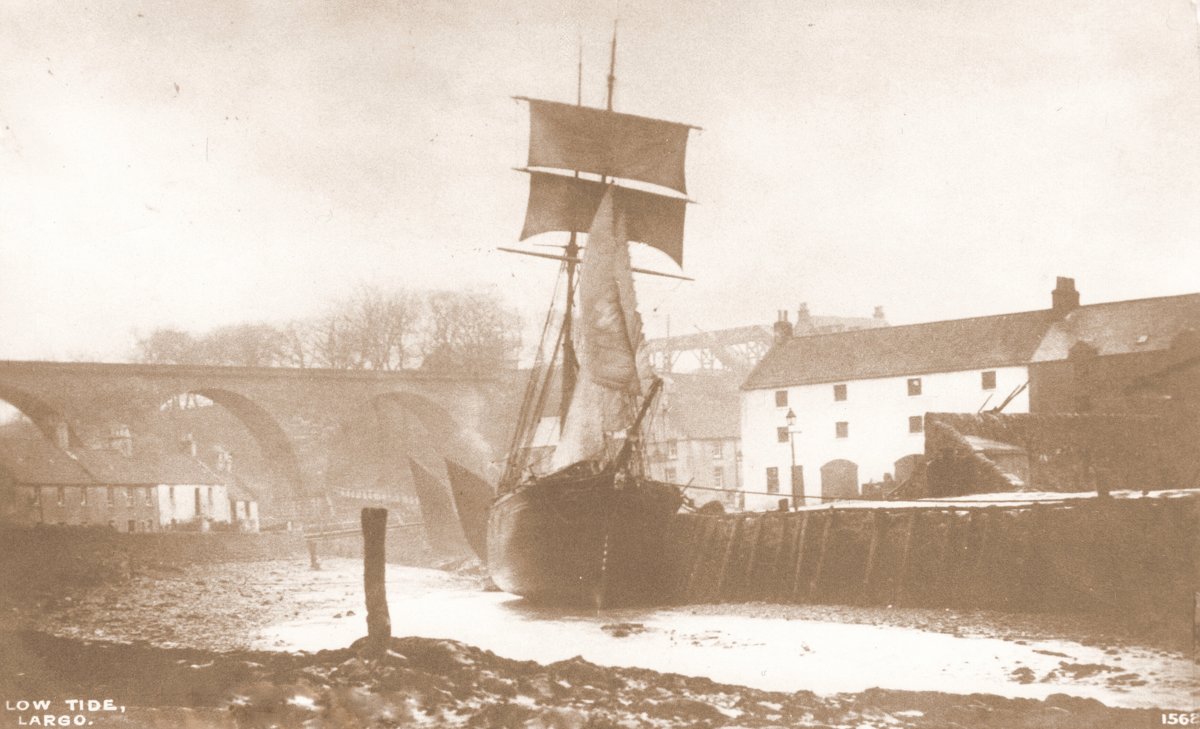
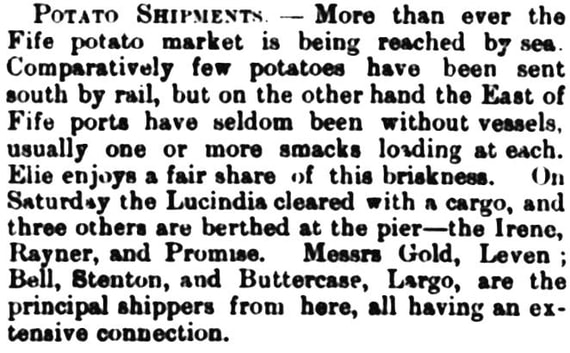
The above postcard image features a topsail schooner at Largo Harbour at low tide. It's unclear which particular trading vessel is featured but there's a good chance that she was a "tattie boat". The potato trade had been long established at Largo and other East Fife ports by the time this image was captured in the early years of the 1900s. Despite the opening of the railway half a century before, the shipment of potatoes by sea was still generally the choice by local merchants, as the piece below from the 26 January 1899 Leven Advertiser states. It tended to be primarily the higher value produce, such as livestock, that were transported by rail at this time.
Picture

Robert Gold of Leven, John Bell of Stenton near St Monans and Thomas Buttercase of Largo are all named above as "the principal shippers" from East of Fife ports. Buttercase was a potato merchant who lived in Upper Largo and rented space within the granary at Largo Harbour in the 1890s. Harbours such as Largo. Leven, Anstruther, Elie, Pittenweem, St Monans, Crail and Kingsbarns are all frequently referenced in the newspaper archives as handling potato shipments. The shipment of potatoes was of course seasonal - from late autumn, right through the winter, into spring. The vessels involved typically included schooners (like the one pictured above) as well as smacks, ketches and brigs. Most would only carry around 100 tons or less at a time. 

​
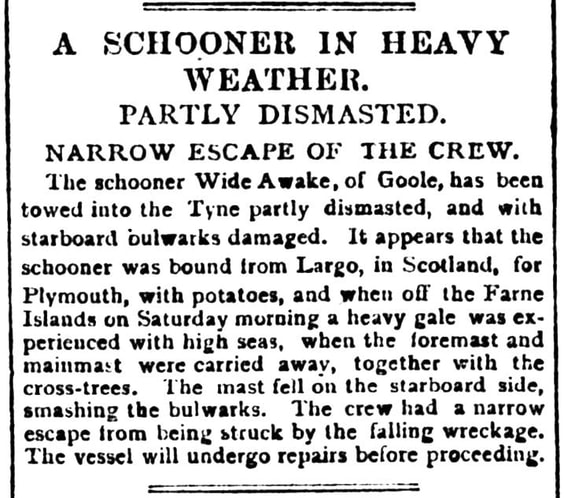
In 1885, the 14 February Fife News described how at Largo "the shipment of potatoes to English ports is being carried out to a pretty large extent". The previous week two vessels had "cleared out" - one for Middlesbrough and the other for London, each with about a hundred tons. A third was "busy loading" and a "look out was being kept for a fourth". The report below from the 3 April 1888 Shields Daily Gazette describes how the schooner Wide Awake of Goole got into difficulty in heavy weather off the Farne Islands, after picking up a load of potatoes from Largo heading for Plymouth.
​
Picture
Picture

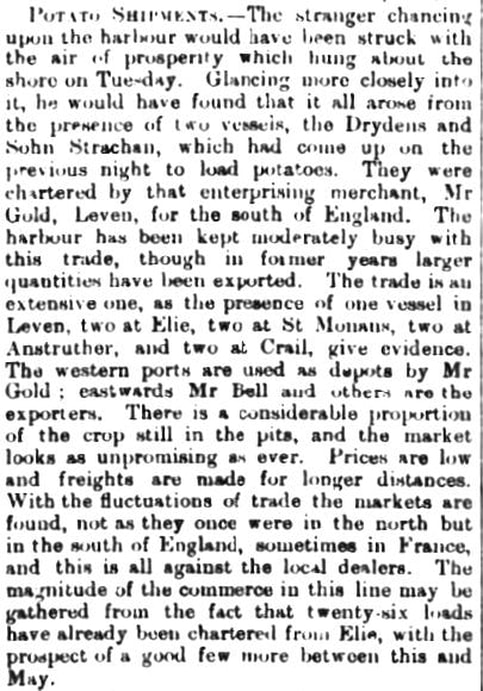
The potato cargoes leaving Largo around this time were largely bound for England. The small piece above from 22 December 1894 St Andrews Citizen tells of the schooner Sweet Home heading from Largo for the "English markets". Below is a longer snippet from the 1 April 1897 Leven Advertiser, which describes the arrival of two vessels that "had come up on the previous night to load potatoes", chartered by Robert Gold of Leven. Mr Gold was a potato merchant who lived in Leven, before moving into one of the newly-built semi-detached villas of Victoria Road in Lundin Links in 1903.

The article eludes to the fact that Largo harbour was not as busy as it used to be with potato exports, stating "in former years larger quantities have been exported". It also notes that several nearby harbours were busy as well with the potato boats. Further information given tells us that the potato trade once was to the north but now was with the south of England and sometimes France. The markets fluctuated and at the time prices were relatively low.
Picture
Picture

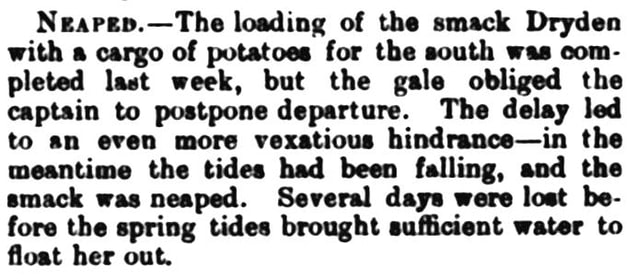
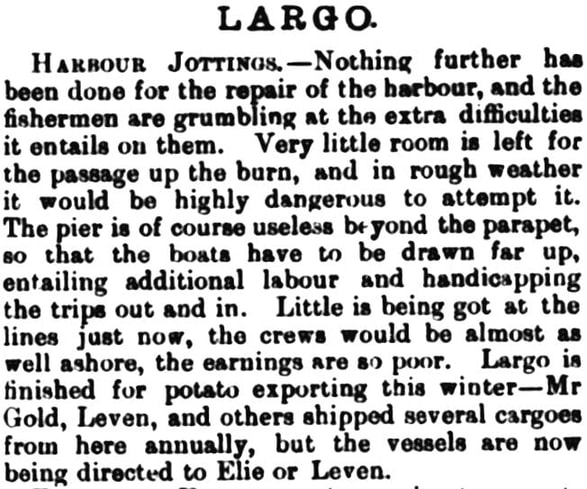
The 31 March 1898 Leven Advertiser snippet above names the smack Dryden as a vessel involved in the potato trade. On this particular visit to Largo she was "neaped" - that is she missed the tide and had to stay in port until the spring tides brought enough water into the harbour to float her out. The potato trade out of Largo took a hit in the following (1898/99) season when the harbour was damaged in winter storms. The piece below from 1 Dec 1898, under the heading "harbour jottings", describes how the harbour was in need of repair and had become dangerous, bringing an early end to that winter's potato export activity.
Picture

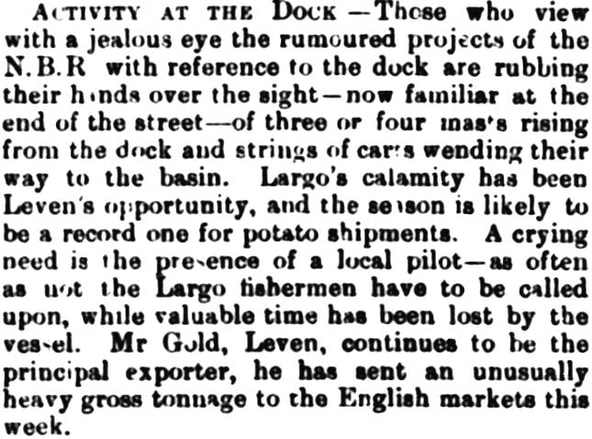
The 20 April 1899 piece below from the same newspaper provides an update from later in the season. It tells of how "Largo's calamity has been Leven's opportunity" bringing the latter a record season of potato shipments. Robert Gold continued to be the main exporter with his loads heading for the English markets.
Picture
Picture

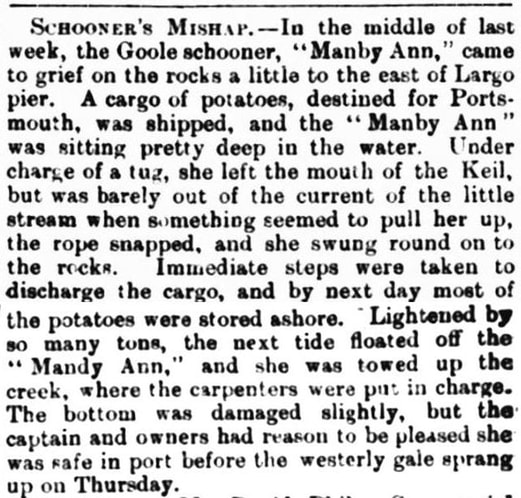
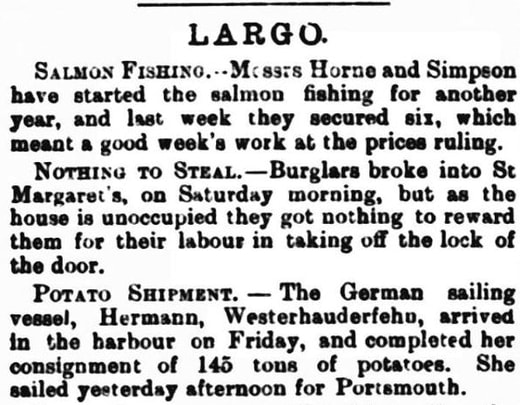
Potato shipments eventually resumed from Largo and continued (likely at reduced frequency) into the 1910s. The 22 February 1911 Leven Advertiser (above) tells of a mishap experienced by the schooner Mandy Ann of Goole. Carrying a cargo of potatoes destined for Portsmouth the vessel had only just left the mouth of the Keil under charge of a tug when she swung round onto rocks. The potatoes were saved and the boat repaired locally at Largo. The piece below from the 21 March 1912 Leven Advertiser notes that the German vessel Hermann arrived to collect 145 tons of potatoes bound for Portsmouth. 
Picture

The start of World War One in 1914 disrupted the potato trade, with shipments from Largo coming to a halt. The book "The Forth at War" by William F Hendrie describes how...

"The declaration of war in August 1914 had an immediate effect on shipping on the Forth, as the Admiralty swiftly imposed restrictions. Two armed naval inspection vessels took up position off Inchkeith, and captain of merchant vessels were instructed that they must report to them upon their arrival in the firth, which must be during the hours of daylight....There were in any case, far fewer shipping movements than normal". 

The fear of mines and torpedo attacks must have played a large part in the reduction of shipping movements. The regular potato shipments out of Largo were never re-established. 
​
Picture
0 Comments

Mary Stewart - Long-Serving Montrose-Built Schooner

24/5/2024

1 Comment

 
Picture

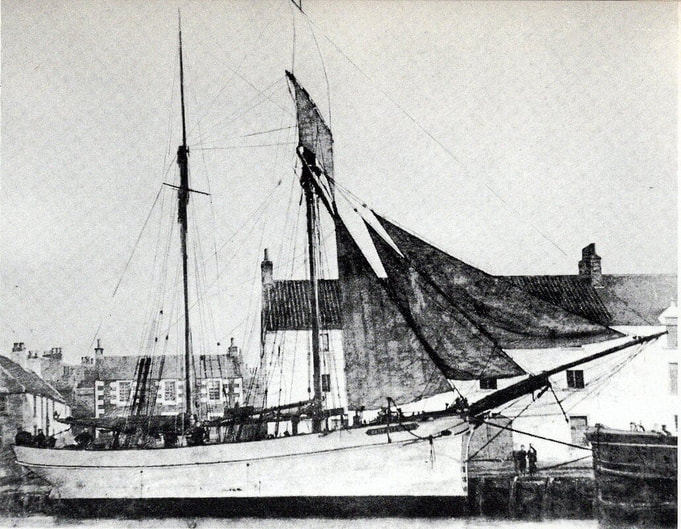
The impressive vessel in the photograph above is Mary Stewart, an iron topsail schooner, pictured around 1900. This image appeared in the book 'Scottish Sail' by Robert Simper, where the source of the photograph was given as Michael Bouquet. He was a retired teacher from Devon who authored multiple books on maritime history. He owned an extensive collection of photographs including this one, which it would seem, he was unable to identify as Largo. The Mary Stewart had a very long active service and was based at many different locations around the United Kingdom from Orkney to Devon. So it's not surprising that a fleeting visit to Largo was missed by those more focussed on the vessel herself.

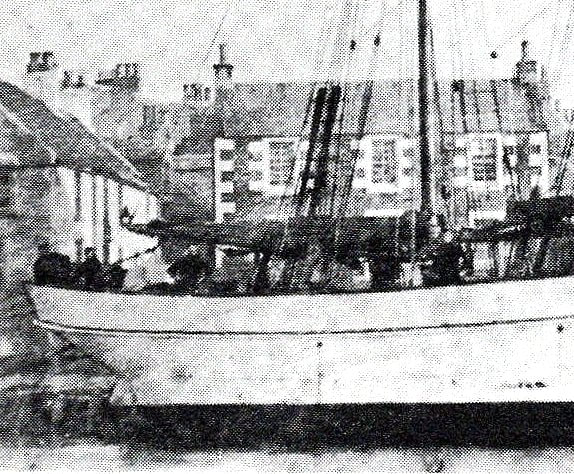
For those familiar with Largo Harbour, however, the Crusoe Hotel can be clearly seem behind the jib sails. The appearance of the Crusoe Hotel helps to date the image. The new larger dormer windows are present on the top floor of the right side of the hotel and the new slate roof is on with new chimney pots added. The hotel exterior was spruced up around 1900 so the image is likely soon after that. In the background on the left side of the photo is Alexandra House (the two storey house with three upper windows) and the Railway Inn. The 'Mary Stewart' name plate can be seen on the upper right hand side of the ship and on close inspection at least four of her crew can be seen on deck. Further people are standing on the quayside. The tide is quite high with plenty of water in the harbour.
​
Picture
Picture

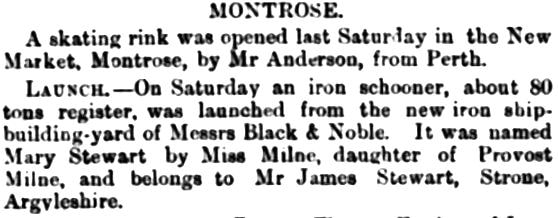
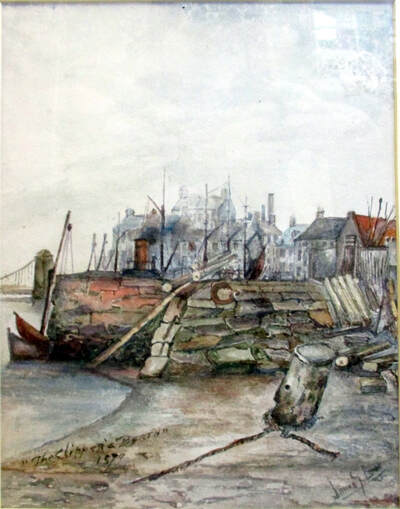
Mary Stewart was built in Montrose in 1876 for James Stewart of Strone in Argyllshire and was named after a relative of his. She was launched on 3 June 1876 from the yard of Messrs Black and Noble at the Old Shore (pictured below in an 1879 painting by James Low). The christening ceremony was performed by Miss Milne, daughter of Provost Milne. After the launch a "wine and cake party was held" in the drawing loft of the boat builder, with the Provost presiding. The "usual social toasts were given, especially success to the builders" (Dundee Courier 6 June). The use of iron as a material for the 72-ft hull was a departure from the traditional wood and was something of an innovation for Montrose. Many of those watching the launch had never seen anything of the kind before.

Picture

James Stewart continued to own the Greenock-registered schooner for over a decade. Her official number was 72414. The vessel traded between the United Kingdom and Newfoundland rigged as a topsail schooner. As Robert Simper states in 'Scottish Sail', "it is amazing to look back and realise that this schooner which loaded only 110 tons was profitably employed in the ocean trades". 

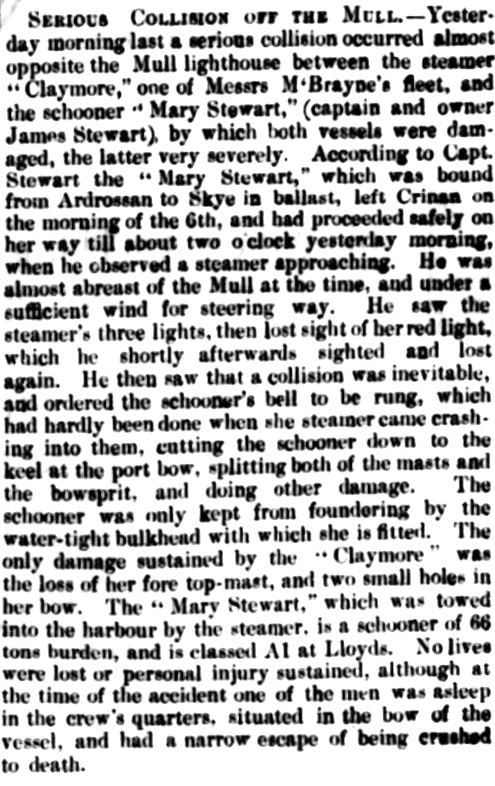
On 7 August 1885 a serious incident off Mull caused significant damage to Mary Stewart - reports of which appeared in several newspapers, including the article below. Heading from Ardrossan to Skye, the Mary Stewart encountered the steamer Claymore. Some reports describe the night as somewhat foggy but not sufficiently dense as to account for the accident where the Claymore collided with Mary Stewart, stoving in her bow and damaging both masts and her bowsprit. Fortunately, no serious injuries occurred and the Mary Stewart was subsequently repaired.

Picture
Picture

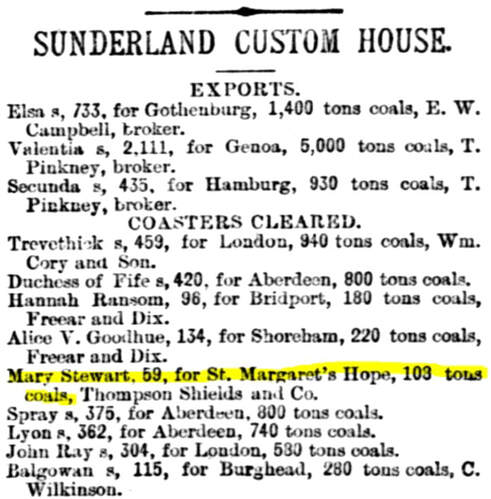
​By 1892, ownership of the vessel had changed to James McDonald of St Margaret's Hope, Orkney. During his tenure, she sailed up and down the east coast - often to The Wear to carry back coal (see above from 29 September 1898 Sunderland Daily Echo and Shipping Gazette) but also to places such as Leith carrying loads like hay. It seems probable that it was during this period that she called at Largo and was photographed. Perhaps she was acting as a "tattie boat" for this particular journey, carrying potatoes.

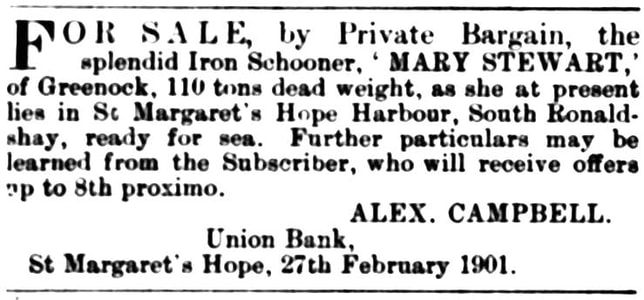
In fact by early 1901, Mary Stewart was advertised for sale (see advert below from 6 March 1901 Orkney Herald). This would narrow down the likely timing of the photograph at the top of this post to either 1900 or early 1901. The eventual purchaser was William Weaver of Isle of Whithorn, Wigtownshire. There on the west coast of Scotland, Mary Stewart was involved in trading between Dublin, Drummore and Isle of Whithorn. Barley grown in the local areas of Drummore and Isle of Whithorn was taken to Dublin to be used in the brewing of Guinness stout. The barley husks were subsequently returned to Scotland to be used as cattle feed. She also called at places such as Plymouth, Liverpool, London and various ports in Wales. Captain Weaver's thirteen-year-old grandson, also William Weaver, left school to join the schooner and ultimately went on to command an ocean liner.

Picture

Mary Stewart was sold on again in 1906, when she headed to Gloucestershire. Under the ownership of George H Meadows, she made regular sailings to Wales, Kent and Plymouth with loads as diverse as slates, cement, clay, pitch, salt and guano. The vessel's next move was to Ilfracombe, where she underwent a few adjustments. Under the ownership of Messrs Bengey and Sons, she was described in 1922 as a "ketch" and in 1926 had an auxiliary engine fitted. She carried coal up Bristol Channel was well-known in the ports of North Devon.
​
Picture

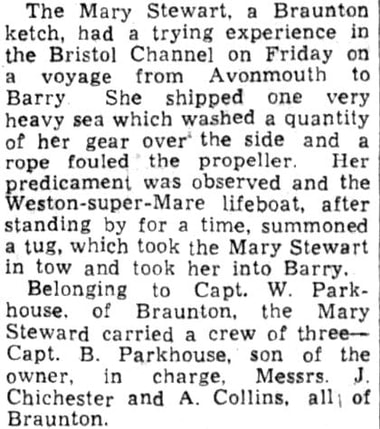
The late 1920s saw Mary Stewart move to another part of Devon. By 1929, she was owned by William Parkhouse of Braunton, Devon. Initially she transported barley, wheat and miller's produce but went on to carry coal to various harbours in the Bristol Channel. During her many years with the Parkhouse family, the Mary Stewart saw some drama, including the above incident where she "shipped one very heavy sea" that washed some of her gear overboard and resulted in the propeller becoming tangled with rope (23 September 1946 Western Morning News above).

Picture

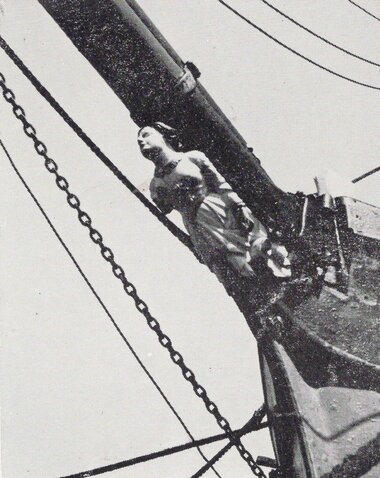
The photograph above shows the figurehead of the Mary Stewart - an original feature, modelled on the lady from whom the ship took her name. This image appeared in the book 'Ships and Harbours of Exmoor' by Grahame Farr (who also captured the photograph). He writes that in a storm, during the Second World War, the figurehead was lost in the Bristol Channel. Eventually, it washed up on the beach at Amroth in South Wales, looking worse for wear. Mary Stewart still carried her bowsprit and jib-boom until 1948 (and was one of the last vessels in Europe to carry this spar). During 1956-58 she traded into Minehead and in 1959 around the Channel Islands. 

​
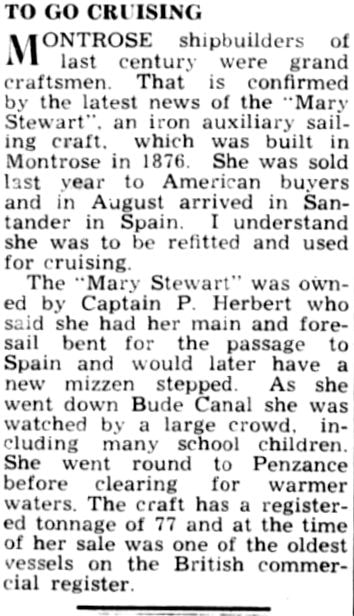
In 1963, Mary Stewart was sold to American buyers by Captain P Herbert and in August that year arrived in Santander, Spain. There she was to be refitted and used for cruising (see 21 May 1964 Montrose Review below). Here her trail goes cold and further details remain elusive. If any reader can shed light on this new chapter in the long life of Mary Stewart or knows of her ultimate fate, please do leave a comment or get in touch. Whether or not the Mary Stewart made it to her centenary, she was a remarkable vessel who had a long and varied history, surviving a few close calls along the way. 

Picture

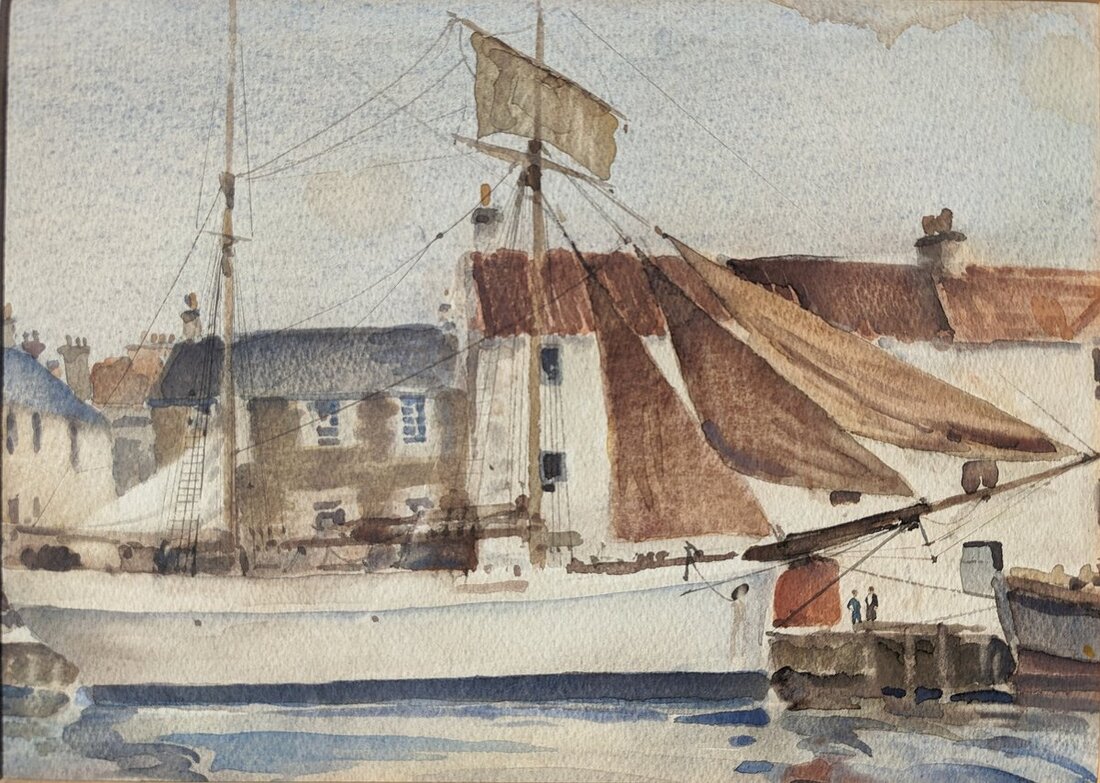
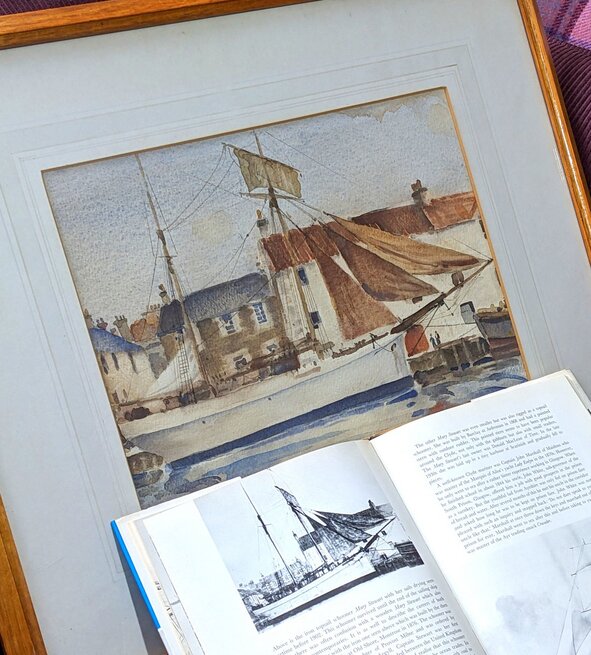
The Mary Stewart features in the painting below by W.G. Walker, which was likely based upon the photograph rather than painted in situ. This artwork reinforces the way that large vessels dominated the harbour area when calling at a small port such as Largo. It's great to be able to identify this hard-working boat as one that passed through Largo.

Picture
Picture
With many thanks to John Downie for his input to this post and ongoing advice on all things maritime.
1 Comment

1861 Census - Ships in Harbour

17/5/2024

2 Comments

 
Picture
Picture
Picture

The census of 1861 in Scotland took place on Sunday 7 April. In addition to the 2636 residents and visitors staying in dwellings in Largo Parish, there were also a number of people recorded on the boats at Largo Harbour at midnight that evening. Their details were recorded separately on the Shipping Census Returns (special schedules for vessels). In 1861 all returns from the Royal Navy and from merchant vessels were recorded at the end of the census series, but after that vessels in home ports are listed at the end of the districts where they were moored, and only those in foreign waters are grouped together at the end of the series. So, the 1861 records list shipping returns separately and in alphabetical order, with Largo recorded being listed between those for Kirkcaldy and Newburgh.

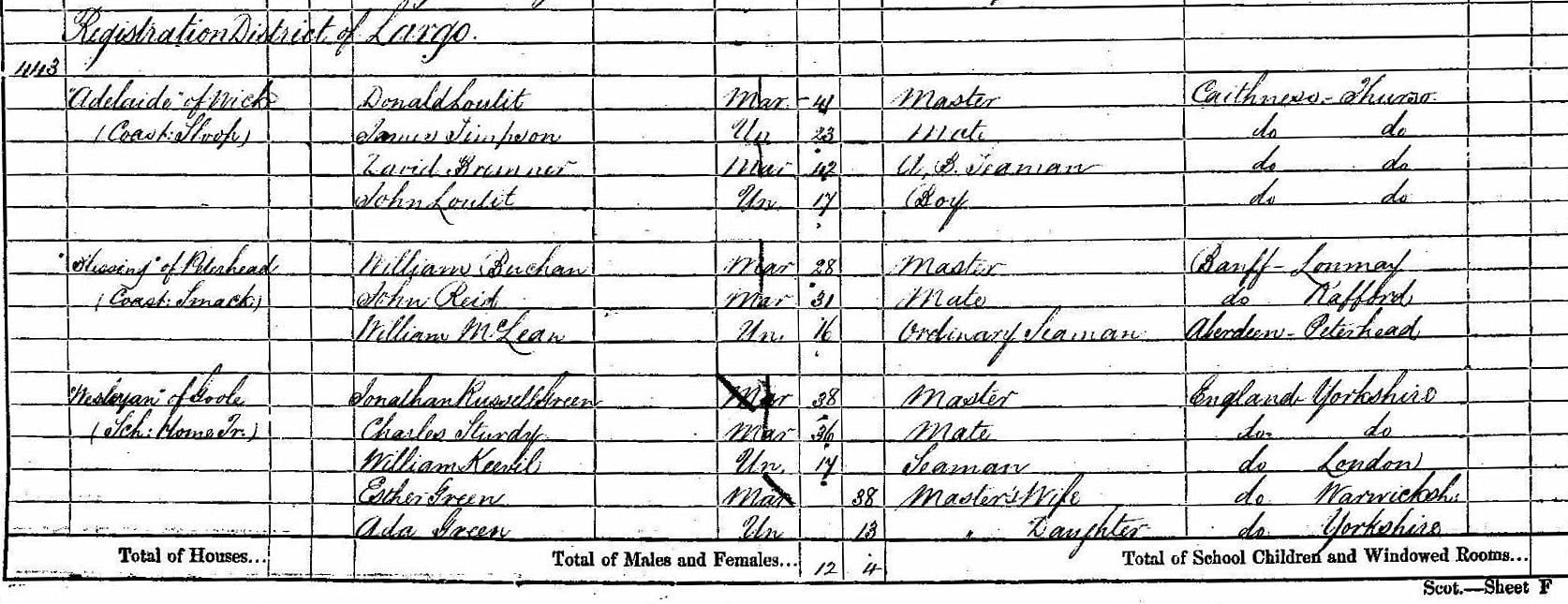
​At midnight on 7 April there were 3 occupied ships in port at Largo, with a combined total of sixteen persons on board:

Adelaide - Sloop 52 Tons, registered at Wick, Official No. 17655, with 4 persons on board;
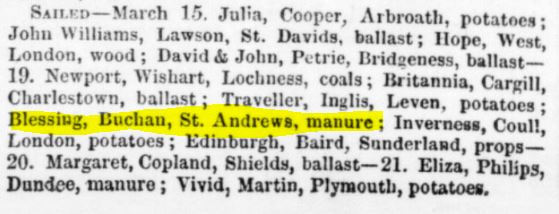
Blessing - Smack 26 Tons, registered at Peterhead, Official No. 8961, with 3 persons on board; 
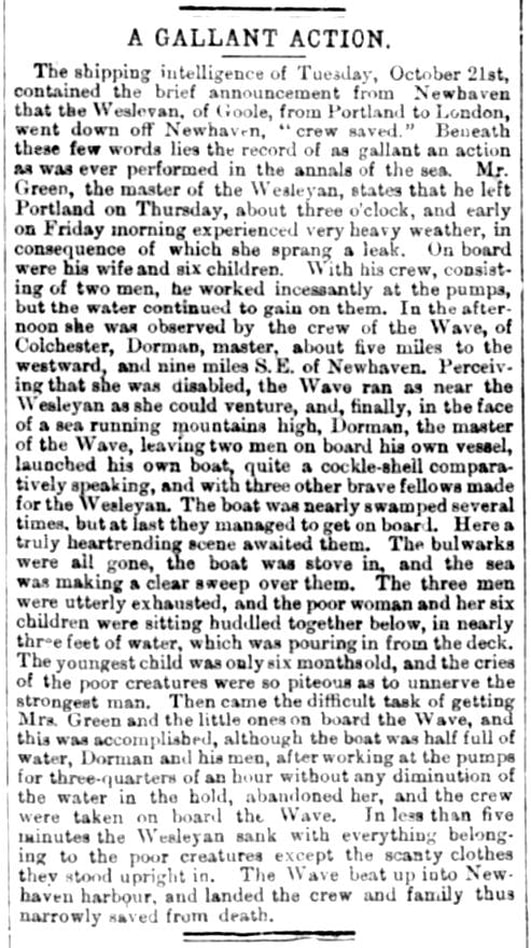
Wesleyan - Schooner 75 Tons Registered at Goole, Official No.19013, with 9 persons on board.

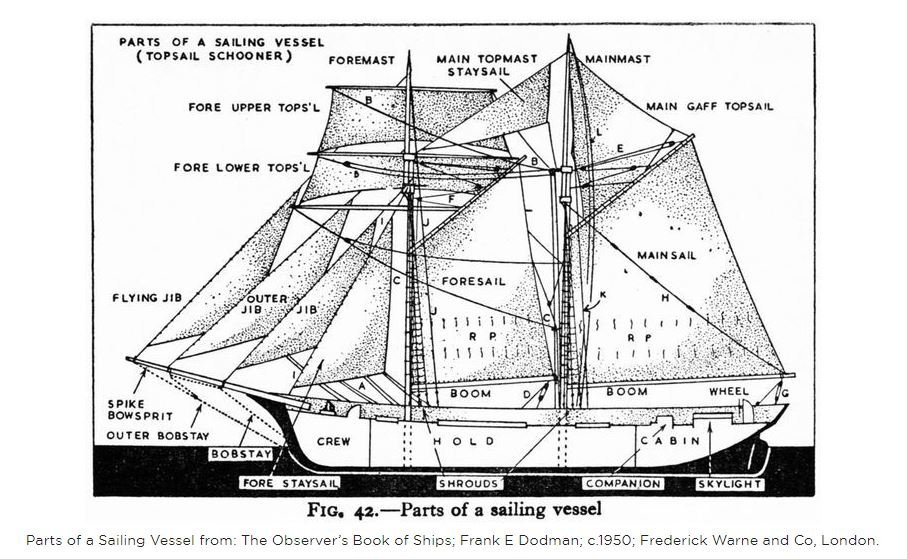
A sloop is a single masted vessel with a fore and aft mainsail plus one or more headsails (some also carried a square sail). A smack is a fully decked, single masted vessel (sometimes an ex fishing vessel), of typically 40 to 60 feet in length. It is gaff rigged with a large mainsail. The design helped them to operate in shallow waters. A schooner has two or more masts with fore and aft rig plus one or more square topsails, plus one or more Jibs forward of the mast.

Picture

​Here's some further information about the three ships and the people on board who were transient residents at Largo:

Adelaide

Donald Loutit - Ship Master aged 41, born in Thurso
James Simpson - Mate, aged 23, born in Thurso
David Bremner - AB Seaman, aged 42, born in Thurso
John Loutit - Boy, likely son of the Master, aged 17, born in Thurso

There is little information readily available about the Adelaide, aside from the occasional fleeting mention in the newspaper shipping intelligence, such as the note below from the 29 June 1861 Dundee Courier, when she carried sawn fir timber back into Wick. ​Donald Loutit lived until 1894 (aged 73) and his son John until 1928 (aged 85).
​
Picture

Blessing

William Buchan - Ship Master, aged 28, born in Lonmay
John Reid - Mate, aged 31, born in Rafford
William McLean - Ordinary Seaman, aged 16, born in Peterhead

The Blessing was built in 1793 at Brixham. Eventually moving to Peterhead, this vessel operated up and down the east coast, calling frequently at places like Dundee, Montrose, Leith, Kirkcaldy, Anstruther, Wemyss and St Andrews with cargoes such as coal, wood, oats, flour or manure (see example below from 22 March 1861 Montrose Review). This hardy boat lasted almost a century being broken up in 1887.

Picture

Wesleyan

Jonathan Russell Green - Ship Master, aged 38, born in Yorkshire
Charles Sturdy - Mate, aged 36, born in Yorkshire
William Keevil - Seaman, aged 17, born in London
Esther Green - Master's wife, aged 38, born in Warwick
Ada Green - Master's daughter, aged 13, born in Yorkshire
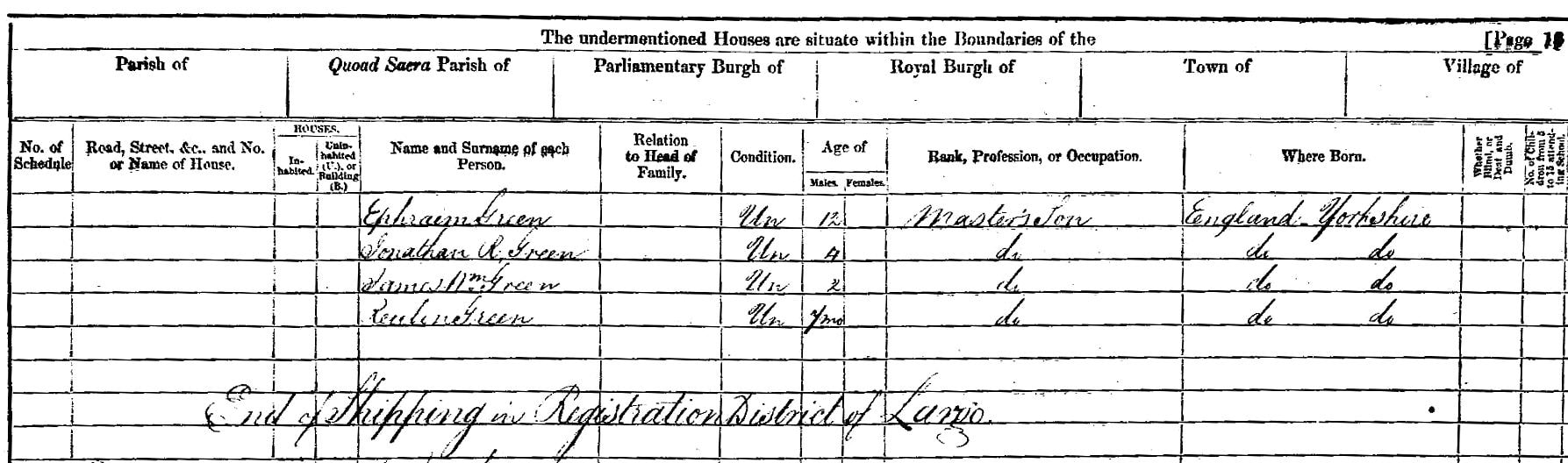
Ephraim Green - Master's son, aged 12, born in Yorkshire
Johnathan R Green - Master's son, aged 4, born in Yorkshire
James Wm Green - Master's son, aged 2, born in Yorkshire
Rueben Green - Master's son, aged 7 months, born in Yorkshire

Jonathan Green's family likely often accompanied him on his travels by sea. It was an unorthodox lifestyle and not without its challenges and risks. The whole family were with him on the Wesleyan when it met its end the following year. ​The Wesleyan had been built in 1846 in Knottingley. It foundered at Beachy Head in October 1862, while bound for London with a cargo of stones. The news report below, which appeared in many newspapers around the country, details the incident in which the vessel was lost. Ship master Jonathan Green was saved along with his crew and his wife and six children (the youngest of whom was only six months old). ​

Picture

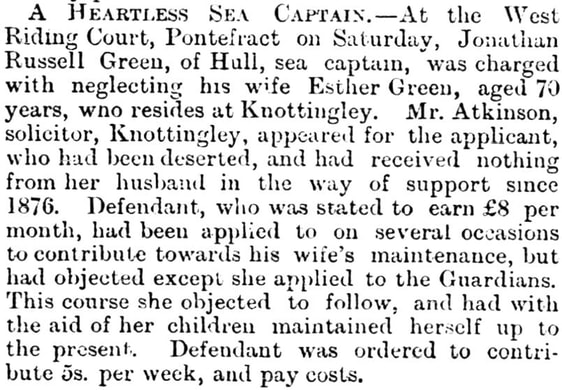
Despite their fortunate escape on that occasion, there was ultimately no happy ending for the Green family and in particular for Esther, the wife of Jonathan. The piece below from the 13 July 1891 York Herald tells us that her husband deserted her some time prior to 1876, at which point he ceased giving her any support at all. The "heartless sea captain" passed away in 1894. 
​
Picture
2 Comments

Standing Stanes Through The Years

10/5/2024

0 Comments

 
Picture

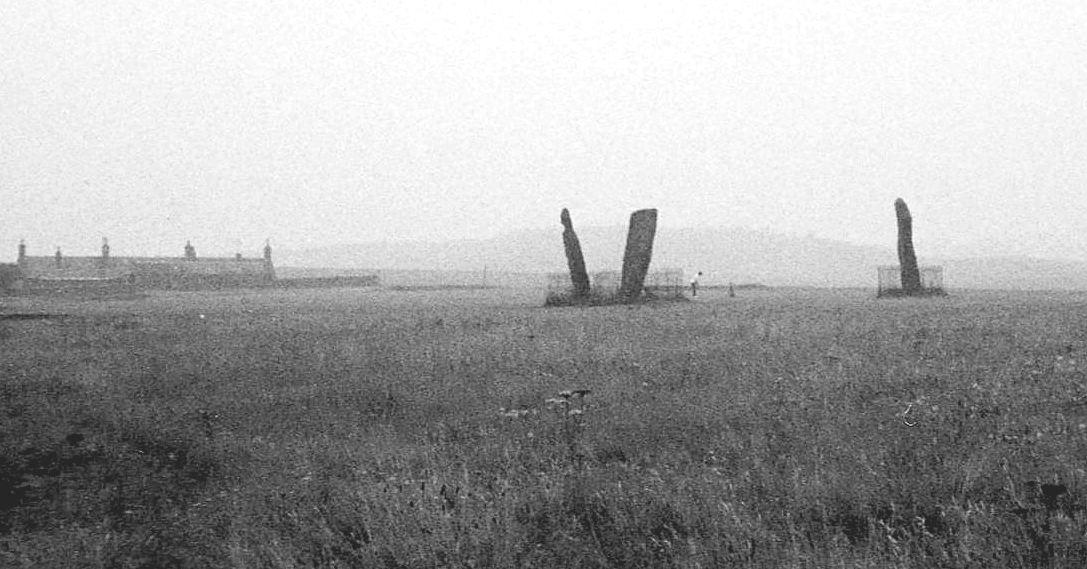
The Standing Stanes of Lundin are three tall, unsculptured, irregularly shaped pillars of red sandstone. Ranging from about 13'6" to 18' high, they are thought to date back around four thousand years. In a world that's forever changing, the Standing Stones of Lundin provide a reassuring familiarity. These megaliths are one of the few local landmarks that would be recognisable to our ancestors. The land use around the stanes has however changed with the times. Long gone are the sheep pictured in the etching above by local engraver William Ballingall circa 1870. Crops no longer grow around their bases. For the past century plus, golf has been played among and around them.
​
Picture

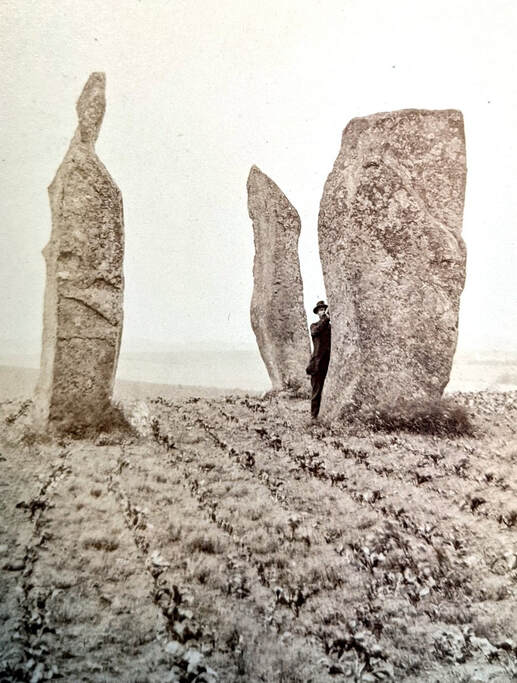
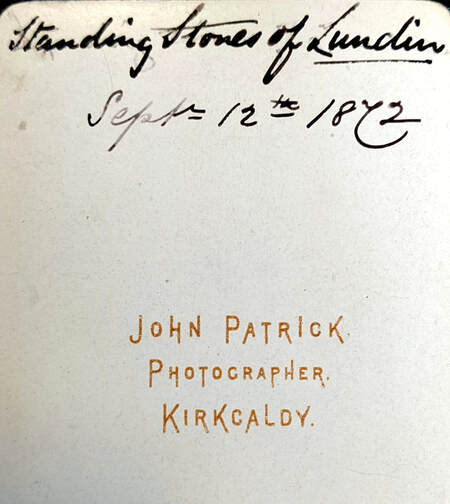
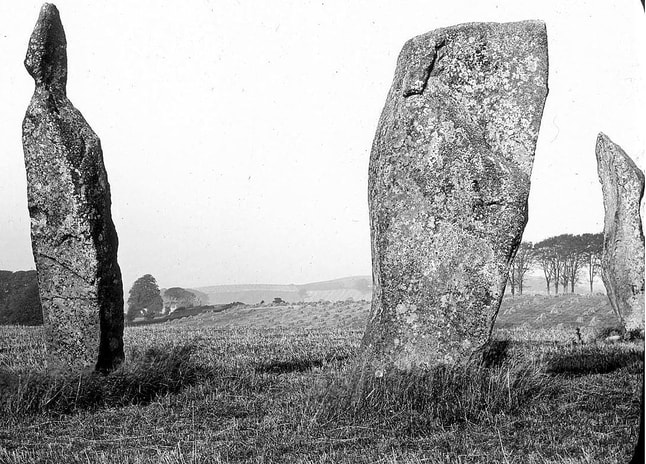
​This 1872 photograph by John Patrick shows a gentleman examining the stones while near rows of crops grow at his feet. It was likely a farm worker that discovered a "coffin built of loose slabs" on the site around 1844, which had been exposed immediately adjoining the standing stones. 

Picture
Picture
Picture

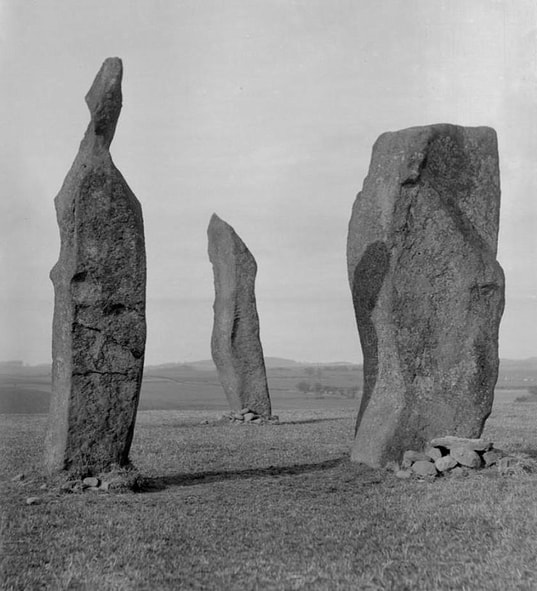
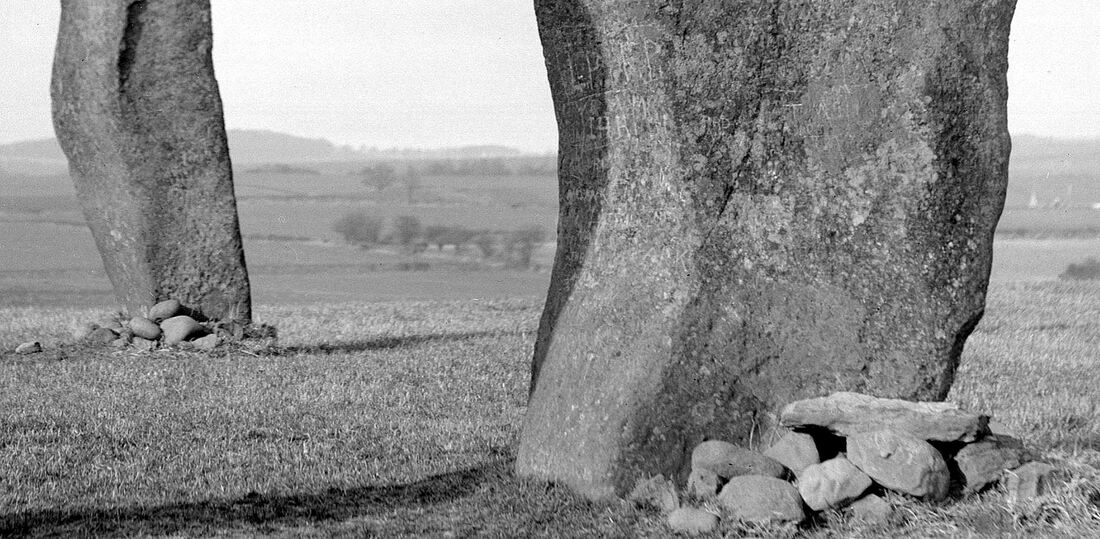
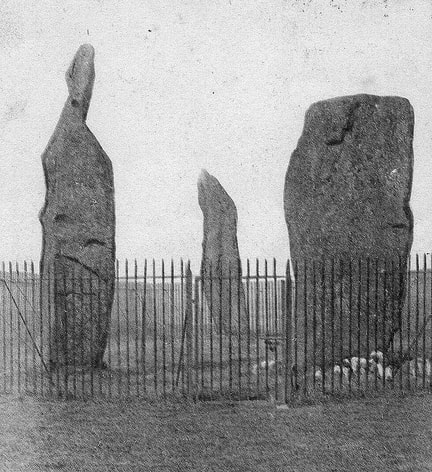
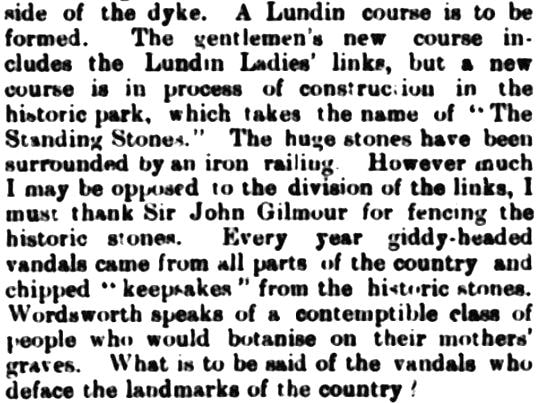
The 1908 image captured by Lady Henrietta Gilmour shows the stones shortly before the Lundin Ladies Golf Club moved to occupy the site and embrace the stanes as a feature of their course. The zoomed in detail below shows clear evidence of graffiti in the form of carved initials and messages. The 2 September 1908 extract from the Leven Advertiser further below explains how this vandalism led to the installation of railings that year. 
​
Picture
Picture
Picture
Picture

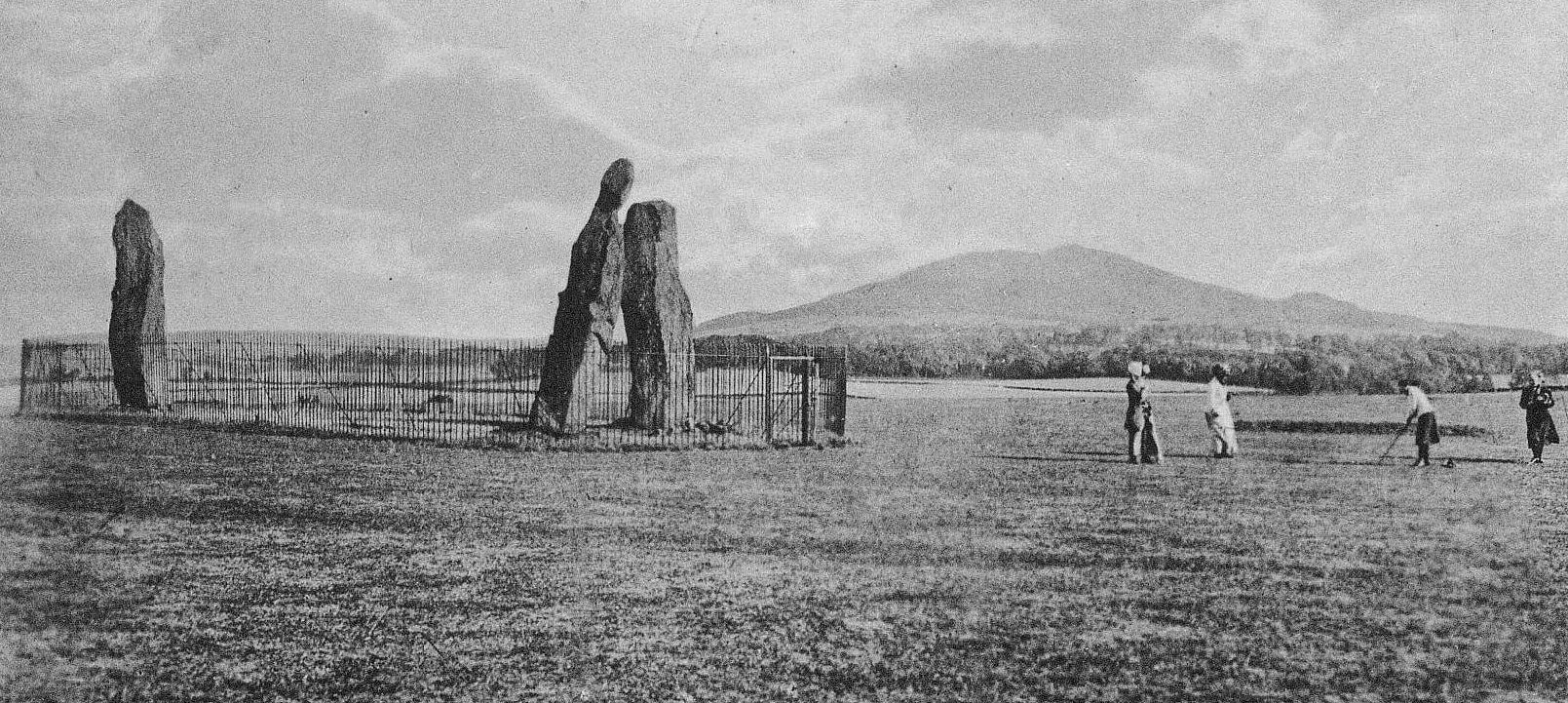
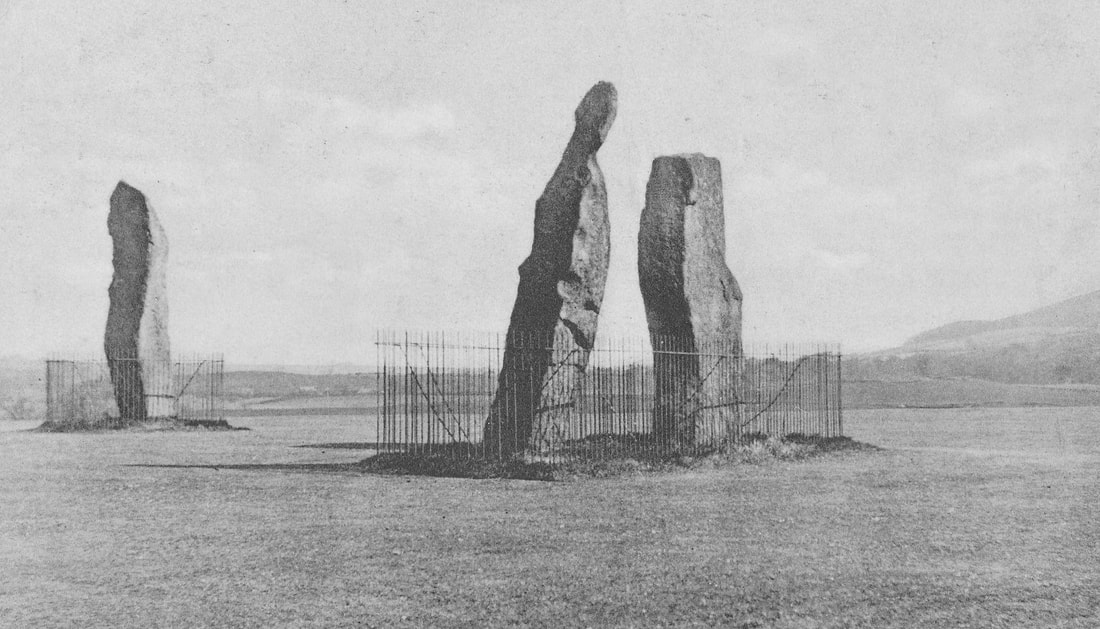
The initial enclosure was one large railing with a gate (see above). However, having all of the space between the stones fenced off and unplayable for golf must have proved problematic. In 1922 this was replaced by two sets of railings forming separate enclosures. Golfers could then play through the middle of the stones as part of the course's second hole. These railings (shown below) remained in place until the early 1980s.

Picture

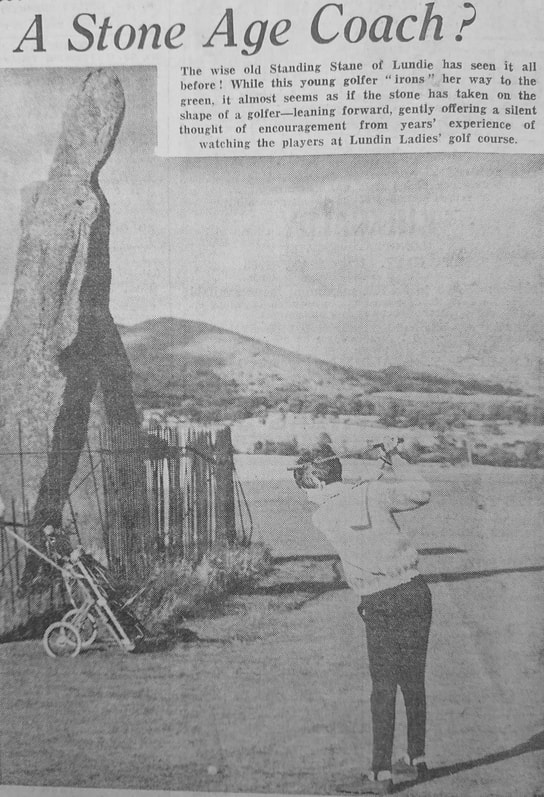
The newspaper piece below from a 1969 East Fife Mail shows a section of the railings. By this time they were looking a little buckled and worse for wear. 
​
Picture

The two images below, both from the Canmore Collection, show the stanes shortly before and after the railing removal. The first is from the mid-1970s and shows a wider scene of the second hole fairway (and third tee behind) with the railings still around the stanes. The second image dates to 1986, when the stanes had been recently released from their iron enclosures, enabling people to fully enjoy their ancient splendour from all angles.

Picture
Picture
0 Comments

Lower Largo Toll House

3/5/2024

2 Comments

 
Picture

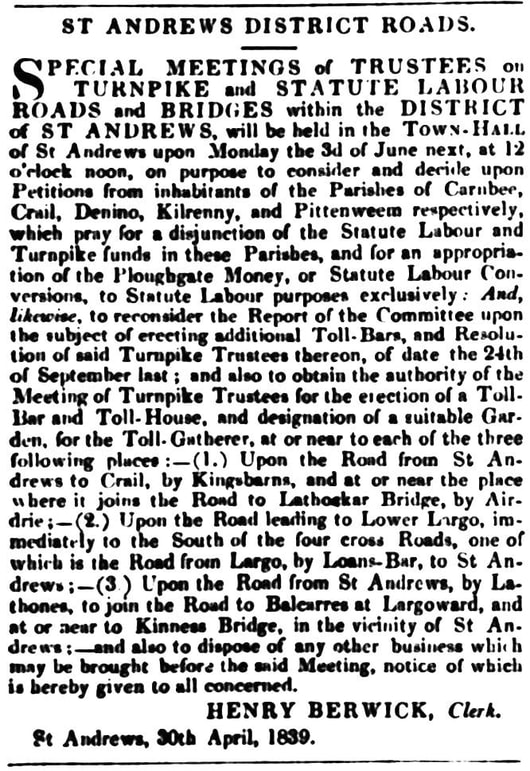
The origins of Largo Toll House, pictured in the centre of the photograph above, date back to 1839. The 9 May Fifeshire Journal of that year included the notice below, stating the intention of the Turnpike Trustees of St Andrews District to erect additional toll bars and houses at three new locations. Location number 2 was described as "upon the road leading to Lower Largo, immediately to the south of the four cross roads, one of which is the road from Largo, by Loans-Bar to St Andrews".

Picture

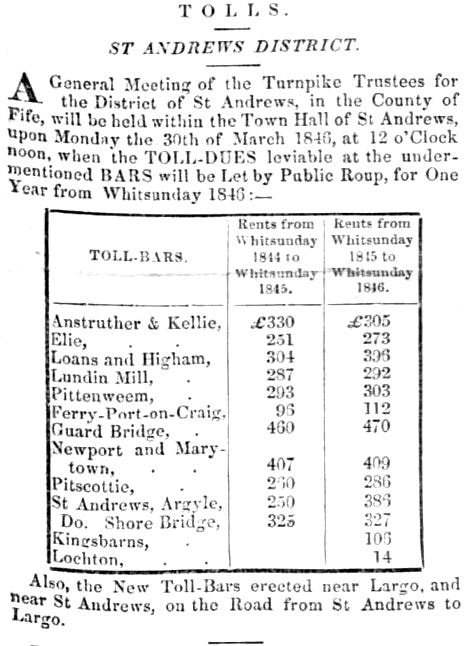
The new toll bar eventually became operational in 1846, which was more than two decades after the toll bar at Lundin Mill had been established. It is mentioned in the footnote of the notice below (12 March 1846 Fife Herald) regarding the public roup of the district's toll bars. A note is provided of the two previous years' rent amount to help guide those bidding for the forthcoming year. The toll bars with the heaviest traffic presumably attracted greater rents.
​
Picture

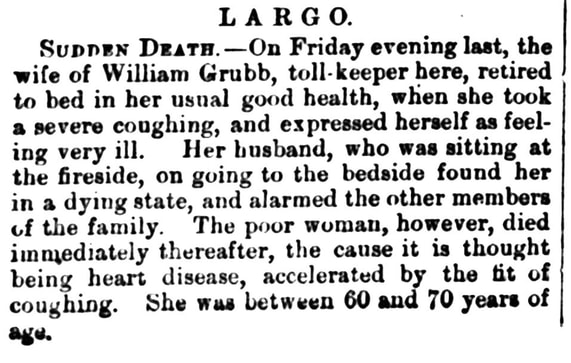
The first census after the toll house was built, 1851, records George McKenzie living there as toll keeper, with his wife Margaret. A decade later, at the time of the 1861 census, the Moyes family lived in the toll house, with 32-year-old Joseph Moyes being the "Toll Bar Keeper and Collector". Wife Margaret and three young daughters all aged under 5 completed the household. A few years later William Grubb became toll keeper and on 15 April 1870 his wife, May Drummond, died at the toll house (see 22 April 1870 East of Fife Record below). While the toll bar was operational the house was owned by the 'Turnpike Trustees of St Andrews District' and rented to the toll keeper. 

Picture

By the late 1870s, the unpopular toll system was being dismantled. Although the role of toll keeper ceased, the former toll house continued to be inhabited for many more decades. Ownership of the building fell to the Largo Estate, which at the time was owned by George Johnston. In many places, former toll keepers and their families were able to continue to lease the toll houses. In 1891, William Grubb, gardener, son of the former toll keeper of the same name, was tenant of the house, living there with his wife and five of their children. He was still there at the time of the 1901 census, along with his wife and two of their adult children.
Picture

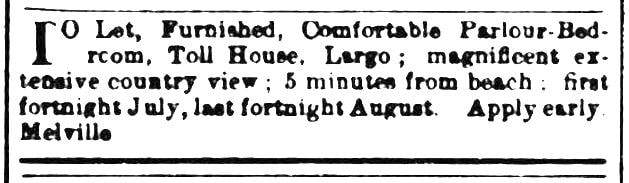
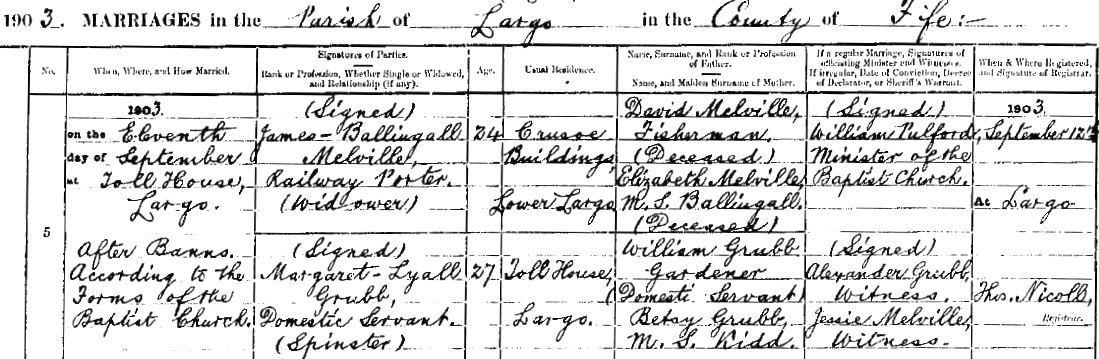
​In 1903 a marriage took place at the Toll House, when William's daughter Margaret Lyall Grubb married James Ballingall Melville on 11 September. William died there in 1913 - 43 years after his mother had passed away in the same house. His widow Betsy continued to live in the Old Tollhouse until her death in 1919. Sometimes the family let out a room to summer visitors - see the advert below from the 13 July 1913 Leven Advertiser.

Picture
Picture

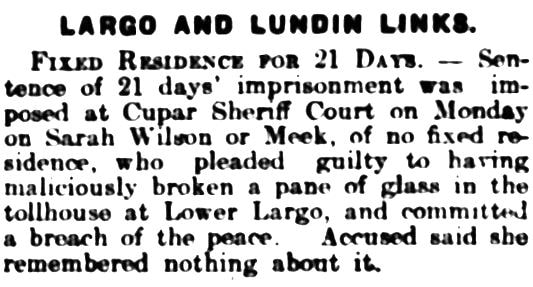
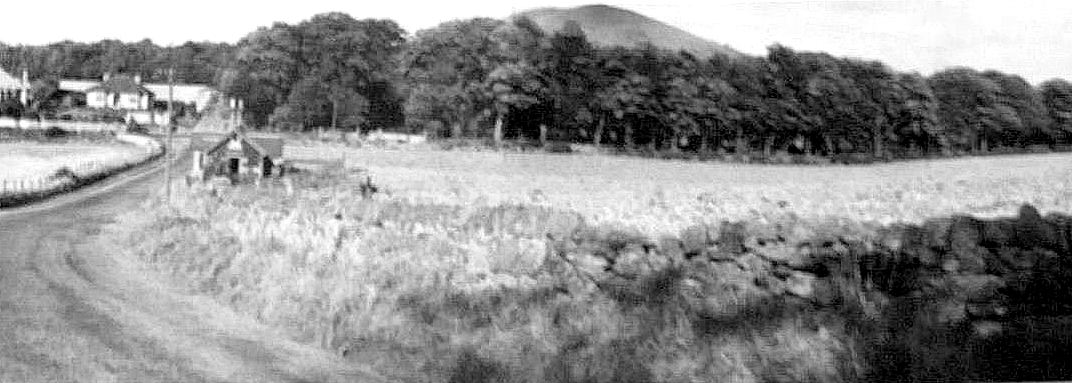
By the 1921 census, the Toll Cottage was occupied by Mrs Jane Grieve and her daughter Florence. The ​23 March 1929 Leven Advertiser piece above tells us that that house suffered a broken pane of glass during a breach of the peace incident. The 1930 valuation roll states that a G Simpson was the tenant. By 1935 the tenancy had passed to Alexander Simpson, and in 1938 Alexander and Mary Simpson were listed on the electoral register as living in Old Tollhouse. By 1940 the house was described as 'uninhabitable' on the valuation roll. It can be seen in that condition in the 1940s image below, with the war memorial cross roads in the background.
Picture
Picture

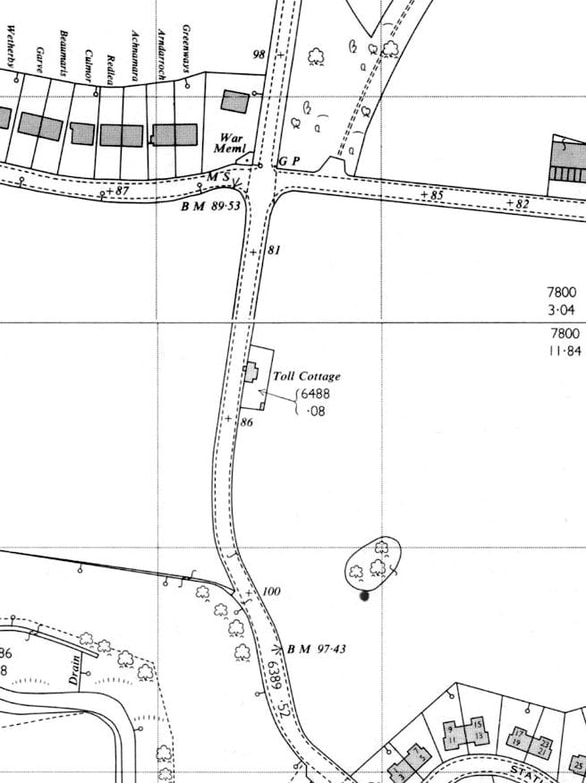
Despite being in a state of decline, the old toll house building outlasted many other toll houses. For example the toll house at Muiredge, Buckhaven was demolished in 1933 as it obscured the road and led to accidents. Higham Toll on the St Andrews to Largoward Road was knocked down in 1937, following the death of its long term tenant. The Lower Largo Toll House still appeared on the 1964 map above but within a few years it would be gone.
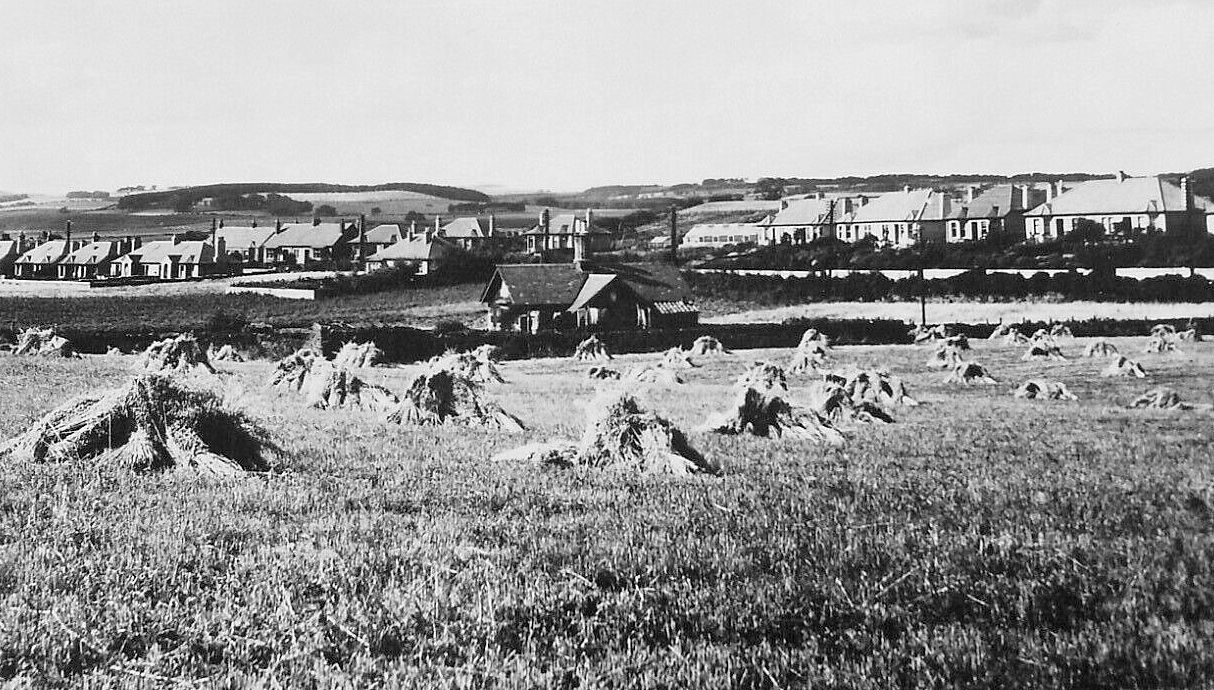
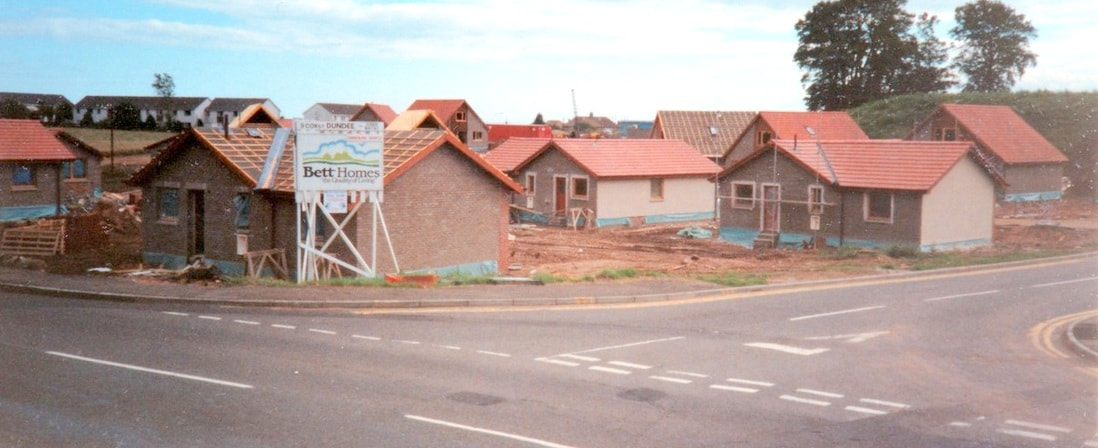
In 1989 the site and its surroundings were developed when Bett Home built modern detached houses and bungalows. The street was named Toll Court in recognition of the former use of the site. The photograph below shows the development under construction. The Roundel completed this pocket of development in the mid 1990s - the name being a reference to the roundel of trees seen on the map above, south of the toll house.
​
Picture
2 Comments

    About

    This blog is about the history of the villages of Lundin Links, Lower Largo and Upper Largo in Fife, Scotland. Comments and contributions from readers are very welcome!

    Search

    There is no in-built search facility on this site. To search for content, go to Google and type your search words followed by "lundin weebly".

    Contact

    Categories

    All
    Antiquities
    Beach
    Boarding Houses
    Business
    Churches
    Clubs And Societies
    Drummochy
    Facilities
    Farming
    Fishing
    Golf
    Houses
    Keil's Den
    Largo Law
    Lower Largo
    Masseney Braes
    New Gilston
    People
    Railway
    School
    Shops
    Standing Stanes
    Streets
    Tourism
    Upper Largo
    Viaduct
    War

    Archives

    January 2026
    December 2025
    November 2025
    October 2025
    September 2025
    August 2025
    July 2025
    June 2025
    May 2025
    April 2025
    March 2025
    February 2025
    January 2025
    December 2024
    November 2024
    October 2024
    September 2024
    August 2024
    July 2024
    June 2024
    May 2024
    April 2024
    March 2024
    February 2024
    January 2024
    December 2023
    November 2023
    October 2023
    September 2023
    August 2023
    July 2023
    June 2023
    May 2023
    April 2023
    March 2023
    February 2023
    January 2023
    December 2022
    November 2022
    October 2022
    September 2022
    August 2022
    July 2022
    June 2022
    May 2022
    April 2022
    March 2022
    February 2022
    January 2022
    December 2021
    November 2021
    October 2021
    September 2021
    August 2021
    July 2021
    June 2021
    May 2021
    April 2021
    March 2021
    February 2021
    January 2021
    December 2020
    November 2020
    October 2020
    September 2020
    August 2020
    July 2020
    June 2020
    May 2020
    April 2020
    March 2020
    February 2020
    January 2020
    December 2019
    November 2019
    October 2019
    September 2019
    August 2019
    July 2019
    June 2019
    May 2019
    April 2019
    March 2019
    February 2019
    January 2019
    December 2018
    November 2018
    October 2018
    September 2018
    August 2018
    July 2018
    June 2018
    May 2018
    April 2018
    March 2018
    February 2018
    January 2018
    December 2017
    November 2017
    October 2017
    September 2017
    August 2017
    July 2017
    June 2017
    May 2017
    April 2017
    March 2017
    February 2017
    January 2017
    December 2016
    November 2016
    October 2016
    September 2016
    August 2016
    July 2016
    June 2016
    May 2016
    April 2016
    March 2016
    February 2016
    January 2016
    December 2015
    November 2015
    October 2015
    September 2015
    August 2015
    July 2015
    June 2015
    May 2015
    April 2015
    March 2015
    February 2015
    January 2015
    December 2014
    November 2014
    October 2014
    September 2014
    August 2014
    July 2014
    June 2014
    May 2014
    April 2014
    March 2014
    February 2014
    January 2014
    December 2013
    November 2013
    October 2013

    Links

    Largo Baywatch Blog
    Fife Family History Society
    ​
    Polish Parachute Brigade Info​

    RSS Feed

Powered by Create your own unique website with customizable templates.