VINTAGE LUNDIN LINKS AND LARGO
  • Blog

Erika

24/11/2023

1 Comment

 
Picture

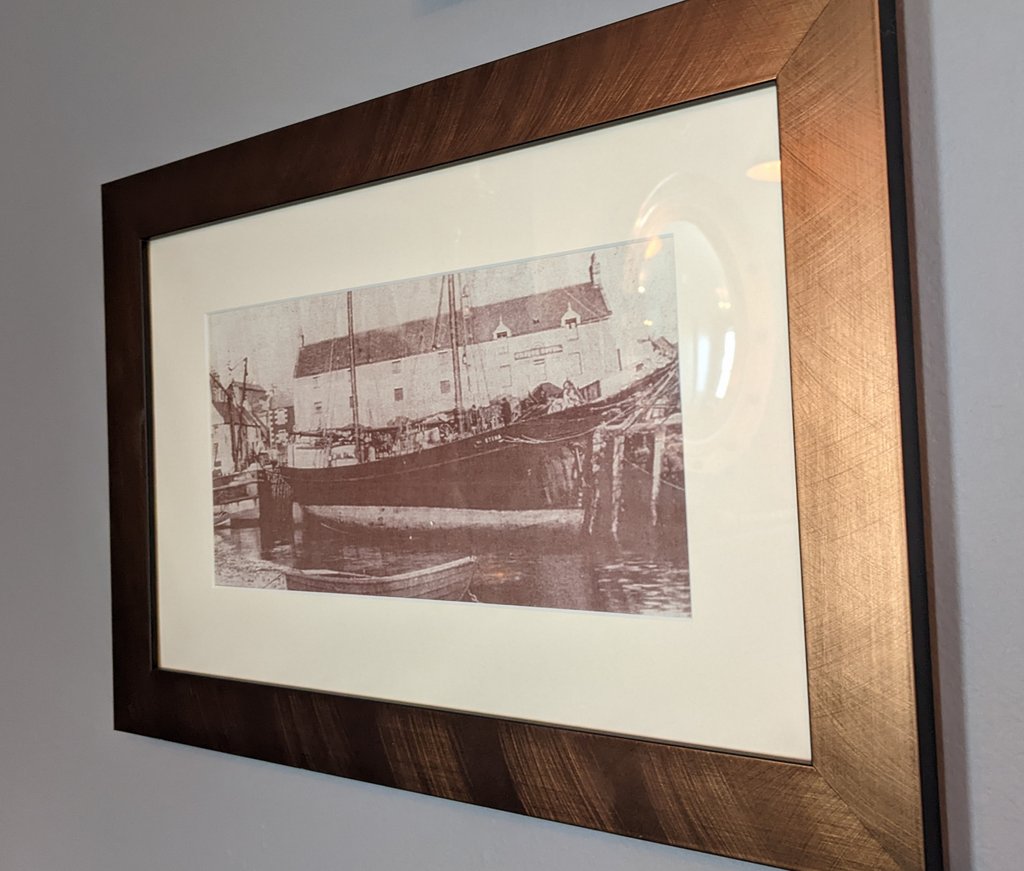
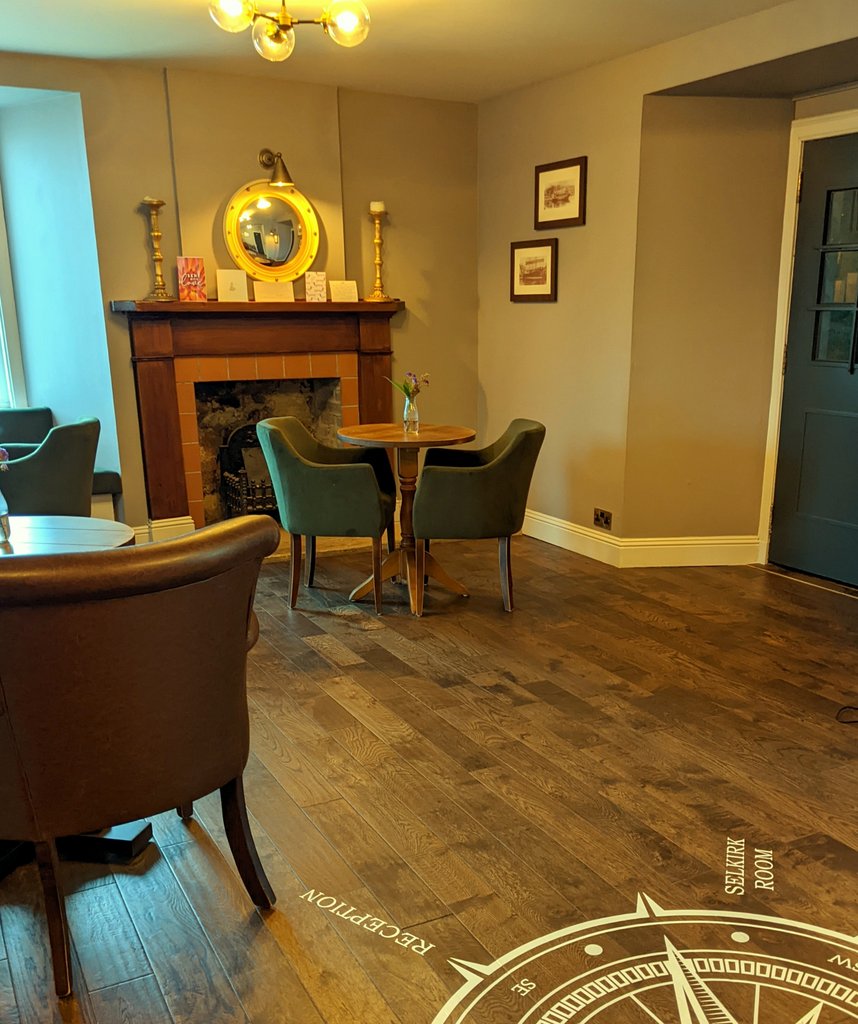
Hanging on the wall at reception in the Crusoe Hotel is an old photograph of the hotel circa 1900, with a substantial double-masted vessel berthed in front of it in the harbour. The boat in question is the Erika, a Russian schooner.
Picture
Picture
Picture

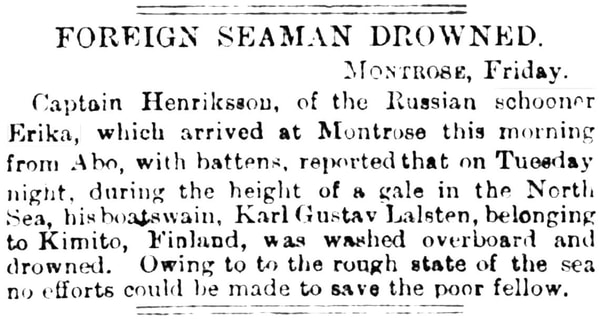
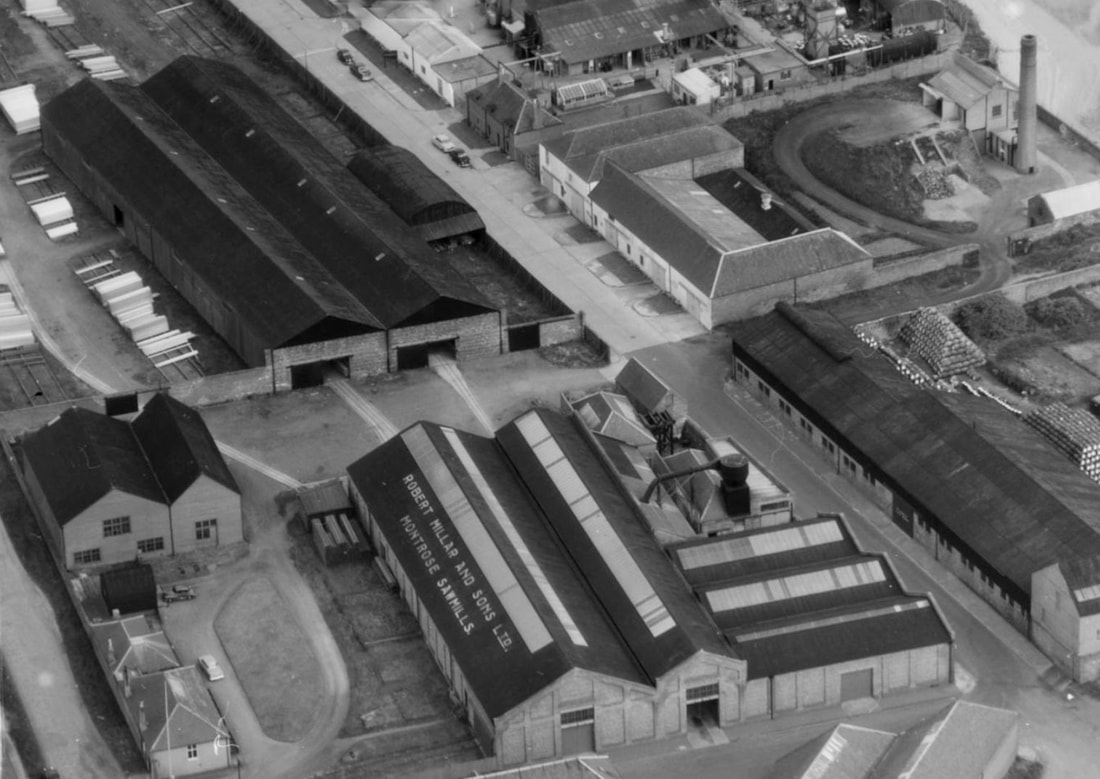
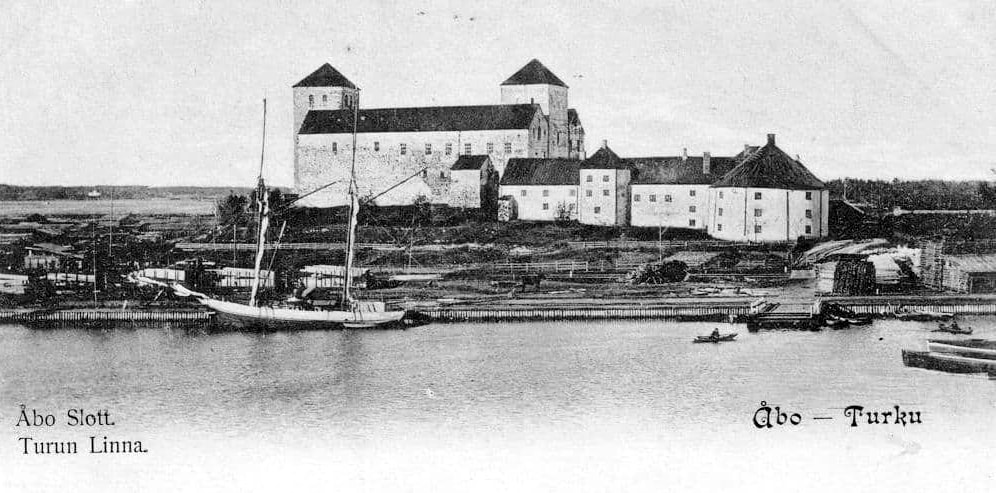
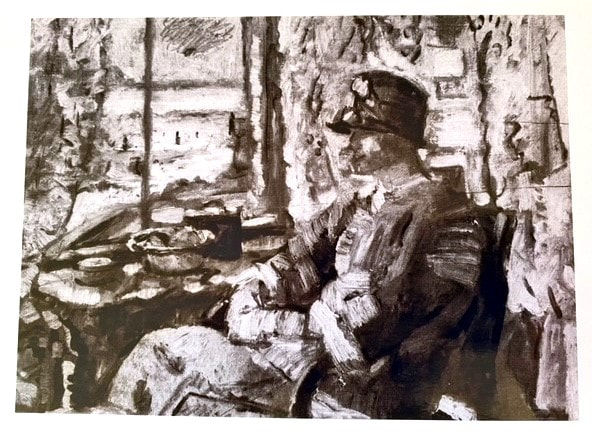
In 1885 while visiting Montrose, Erika featured in newspapers, having lost a man overboard in a terrific storm. The above piece is from the 16 October 1885 Dundee Evening Telegraph. The piece tells us that Erika belonged to the port of Abo in FInland (also known as Turku, pictured below) which was Russian controlled at the time. The vessel had been laden with battens to be delivered to the woodyard of Robert Millar and sons. The firm's more modern sawmill is shown in the photograph at the foot of the post. What type of cargo the Erika was bringing to Largo is unclear, as is how regular a visitor she was. 
Picture
Picture
Photo credit: Canmore Collection

​With thanks to John Downie for help identifying the Erika.
1 Comment

George Leslie Hunter's Woman in the Hat

17/11/2023

2 Comments

 
Picture

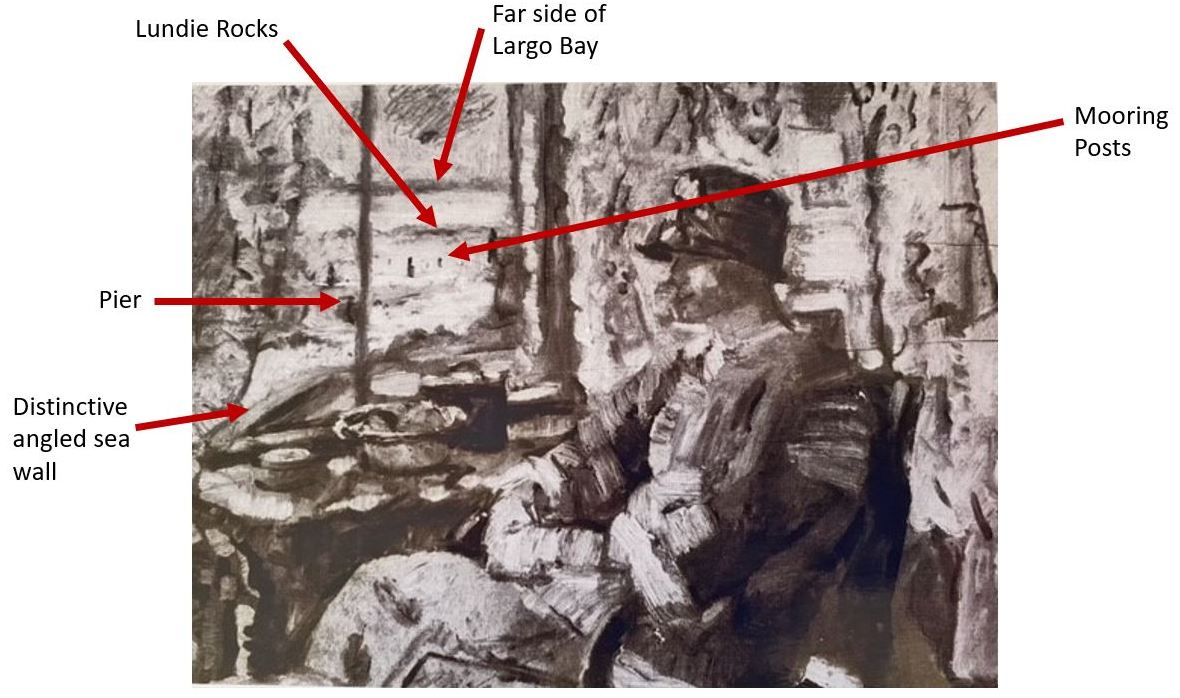
The artwork above is by George Leslie Hunter the Scottish Colourist. Hunter frequented Largo in the early to mid 1920s and a previous post has looked at some of his works which are instantly recognisable as Largo. For example, he painted Largo Pier many times and also captured scenes of the Pier Pavilion, the viaduct, Drum Lodge, the beach and the flour mill at Lundin Mill. However, there are also pieces which are not immediately obvious as being Largo. The above image is one example of this. While the focus of the piece is a lady in a striking hat, there are also points of interest visible outside the window.  The annotated image below aims to interpret the features seen.
​
Picture

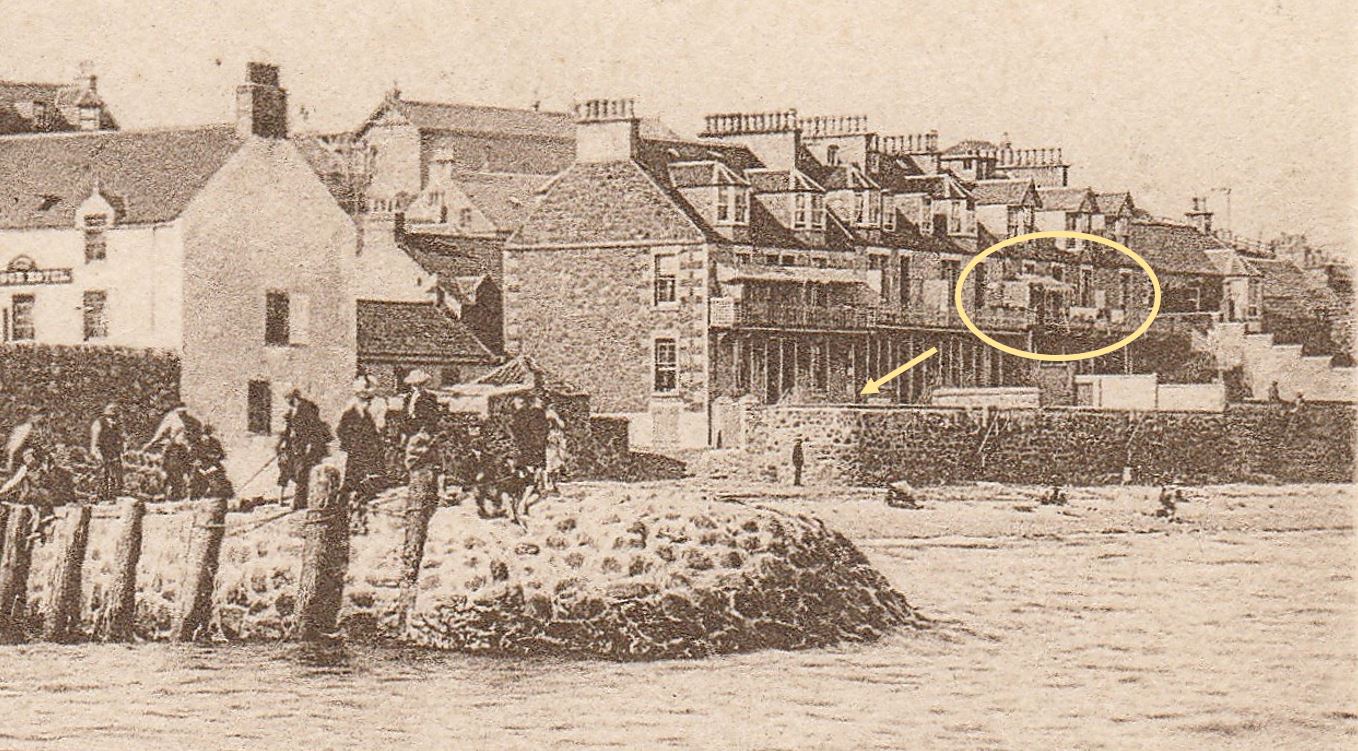
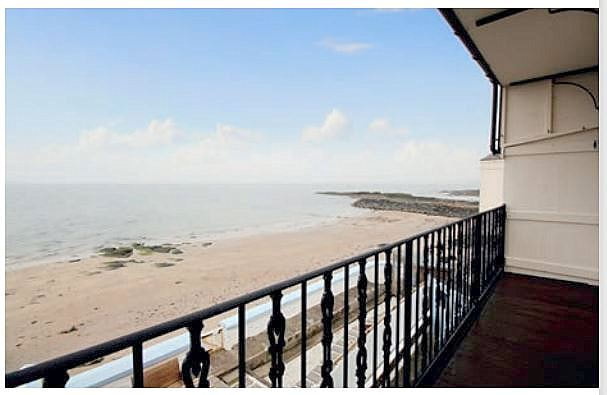
So where was this lady sitting? I believe that this is a covered balcony on the terraced buildings originally known as "Edina View", "Rock View" and "Beach House"  (also known locally as The Barracks). The image below indicates a likely spot looking down to the curved sea wall and beyond to the pier.
​
Picture

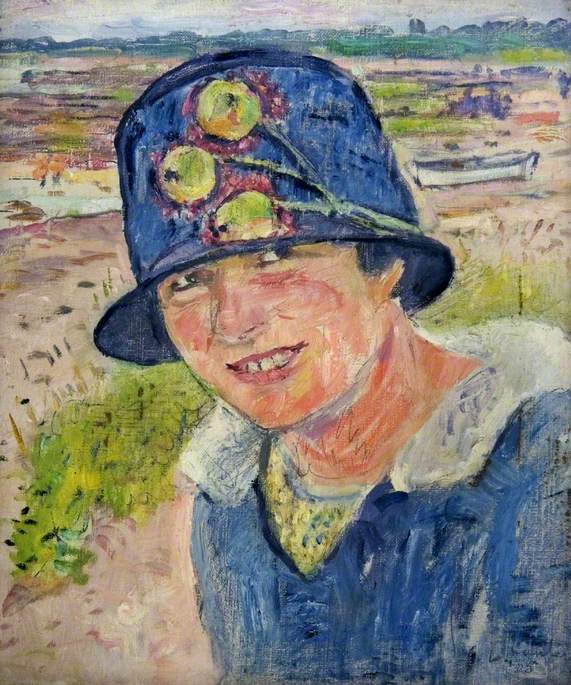
The female sitter in the distinctive hat would appear to be the same lady captured in another of Hunter's artworks - The Blue Hat (oil on canvas, 1925), shown below. The hat has the same shape and same design detail. The background again looks very much like it is Largo Bay.
​
Picture
Photo credit: Glasgow Life Museums

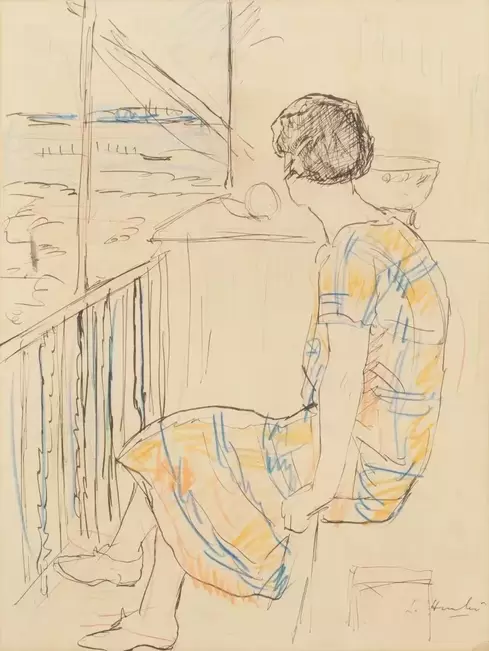
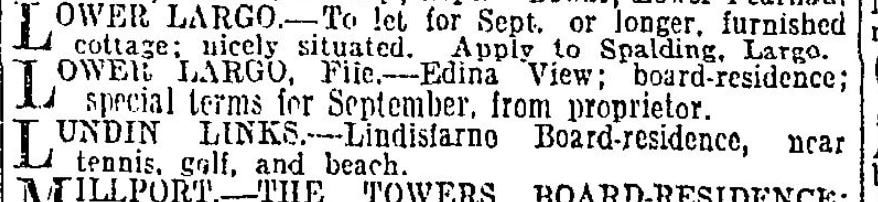
Another sketch of Hunter's (below) was also made at 'The Barracks' location. Also featuring a short-haired woman, this balcony looks a bit more open than the one in the top image but it features the distinctive railings of these flats. Properties within Edina View, Rock View and Beach House were let to summer visitors in the mid-1920s. An example advert is further below, from 29 August 1924 Scotsman. It may be that George Leslie Hunter stayed in the building on one or more of his visits. However, one venue where he certainly stayed on more than one occasion was the Belmont Hotel. He is known to have been a guest there in the summers of both 1924 and 1925. The hotel was gutted by fire in January 1926, so clearly Hunter would have resided elsewhere when he returned to Largo in summer of 1926. If you know of other Largo properties where he might have stayed - please comment. 

Picture
Picture
Picture
With thanks to Jill Marriner for background information.
2 Comments

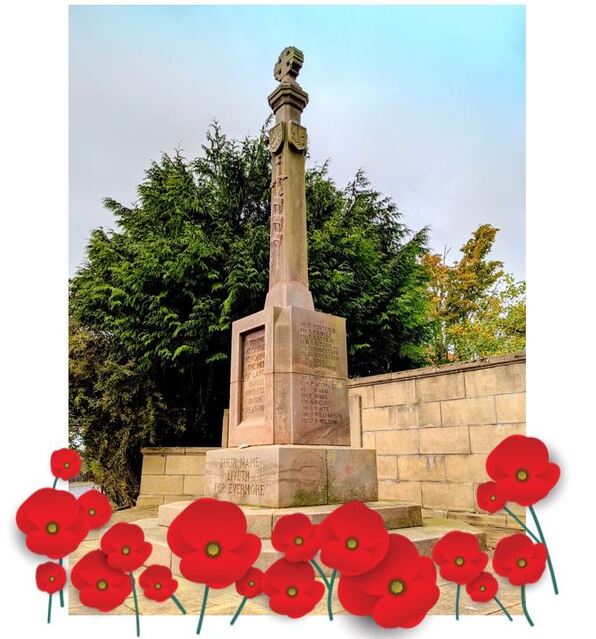
Remembrance 2023

10/11/2023

4 Comments

 
Picture

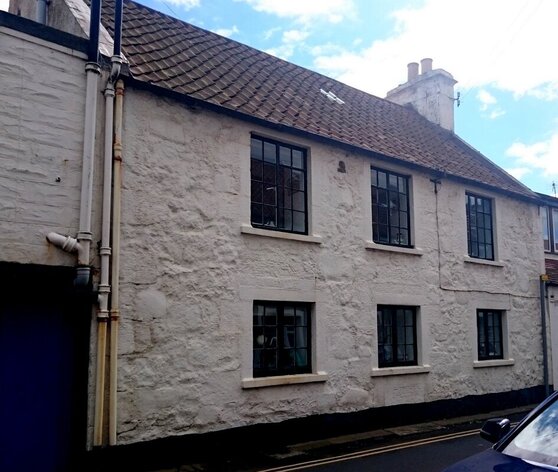
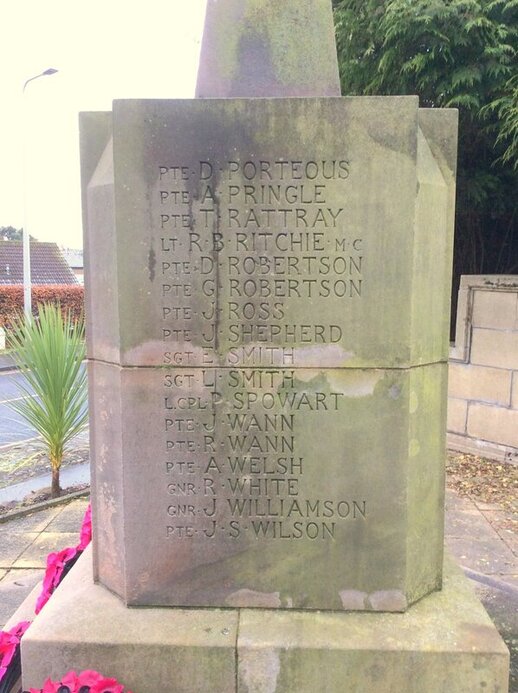
This Remembrance Day the blog will focus in on just one of the names inscribed on Largo War Memorial - that of Sergeant Edward Smith. Born at the Temple, Largo on 14 September 1895 to fisherman Charles Smith and his wife Agnes Turnbull, Edward was their sixth son and one of eleven siblings, all of whom were alive at the time of 1911 census. In that census, aged 15, Edward was described as an apprentice plasterer. Elder brother David was also a plasterer. The family were living at Berwick View on Lower Largo's Main Street. Now known as Crampie (pictured below) this is the house which still displays a 'sun plaque' on its external wall. 

Picture

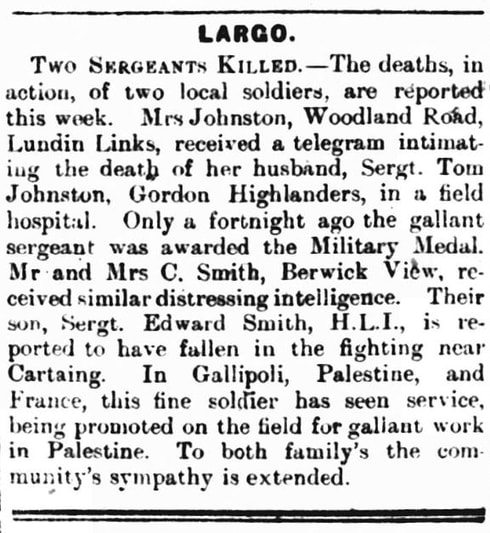
​Edward Smith joined the 1st/6th battalion of the Highland Light Infantry soon after the outbreak of war. He fought in Gallipoli and Palestine before later serving in France. After a visit home in August 1918, Edward was in northern France the following month at the time of the recapture of Cantaing. It was there that he was killed on 1 October 1918. The 17 October 1918 Leven Advertiser reported on the death of Edward, along with that of another local soldier, Thomas Johnston (see below). Edward is buried at Cantaing British Cemetery in France.

Picture
Picture

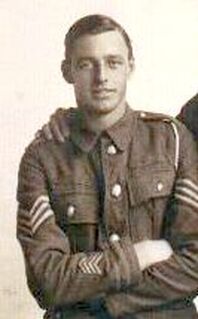
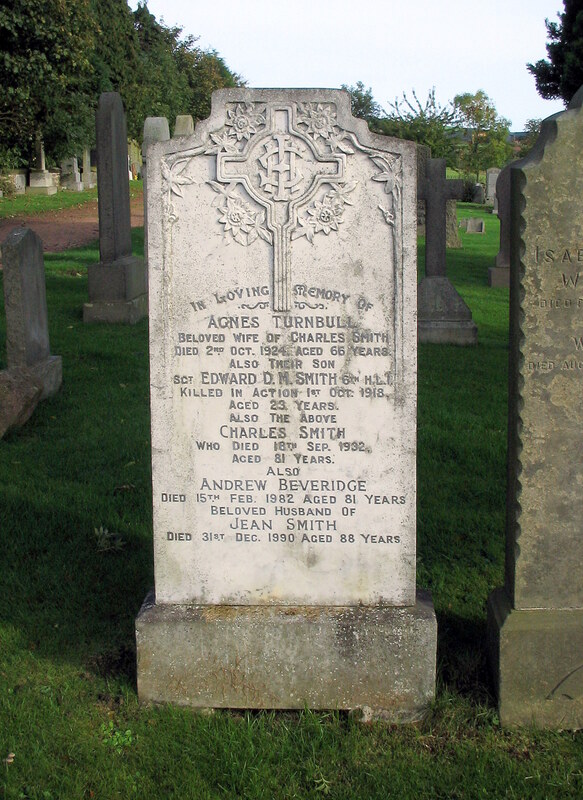
Edward (pictured above courtesy of Ancestry.co.uk) is also remembered at Largo cemetery on the grave of his parents (see below) as well as on Largo War Memorial.

Lest we forget.

​
Picture
Picture
4 Comments

Ring Rock

3/11/2023

4 Comments

 
Picture

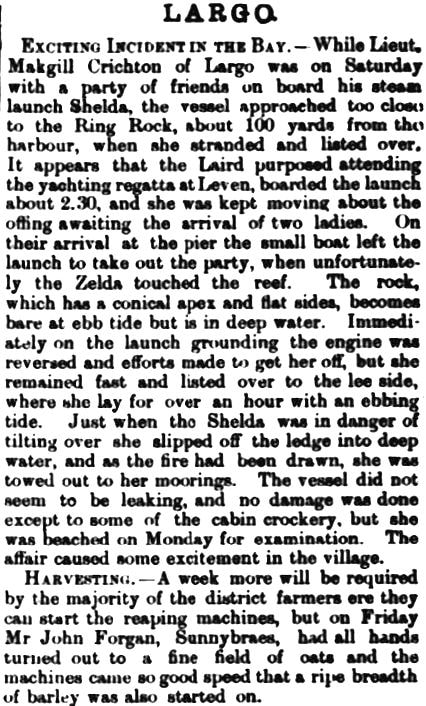
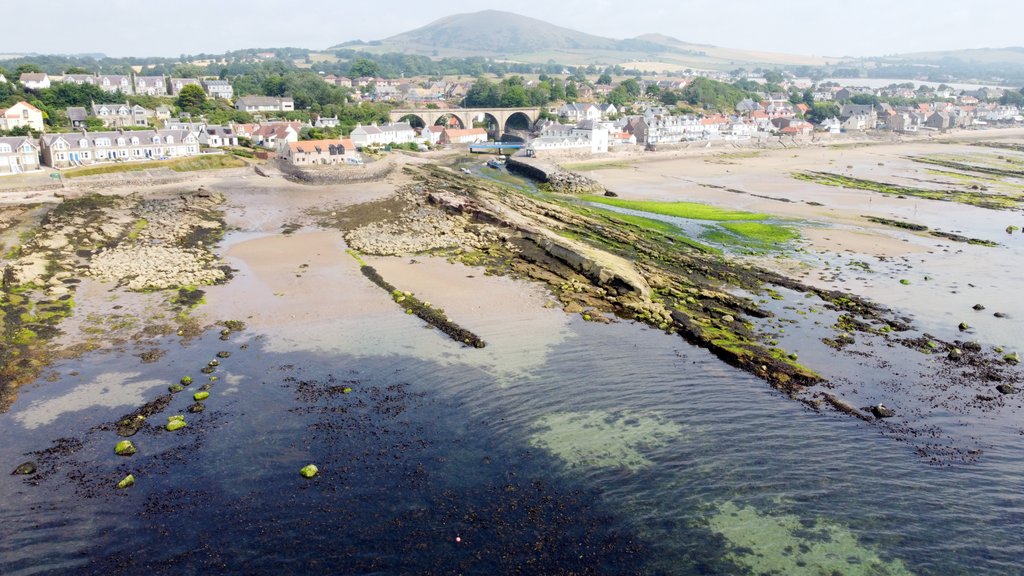
Following on from the previous post about Largo House, the Eagle Gate Lodge and Major Makgill Crichton, the article above from the 4 September 1902 Leven Advertiser reports on an "exciting incident in the bay". Makgill Crichton had recently succeeded to the estates of Largo, Lathrisk, Monzie and Barelaw and his title was Lieutenant (the rank at which he had served in the 78th Royal Highlanders). Recently married, he owned a steam launch, named Shelda or Zelda (both names are used in the article). It was upon this vessel that he and his wife had arrived in Largo to take up residence earlier in 1902.

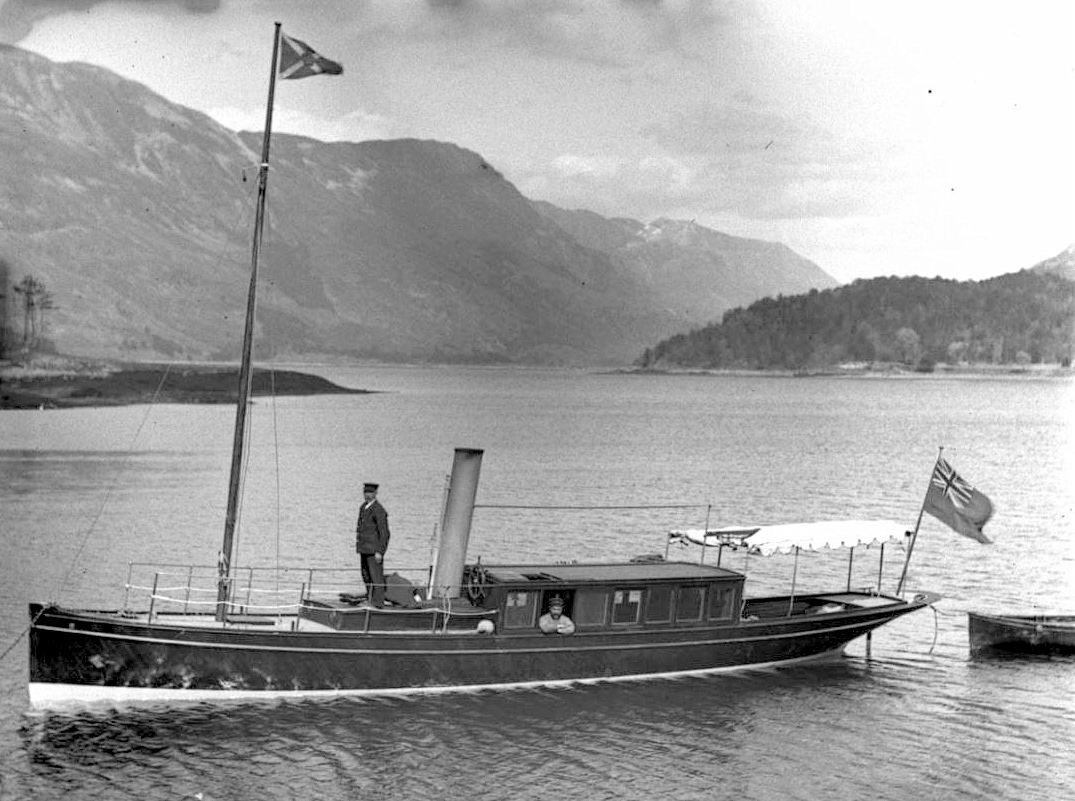
However, on 30 August 1902, while waiting off Largo Harbour for additional passengers, ahead of going on to a yachting regatta at Leven, the Shelda/Zelda had an accident. She caught the Ring Rock about 100 yards from the harbour and began to list. The vessel was unable to move for about an hour until the ebbing tide eased her off the rock. The Ring Rock was described as having "a conical apex and flat sides". The Shelda/Zelda survived the incident relatively unscathed, aside from some damage to cabin crockery. The photograph below shows a similar steam launch, the 40-feet Netta, captured in 1899 by Lady Henrietta Gilmour of Montrave (courtesy of the University of St Andrews Special Collection). 
​
Picture
Picture

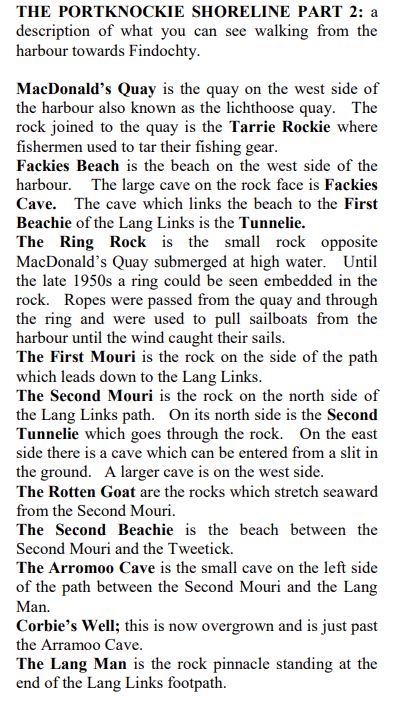
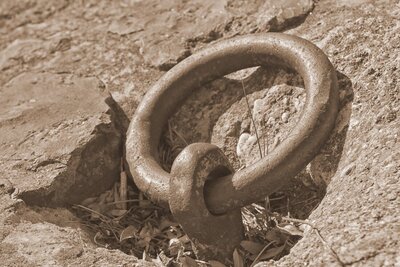
No doubt Shelda/Zelda was not the first, nor the last vessel, to fall foul of the Ring Rock. So, what was the Ring Rock? A clue to how it was used could come from another Ring Rock, at Portknockie in Moray. Their heritage leaflet tells of the Ring Rock "off the mouth of the harbour" which was "used to kedge off sailing boats when the wind was light or adverse". Another local leaflet further describes the named rocks at Portknockie shoreline - see below - telling of how their Ring Rock once had a ring embedded in it. In their example, "ropes were passed from the quay and through the ring and were used to pull sailboats from the harbour until the wind caught their sails". 

​"Kedging" or "warping" is a technique for manoeuvring engineless vessels in calm conditions, including in and out of tight harbours, to a point where their sails could better catch the wind, by hauling on a line attached to a kedge anchor, a sea anchor or a fixed object. Small boats might simply throw the anchor in the intended direction of progress and haul in after it settles, pulling the boat in that direction. Larger vessels could use a smaller boat to carry the anchor ahead, drop it and then haul. An alternative approach would appear to be to used a fixed point outside the harbour as part of this process. If you have more information about the use of Largo's Ring Rock, please leave a comment.
​
Picture
Picture

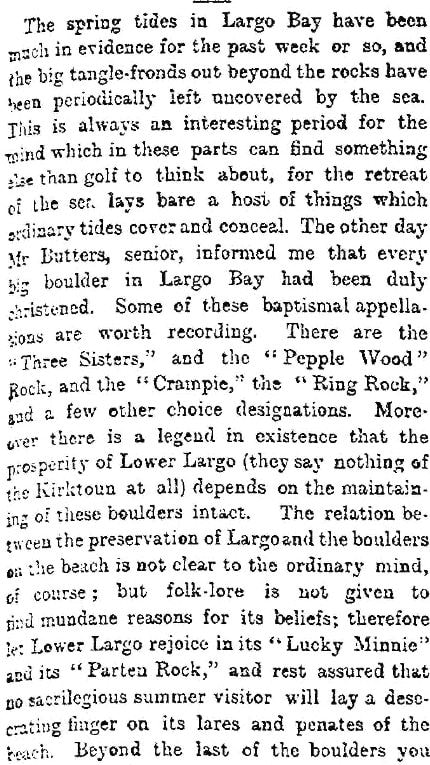
The Ring Rock is just one example of a named rock or boulder on the Lower Largo shore. Below is a fascinating excerpt from 26 August 1893 Glasgow Herald. In addition to the Ring Rock, the article lists the following other names:

Three Sisters
Pepple Wood
 
Crampie
Lucky Minnie
Parten Rock
 (likely intended to be Partan, the Scots word for a crab)

The piece explained that the spring tides in Largo Bay (i.e. tides just after a new or full moon, when there is the greatest difference between high and low water) had uncovered more of the shore than normal. Mr Butters senior - James Butters a fisherman - had explained that every large boulder in Largo Bay had been christened. 
​
Picture
Picture
Picture
Picture

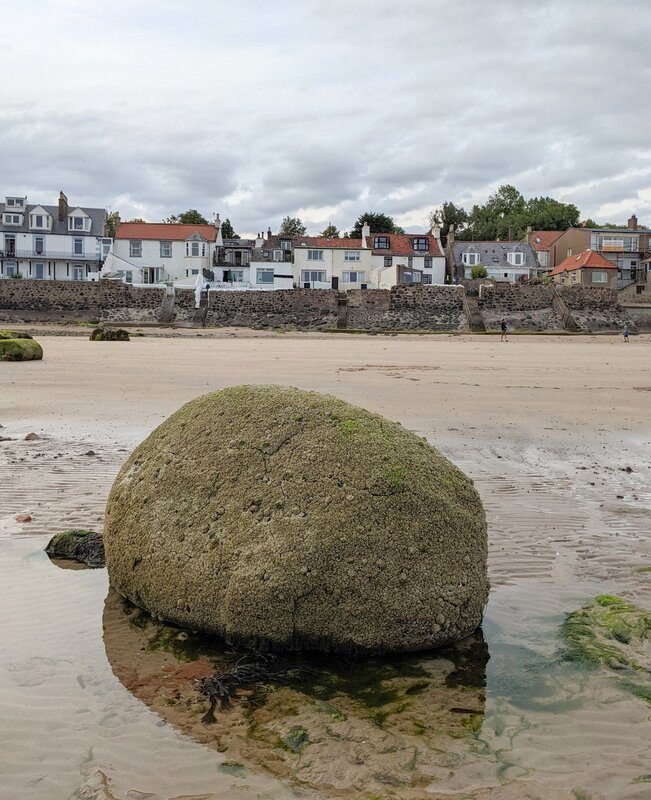
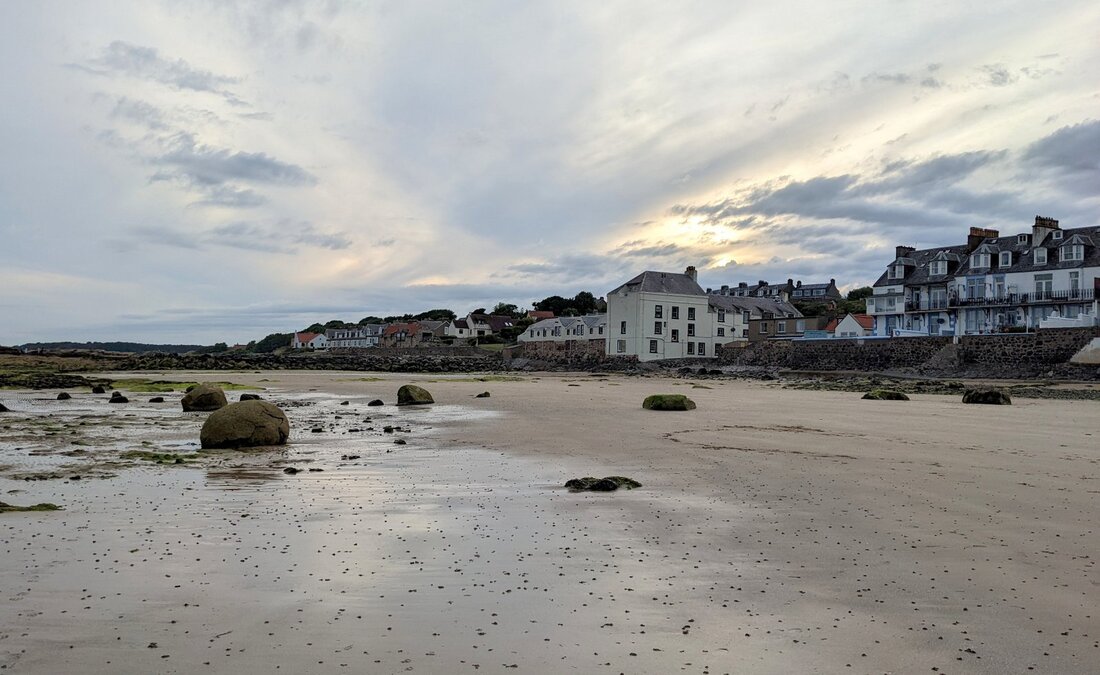
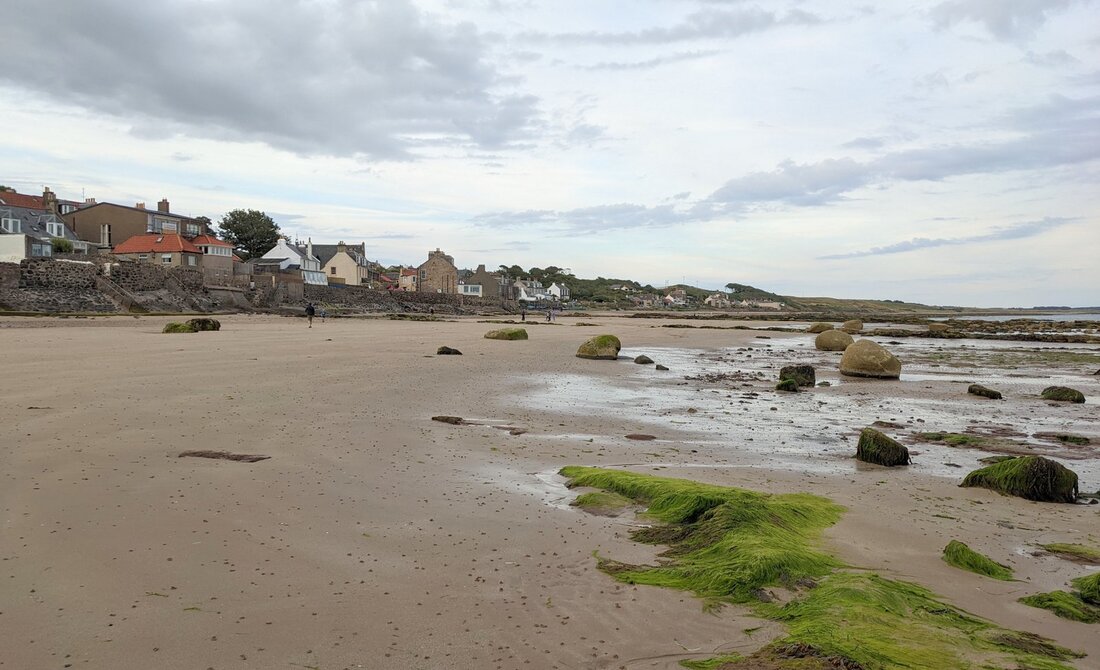
Can you help match the names mentioned in the 1893 article to the boulders that we see on the beach today?  If you can - please comment. Likewise if you are aware of other named rocks not mentioned in the piece - such as the ​Punch and Judy rocks at the Temple, please comment, so that this very localised information (which tends not to be formally recorded) can be saved for future generations.
​
4 Comments

    About

    This blog is about the history of the villages of Lundin Links, Lower Largo and Upper Largo in Fife, Scotland. Comments and contributions from readers are very welcome!

    Search

    There is no in-built search facility on this site. To search for content, go to Google and type your search words followed by "lundin weebly".

    Contact

    Categories

    All
    Antiquities
    Beach
    Boarding Houses
    Business
    Churches
    Clubs And Societies
    Drummochy
    Facilities
    Farming
    Fishing
    Golf
    Houses
    Keil's Den
    Largo Law
    Lower Largo
    Masseney Braes
    New Gilston
    People
    Railway
    School
    Shops
    Standing Stanes
    Streets
    Tourism
    Upper Largo
    Viaduct
    War

    Archives

    November 2025
    October 2025
    September 2025
    August 2025
    July 2025
    June 2025
    May 2025
    April 2025
    March 2025
    February 2025
    January 2025
    December 2024
    November 2024
    October 2024
    September 2024
    August 2024
    July 2024
    June 2024
    May 2024
    April 2024
    March 2024
    February 2024
    January 2024
    December 2023
    November 2023
    October 2023
    September 2023
    August 2023
    July 2023
    June 2023
    May 2023
    April 2023
    March 2023
    February 2023
    January 2023
    December 2022
    November 2022
    October 2022
    September 2022
    August 2022
    July 2022
    June 2022
    May 2022
    April 2022
    March 2022
    February 2022
    January 2022
    December 2021
    November 2021
    October 2021
    September 2021
    August 2021
    July 2021
    June 2021
    May 2021
    April 2021
    March 2021
    February 2021
    January 2021
    December 2020
    November 2020
    October 2020
    September 2020
    August 2020
    July 2020
    June 2020
    May 2020
    April 2020
    March 2020
    February 2020
    January 2020
    December 2019
    November 2019
    October 2019
    September 2019
    August 2019
    July 2019
    June 2019
    May 2019
    April 2019
    March 2019
    February 2019
    January 2019
    December 2018
    November 2018
    October 2018
    September 2018
    August 2018
    July 2018
    June 2018
    May 2018
    April 2018
    March 2018
    February 2018
    January 2018
    December 2017
    November 2017
    October 2017
    September 2017
    August 2017
    July 2017
    June 2017
    May 2017
    April 2017
    March 2017
    February 2017
    January 2017
    December 2016
    November 2016
    October 2016
    September 2016
    August 2016
    July 2016
    June 2016
    May 2016
    April 2016
    March 2016
    February 2016
    January 2016
    December 2015
    November 2015
    October 2015
    September 2015
    August 2015
    July 2015
    June 2015
    May 2015
    April 2015
    March 2015
    February 2015
    January 2015
    December 2014
    November 2014
    October 2014
    September 2014
    August 2014
    July 2014
    June 2014
    May 2014
    April 2014
    March 2014
    February 2014
    January 2014
    December 2013
    November 2013
    October 2013

    Links

    Largo Baywatch Blog
    Fife Family History Society
    ​
    Polish Parachute Brigade Info​

    RSS Feed

Powered by Create your own unique website with customizable templates.