VINTAGE LUNDIN LINKS AND LARGO
  • Blog

Hope you will like the view

14/11/2025

1 Comment

 
Picture
Picture

The sender of this 1903 postcard hoped that Miss Allan would like the view of Drummochy. On the reverse, the writer continued... 

Got home all right and found Father and Mother well. Raining cats and dogs. Hope it will fair before morning.

There's certainly lots to like about the view and many details worth highlighting, many of which are long gone. The fishing nets out drying on tall posts, next to the Net House, are marked (1). Feature (2) is the lost buildings of Cellar Brae of which only traces remain today. Detail (3) is a short section of stone wall situated at the turn in Drummochy Road (shown in more detail further below), which presumably acted to control to flow of road users at a blind corner. 

At point (4) you can see the tracks in the sand where carts crossed the burn, alongside a couple of mooring posts. (5) is a gate - a partial barrier to slow movement towards the footbridge at (6). Detail (7) is a very productive looking garden full of a growing crop, while (8) are washing lines and posts. Note that these rear gardens, sitting at a much lower level than Woodlands Road (9) above, would have been cut short when the viaduct (10) was constructed in the 1850s. In the circa 1900 image the viaduct was less than 50 years old. Now it has been out of use for longer than that.
​
Picture
Picture

It's incredible to think that these streets were once completely devoid of motor vehicles. How much quieter and slower the pace of life must have been. It's also interesting to see how patches of land once put to practical and productive use growing food or drying laundry are now used for more leisurely pursuits, such as storage of pleasure boats or benches and summer houses to sit out in. The image below shows a mid-point in that transition, where the nets are still being dried but use of outdoor spaces for relaxation has increased. The wooden footbridge has been replaced by the road bridge and the days of the railway are numbered.

Picture
1 Comment

Pitch and Putting Green

23/5/2025

0 Comments

 
Picture
 
The Pitch and Putting Green in the above postcard view was laid out in 1923. The development was instigated by Robert C. Paxton of Homelands. He had been Captain of Lundin Golf Club 1907-08 and remained influential at the club, as well as within the wider community. The small piece below from the 26 April 1923 Leven Advertiser notes that Paxton was "again to the fore with an improvement scheme". He had provided and equipped a recreation hut for ex-Servicemen in 1920, among other public and private gifts.
​
Picture
Picture

The twelve-hole course was mapped out by Kilmarnock-born, former rancher in Texas, Robert Paxton (pictured below), who lived just across the road from the course at Homelands and David Patrick, the local golf club maker who also lived adjacent to the course. Situated between the railway line and Station Road (now Links Road), the layout of the little course can be seen clearly in the detailed image above.

Picture

David Patrick lived and worked from his home on Golf Road overlooking the pitch and putting course. It can be seen on the right of the map extract below, where the short street named Golf Road meets the railway line. The site of the pitch and putting course is bounded by the railway to the south and the curve of Station Road to the north. The 18th hole of Lundin Golf Course is marked just below the railway line (and the 1st hole below that).

Picture

The 5 July 1923 Leven Advertiser below covered the inauguration of the pitch and putting course. The first ball was struck by Sheriff-Principal James Alexander Fleming K.C. of Strathairly House (who had been Captain of Lundin Golf Club 1919-20 and who had in 1921 unveiled Largo War Memorial). A total of 172 people went on to take part in a competition on the course that evening. The piece also notes that William Yule was appointed greenkeeper.

Picture
Picture

By 1936, the greenkeeper was Mr A Kennedy. The article above from 25 April 1936 Fife Free Press tells of how he had removed many of the whin bushes from the course, the bushes having been the cause of many a lost ball. The 11 June 1935 Leven Advertiser below highlighted how few small seaside resorts could boast such a variety of facilities for all ages as Lundin Links. It also notes how few pitch and putting courses there were at the time.

Picture

A booklet published by the Largo Parish Community Council around the time, entitled "Lundin Links and Largo The Scottish Riviera - Illustrated Guide" stated the cost of 2d for one round of pitch and putt, or 3d with use of clubs and ball included. Quite a bargain in comparison to a round of golf!
​
Picture
Picture
0 Comments

History of Belmont Temperance Hotel

4/10/2024

0 Comments

 
Picture
Picture

The Belmont Temperance Hotel, pictured in the centre of the image above, once stood adjacent to Largo railway station. The snippet above from the 8 August 1890 East of Fife Record, details the circumstances that would eventually lead to the building of the hotel. The piece highlighted the "enormous" demand for accommodation in Largo but also pointed out the lack of options for those looking for only a short stay. While a couple of hotels existed, these had a small number of rooms, plus, these were "licensed premises" and many visitors at the time would have objected to that. 

The temperance movement, which encouraged abstinence from alcohol, had been established for decades. The local lodge of the Independent Order of Good Templars - the Robinson Crusoe Lodge - had been established in 1872 and was still very active in 1890. Lundin Mill had once had its own small Temperance Hotel. Against this backdrop, a proposal was made to build a new temperance hotel. Specifically, it was to be close to the beach at Lower Largo. By the summer of 1890 it was thought that a suitable site at Drummochy had been identified. However, that particular plan did not come to fruition and teetotal visitors had to wait a little longer.

There was no record of a temperance hotel in the census of 1891 but by July 1893, the local papers were listing summer visitors staying at the Belmont Temperance Hotel on its elevated position between Largo Station and the north side of Main Street. A storm in August 1893 resulted in a Norwegian vessel running aground at the Temple. Her crew were given hospitality at the Belmont Hotel under the care of hotelkeeper Mary Carswell. The 1895 valuation roll shows that Andrew Masterton, joiner, was the property owner, suggesting that he was responsible for its construction. 

Picture

Soon afterwards, James Houston became tenant hotelkeeper. The advert above dates to 1898 and appeared in the 28 July Leven Advertiser. It would seem that James was not committed to the temperance aspect of the establishment. In April 1898, he applied to the County Licensing Court for a six-day hotel license for the 11-bedroom hotel. James explained that he was acting upon the request of travellers, boarders and summer visitors who were aggrieved at having to "send outside for refreshments". Apparently that Easter a group of a dozen visitors who were all in the hotel one night drew up a petition asking for this "much required license" to be granted. The license was not granted by the court, the members of which believed that there was demand for a temperance establishment. An extract from the 22 April 1898 East of Fife Record notes the discussion at the court which includes the comment that "one place should be reserved for temperance people". 

Picture

Unsurprisingly, the following year James Houston "removed" from the hotel. A sale of his household furniture and the hotel furnishings took place. The items available were listed in the 9 November Leven Advertiser. The list below gives an impression of what the hotel interior would have been like with its 12 feet dining table, marble top basin stands, brass bedsteads, brass stair rods and paraffin lamps.

Picture

In 1900, George Cumming, a draper who had decided to turn his hand to hotelkeeping, took charge of the Belmont. In fact, George was the brother of the well-known Leven draper Alexander Cumming, who began his long-standing business in 1897 (purchasing his shops on Leven's High Street and Bank Street in 1914). George had married Isabella Mill in 1898 and their son George was born in the Belmont Hotel on 28 March 1901. The family were recorded there in the 1901 census along with George's 80-year-old mother Agnes, one boarder (a commercial traveller) and one servant.

George Cumming's time at the Belmont was also short-lived. This may have been precipitated by the sad and shocking death of a guest in the summer of 1902. A young man who had been staying at the hotel for a few weeks was found dead between Strathairly and Viewforth, having shot himself in the head. George Cumming decided to return full-time to drapery and established a business in Colinsburgh. By the 1911 census he and his wife had five children and his mother (now aged 91) was still living with them. Agnes Cumming lived to be 100 and died in November 1920. Some fascinating details about her life are detailed below from the 30 June and 15 November 1920 Dundee Courier.


Picture
Picture

​
Picture

The 1 April 1903 Scotsman newspaper ran the small advert above stating that the hotel was "under new management". A W Urquhart was named as proprietor. However, by 1906, it was all change once again when there was another auction of furniture from the hotel (see notice below from 26 April 1906 Leven Advertiser).

Picture
Picture

Finally, a period of stability began when Miss Margaret Pippet Sawyer and Miss Mary Elizabeth Sawyer took over the Belmont in 1906. The sisters were born in the English coastal town of South Shields and were daughters of a mariner turned hotelier. Before coming to Largo they had lived in both Leith and North Berwick (where the family had run a temperance hotel). The article above detailed one of their early bookings at the Belmont - a tea party for a temperance group (30 June 1906 Fife Free Press). The advert below dates to their era. At the time that the 1911 census was taken, a 29-year-old Margaret Sawyer (also known as Marguerite) was the only resident at the Belmont Hotel. She and her sister later moved to Elie, where they ran various holiday accommodation over the years, both eventually marrying.

Picture

Andrew Masterton, who had owned the property since it was first built, passed away in 1913. The ownership of the Belmont Temperance Hotel passed to his daughter Catherine Clayton (nee Masterton).  She was owner listed on the 1915 valuation roll and a William Francis Ireland was tenant hotelkeeper. Sadly, the hotel was advertised for let in 1916 and the reason given was "death of tenant" (see advert below). William Ireland had died at the hotel on 16 May that year.
​
Picture

The 1920 valuation roll had Mrs J MacDougall and Miss J MacDougall as tenants with Catherine Clayton still the property owner. The 1921 census tells us that this was Jessie MacDougall and her daughter Jessie Mary. Also present for the census were four visitors and a servant (house and table maid). In December 1921 the wedding reception of the only daughter of the minister of Largo Baptist Church, Rev. Pulford, took place at the hotel. The hotel was advertised for sale in both 1920 and in 1922 (but apparently never sold as Catherine Clayton was still listed as owner in 1925). 

By summer of 1923 the hotel was under new management with Hugh and Janet McLean taking over the reins. During their time in charge, the Scottish colourist George Leslie Hunter was a guest on more than one occasion. Hunter's choice of a Temperance hotel is significant as his friend, art dealer and biographer, Dr Tom J Honeyman was a big supporter of the Temperance Movement. It's fascinating to imagine such a well-known artist producing familiar artworks featuring local scenes from this base - his hotel room full of his art materials, rough sketches and works in progress. 

​The story of the Belmont came to an abrupt end in the early hours of Friday 22 January 1926, when the hotel was gutted by fire. Only Hugh and Janet McLean and their child were occupying the hotel at the time. The "magnitude of the blaze attracted many spectators" in what was a unique spectacle for Largo. Later the same day the report below appeared in the Dundee Evening Telegraph.
​
Picture

A more detailed piece from the 26 January Leven Advertiser described the drama that brought an end to the hotel that had graced Lower Largo for more than three decades.

"In the early hours of the morning Mr McLean was awakened by the insistent barking of his dog and, assuming that something must be wrong, he made investigation, and found the lower part of the building a mass of flames. The occupants promptly made their escape in night attire, and were received at a friend's house."

The Buckhaven and Methil Fire Brigade were called just before five in the morning, however, by the time they arrived it was clear that the hotel was beyond saving and the focus was on protecting the surrounding buildings and railway.  A shortage of water hampered their work and use had to be made of the sea, although this proved to be challenging as the tide was far out and the hotel situated in an elevated position. Seven hours later the fire brigade left but the hotel's interior was completely destroyed, the roof had fallen in and only the walls remained.  The image further below shows the roofless shell of the building, which remained for years. 

Picture
Picture

The side by side maps below show the hotel in 1912 when still standing (left) and the equivalent site in the 1960s (right) when the empty outline of the shell of the building was still marked on maps. The hotel building outline with its sea-facing bay windows is in the centre of the map extracts (below the F.B. which marks the foot bridge over the railway line). Further below are images of some traces of the old hotel which remain on the foot path up to the car park at the old station. A modern private dwelling, aptly named Belmont House, now occupies the plot of the former hotel.
​
Picture
Picture
Picture
0 Comments

1960s Aerial View

26/4/2024

2 Comments

 
Picture

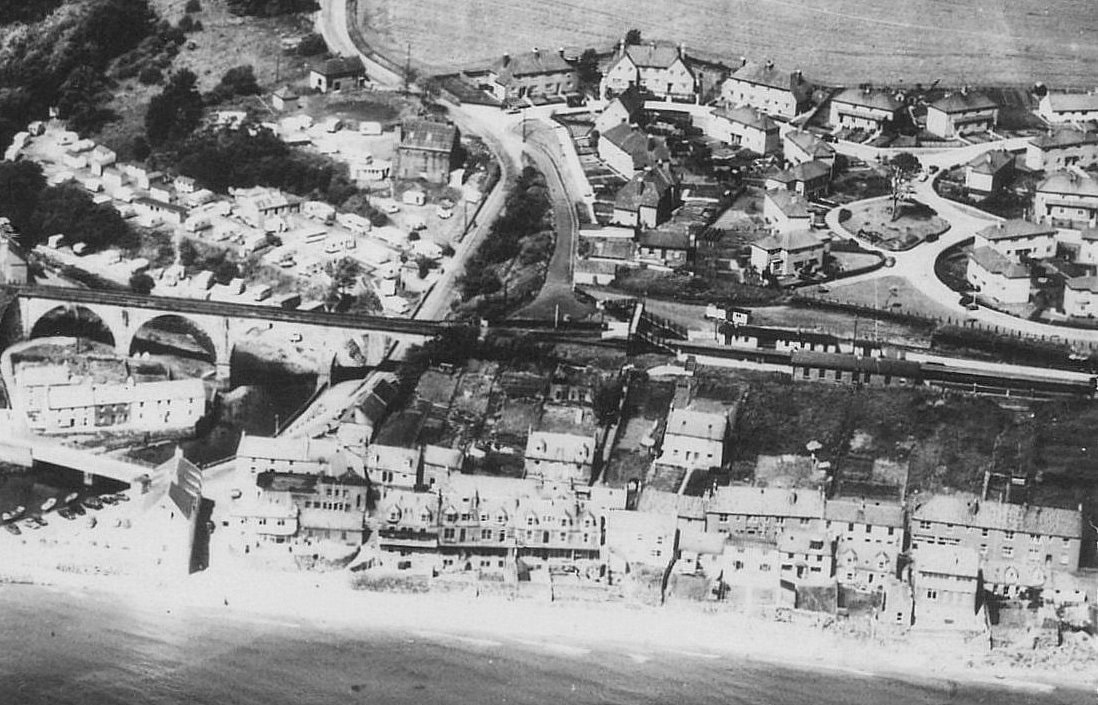
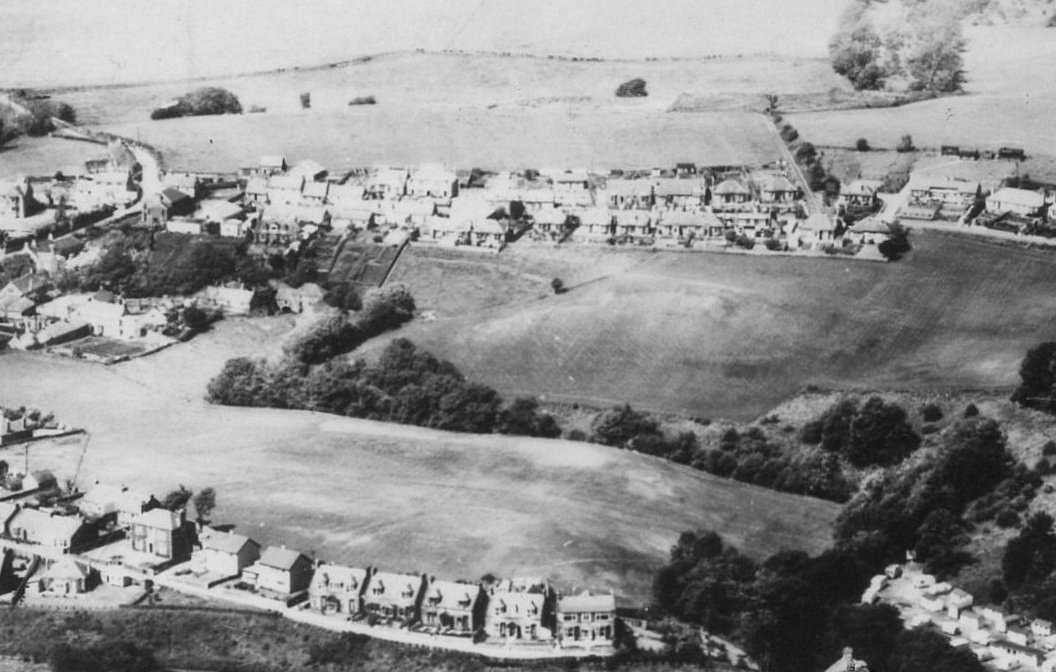
This circa 1965 aerial photograph is a familiar scene albeit with much more open undeveloped space than today. In this blog we will zoom in on a few features of interest and highlight some of the changes over the past six decades. Below is a more detailed view of the viaduct and Largo station with the caravan park and Station Park housing development behind. The first phase of council housing here was 22 homes in the late 1930s. A later phase after the Second World War saw a further fifty houses added. At the time of the aerial photograph, the railway line was reaching the end of its active use but it was prior to the demolition of the station buildings. 
Picture

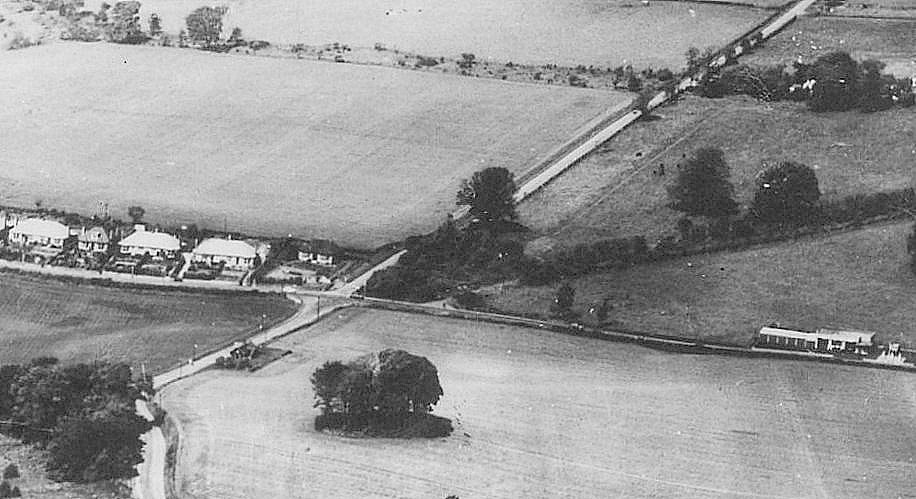
The disused Largo Toll House is also present in the image. In the detailed view below, the Toll House sits alone south of the war memorial cross road, close to a roundel of trees. It is those features that are remembered in the present day street names of Toll Court and The Roundel. The original Toll House was built in the 1840s and demolished in the late 1960s. More on this building to follow in the next post.

Among the other features of note below is the driveway up to Largo House, also known as rhododendron walk. and the garage/service station (the long roadside building on the far right) now known as Mercury Motors. 
​
Picture

The final zoomed in area below is notable for the vast areas of undeveloped green space at the time. The field above the tree-lined burn is now filled by the houses of Keilburn, while the area below the trees is the site of Lundin Mill Primary School built 1973-74 to replace the Crescent Road school built in the late 1850s.

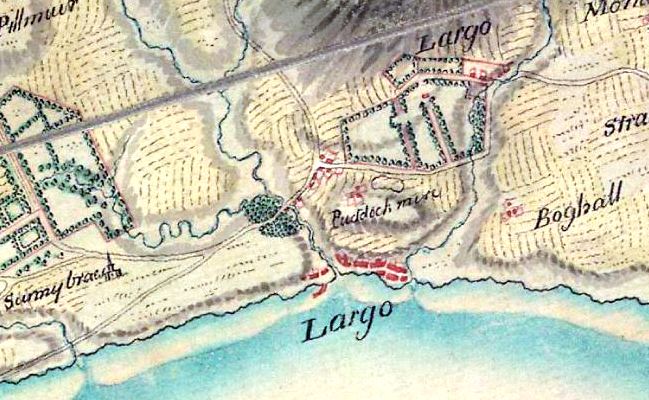
This space was once known as Puddock Mire - see extract from the 1750 Roy map. Puddock means toad or frog and Mire refers to boggy ground.  A swathe of green space remains today on either side of the Keil Burn. The steps up to Largo Road from the mill can just about be made out, just left of centre above the tree line. Finally, the line of trees in the top right quarter of the image below marks the track leading to the one-time local landfill site, which closed in the 1970s. 
​
Picture
Picture

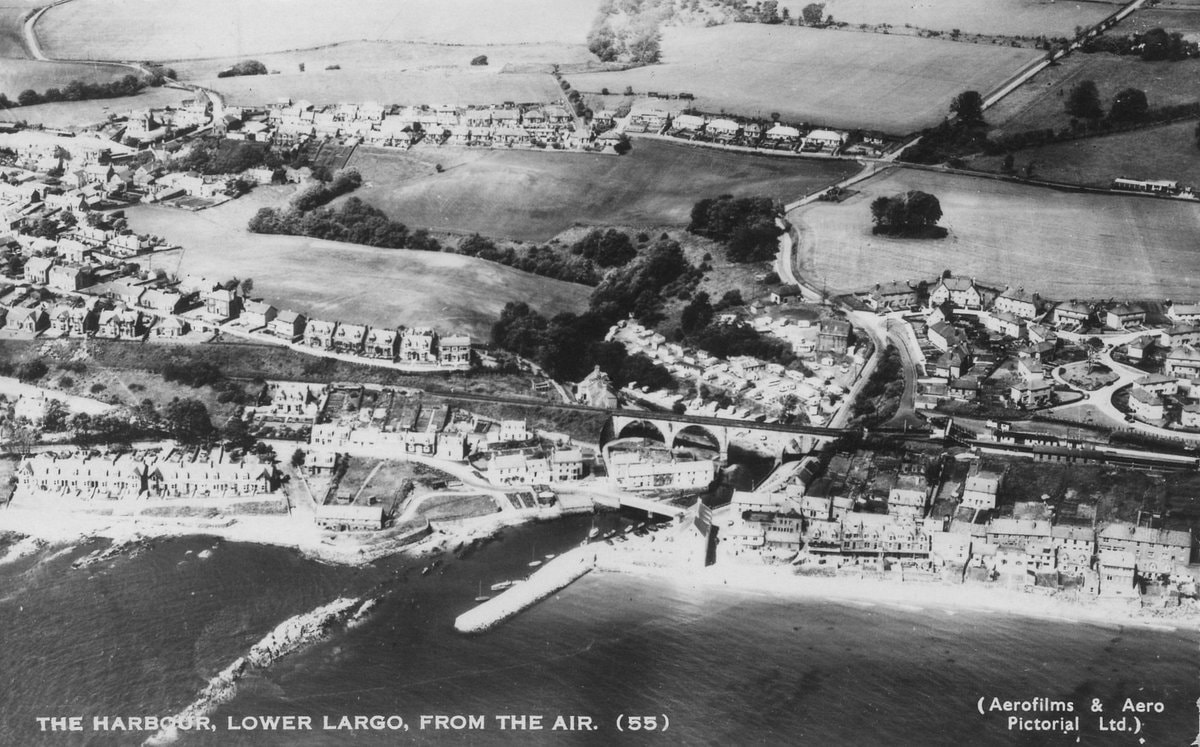
This aerial view was captured by Aerofilms and Aero Pictorial Ltd. This company was the result of the 1958 merger between Aerofilms Ltd (founded in 1919) and Aero Pictorial Ltd (founded 1934). The extensive archive of historical air photographs was bought by Royal Commission on the Ancient and Historical Monuments of Scotland (RCAHMS), English Heritage (EH), and the Royal Commission on the Ancient and Historical Monuments of Wales (RCAHMW) in 2007. The subsequent Britain from Above project conserved 95,000 of the oldest and most valuable photographs in the collection, those dating from 1919 to 1953. Those images were scanned into digital format and made available on this website.
2 Comments

William Grieve (1838-1912)

19/1/2024

0 Comments

 
Picture
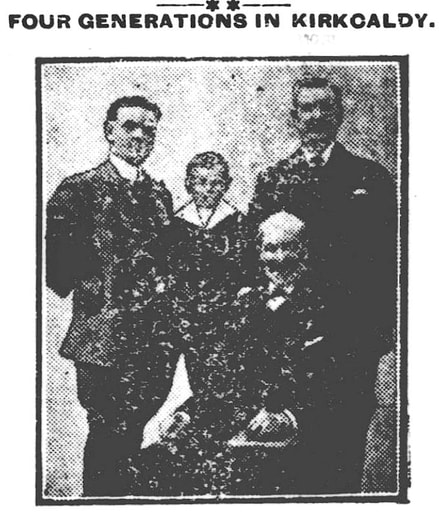
The above photograph of four generations features William Grieve, the eldest in the image, seated in the foreground (published in Fife Free Press on 14 August 1909). This Lower Largo man found fame as a maker of walking sticks and for his highly-detailed carved models made from parrot coal. His life story, which also included 45 years working for the railway, is well worth telling. Standing behind William in the photograph is his son David. On the far left is his grandson, also William Grieve, and in the centre is great-grandson James Norcross Grieve.

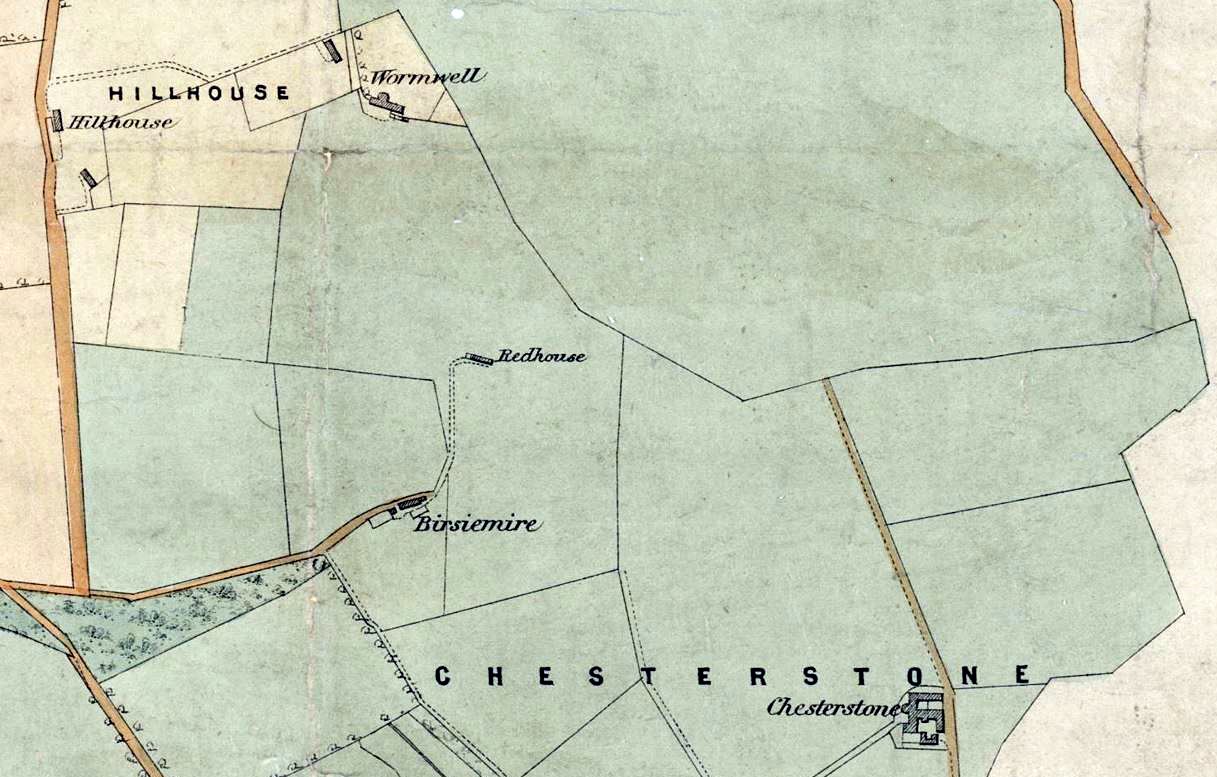
William senior was born in Ceres Parish in 1838, to ploughman David Grieve and his wife Janet Wilson. However, by the age of two, the census of 1841 records William and family at Greenside Bank, within Largo Parish. Greenside Bank was around midway between Montrave House and Teasses House. A decade later, the 1851 census finds the Grieve family at Redhouse within the farm of Chesterstone (shown in the centre of the 1866 map below). Twelve-year-old William was described then as an 'errand boy'.

Picture
Picture

William married Agnes Cunningham on 12 June 1858. The pair were living with William's parents in 1861 in the 'Cote House' at Balcormo Farm. At this point their son David (pictured in the family photograph above when he was around 50) was two years old. Both William, aged 22, and his father, aged 65 were employed as ploughmen, while Agnes combined work as an agricultural labourer with being a new mother. However, the agricultural life was about to end for William and Agnes. By 1871 they were living at the Temple in Lower Largo. William had found employment as a 'railway plate layer' with the Leven and East of Fife Railway Company. In 1878, their son David, by then a spirit dealer and assistant grocer, married Jessie Gillies, the daughter of Largo fisherman Alexander Gillies.
​
Picture

Meanwhile, William's talent for carving parrot coal developed. Parrot coal (also known as 'cannel coal') is more compact that ordinary coal. The term 'parrot' coal apparently came from the noise it made when burned - like the clicking sound a parrot makes with its beak. This type of coal, which occurred in Fife among other places, was easy to work and could be highly polished. It was durable and had an attractive marble-like finish. Coal carving had long existed in many places but particularly flourished in Fife in the second half of the nineteenth century. 

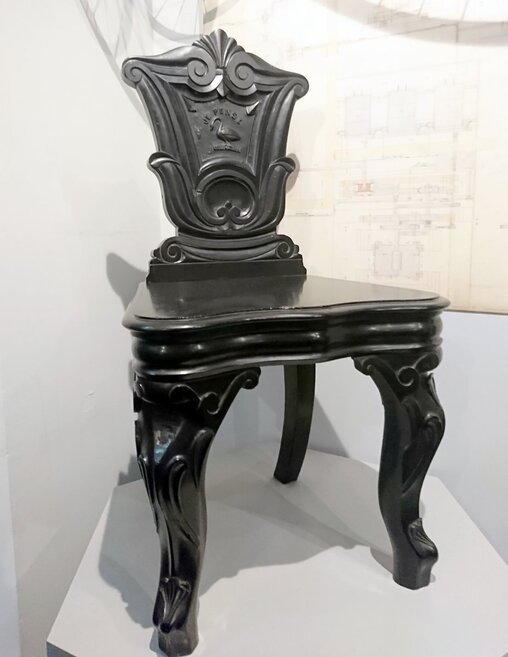
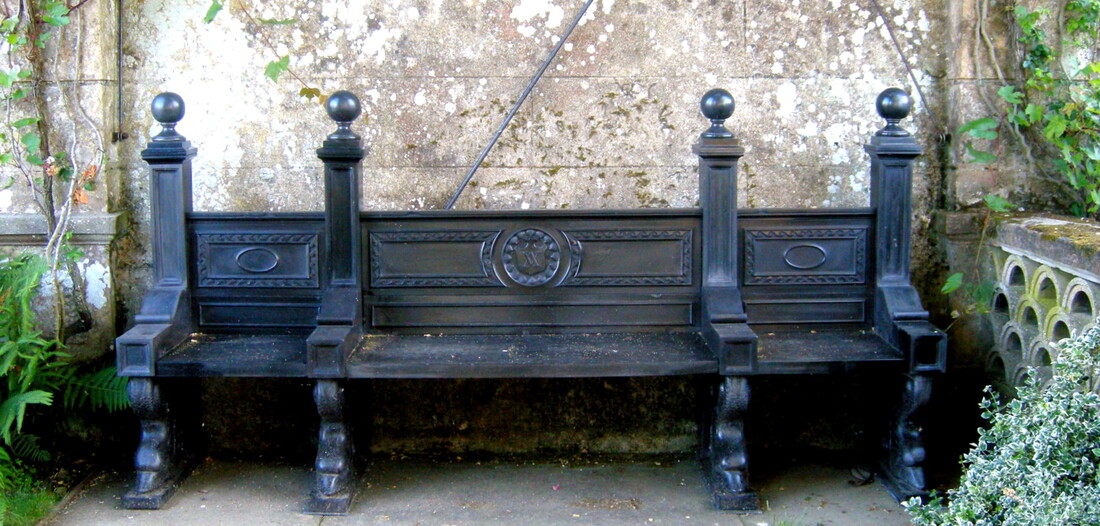
Sometimes, large items such as pieces of furniture were made from the material. An example can be seen today at the Kirkcaldy Galleries - the parrot coal chair pictured above. This chair was made in 1855, by West Wemyss stonemason Thomas Williamson. It was part of a set of two chairs and a table made by Williamson for the Wemyss family. It features the Wemyss family motto 'Je Pense' and a swan, which features on the family crest. Below is a garden seat also made by Williamson which 
was commissioned by Prince Albert. It was exhibited at the Great Exhibition in 1851 and can still be seen at Osborne House on the Isle of Wight. 

Picture
Picture

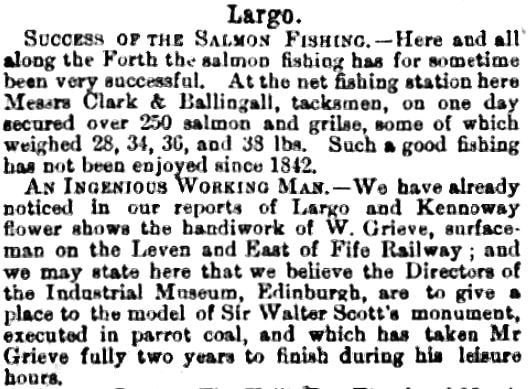
William Grieve's parrot coal creations were of a smaller-scale and more intricate form. The above from the 17 August 1876 Fife Herald describes his model of Sir Walter Scott's monument. This piece took two years to complete and it was hoped that it would find a place in a museum. That same summer, Mr Grieve exhibited his work at flower shows in both Largo and Kennoway. One model displayed was a pasteboard and floral design of the Coventry Cross but it was the Scott Monument parrot coal piece that won first prize.

Picture

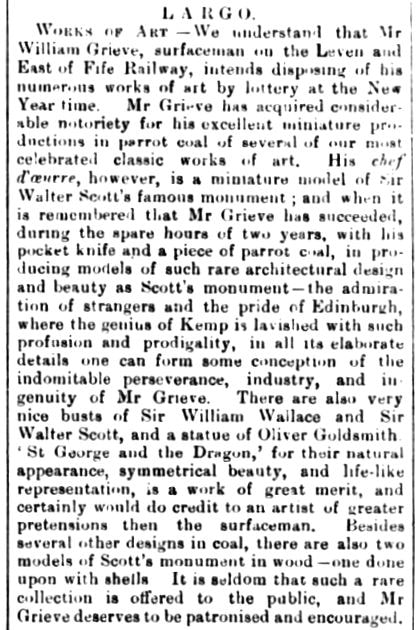
By the end of 1876, the East of Fife Record (1 December above) reported that William intended "disposing of his numerous works of art by lottery". His "miniature productions in parrot coal of several of our most celebrated classic works of art" had become well-known by this time.  Other subjects depicted in coal by Grieve included busts of Sir William Wallace and Sir Walter Scott, a statue of Oliver Goldsmith and a representation of St George and the Dragon. Mention is also made of a wooden model of Scott Monument decorated with shells. I wonder who acquired these pieces and what became of them. ​Newspaper archives tells us that, three years later, in August 1879 when the Largo Museum opened, some examples of Grieve's parrot coal models were among the exhibits.

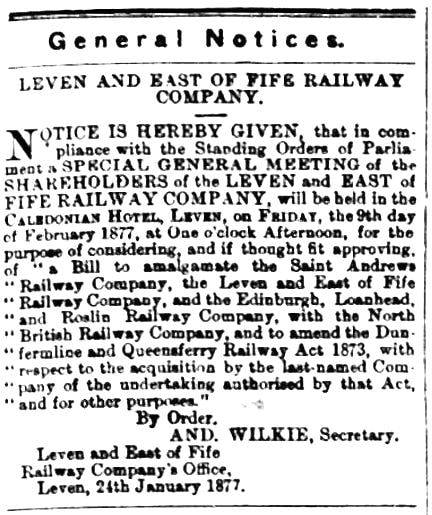
In the meantime, the railway (William's employer) had transferred from the Leven and East of Fife Railway Company to the North British Railway Company. The notice below, from 1 February 1877 Fife Herald, advertises a Special General Meeting of the shareholders to discuss the proposal. It was unanimously agreed to and the transfer took place on 1st August 1877.

Picture

​In 1881, William was described as a 'Railway wire fencer', his wife was a 'Railway gate keeper' and they had a nine-year-old daughter, named Agnes. Their son David was now a grocer in Kirkcaldy and had developed a keen interest in model yachting. David and his wife Jessie had three young children, including William junior. Ten years later, in 1891, William senior was described as a 'Railway surfaceman' and was living in Railway Cottage at the Temple with his wife, daughter and niece. 

​William's wife, Agnes, died in 
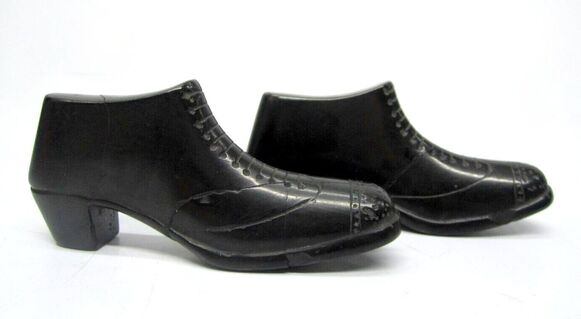
1899 but he continued to live in Railway Cottage and to work for the North British Railway Company. In 1901 he was described as a 'Railway fencer' and was living with niece, who acted as housekeeper for him. In 1905 William was a 'gatekeeper' for the North British Railway Company. In the 1911 census, William Grieve was still living at Railway Cottage, aged 72, a widower and was described as a 'retired railway foreman fencer'. His niece continued as act as his housekeeper. William died on 27 May 1912 at Railway Cottage, Temple, Largo aged 73. ​I wonder what other subjects he carved from coal during his lifetime. Surely train engines must have been among his works? Or perhaps a depiction of Robinson Crusoe? Or some simple objects like the shoes featured below? If you know more about William or his carvings, please leave a comment.

Picture
0 Comments

Rollo Villa

5/5/2023

0 Comments

 
Picture
Picture

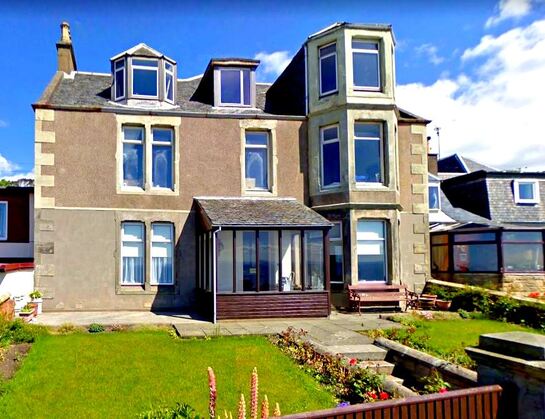
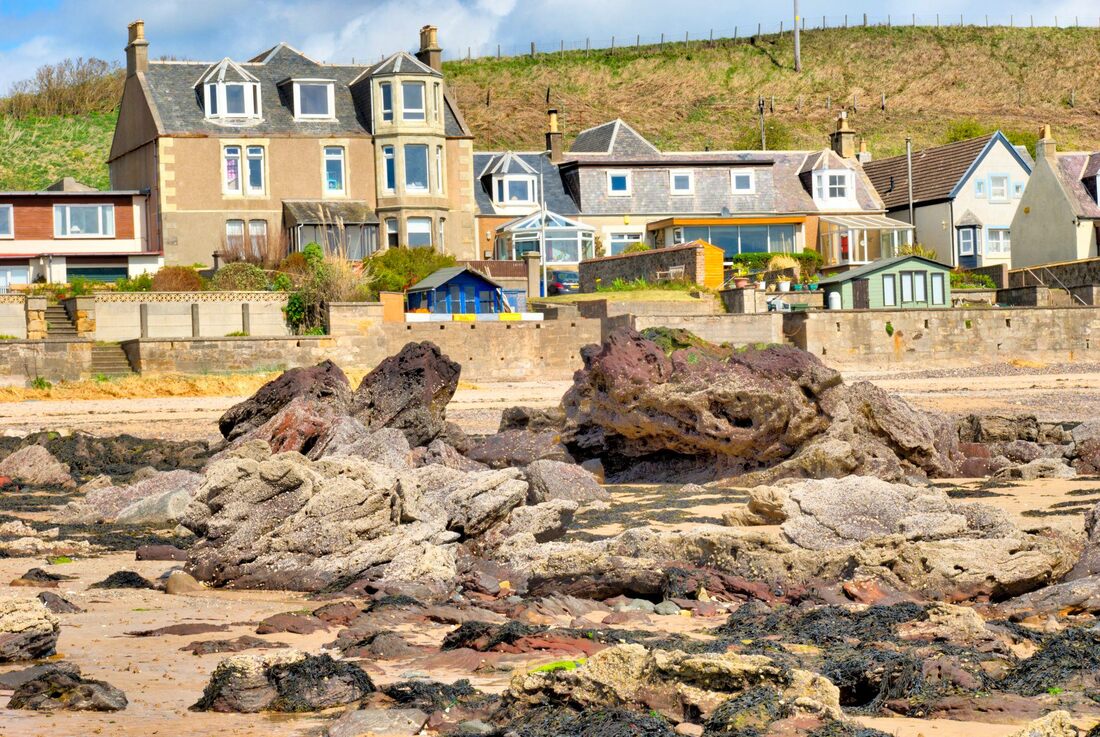
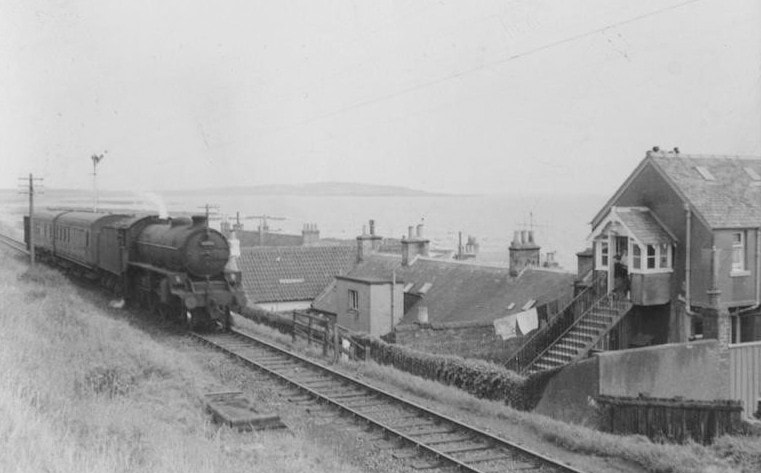
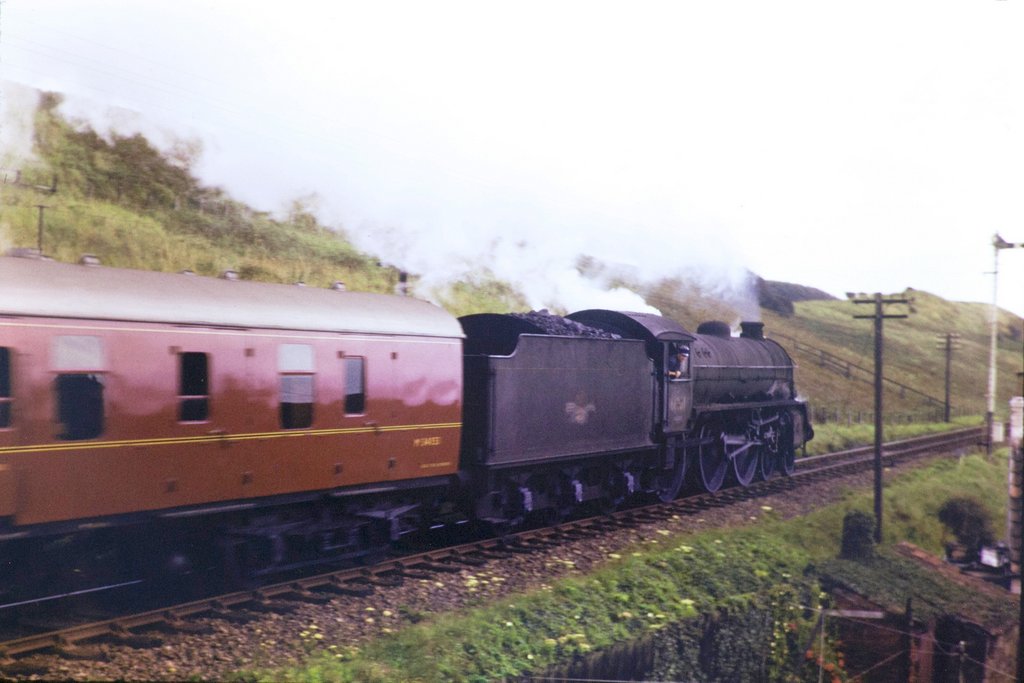
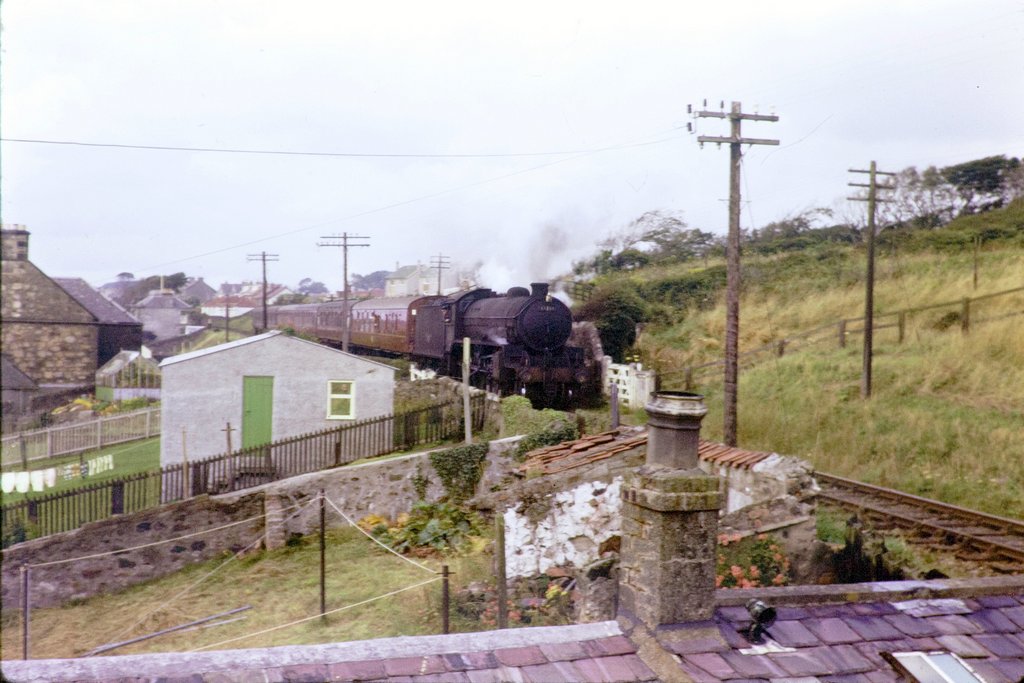
Pictured above is Rollo Villa, an imposing three-storey house on the Temple at Lower Largo. This house dates to the early 1880s and is not dissimilar looking to its neighbour to the west, Serpentine Villa. As well as a sea view, Rollo Villa once enjoyed a great view of the railway line to the rear, with steam trains passing just feet away from the back door and garden. The photographs below, kindly shared by Ian Downie, show just how close the railway was to the back porch.

Picture
Picture
Picture

The surname Rollo first appears in Largo in the 1841 census. Sisters Mary and Isabel Rollo were living at the Temple. Mary was married to James Clark Junior, a salmon fisherman. James's mother was Margaret Selkirk. Mary and Isabel had both been born in St Andrews, in 1815 and 1821 respectively. Mary married James around 1833 and Isabel lived with them for a time, working as a hand loom weaver. Isabel later married weaver and salmon fisher David Birrell and lived at the Temple until her death in 1882.

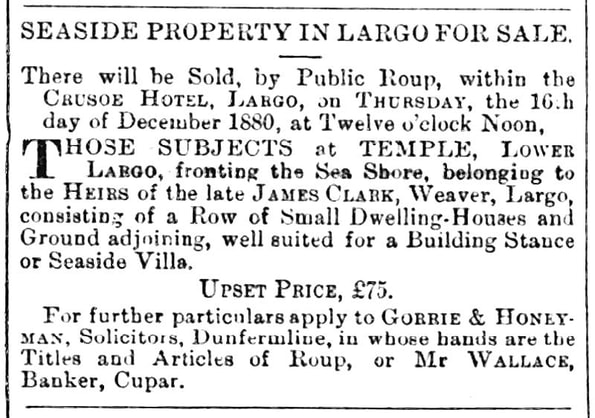
Mary and James Clark had four sons - James, Andrew, William and John - and two daughters, Christina and Mary. Mary Clark (nee Rollo) died in 1873 and James Clark died in 1879. The following year the advert below appeared in the Fife Herald (25 November 1880) where his property was to be sold by public roup in the Crusoe Hotel. The notice describes a "row of small dwelling houses and ground adjoining, well suited for a building stance or seaside villa". It did indeed become the latter.


Picture
Picture

Ultimately James Clark's son, John Clark, a railway surfaceman, became the proprietor of the new villa built upon the site of the cottages. He named the new property Rollo Villa after his mother's maiden name. He and his wife Elizabeth Elder rented out the flatted property to summer visitors for many years. John Clark died at Rollo Villa in 1913 and the house passed on to his widowed daughter Mary Rollo Todd who had lived with him for some time and who had been married in Rollo Villa in 1890. Mary died in 1935 and the property passed on to her children Alexander and Elizabeth.

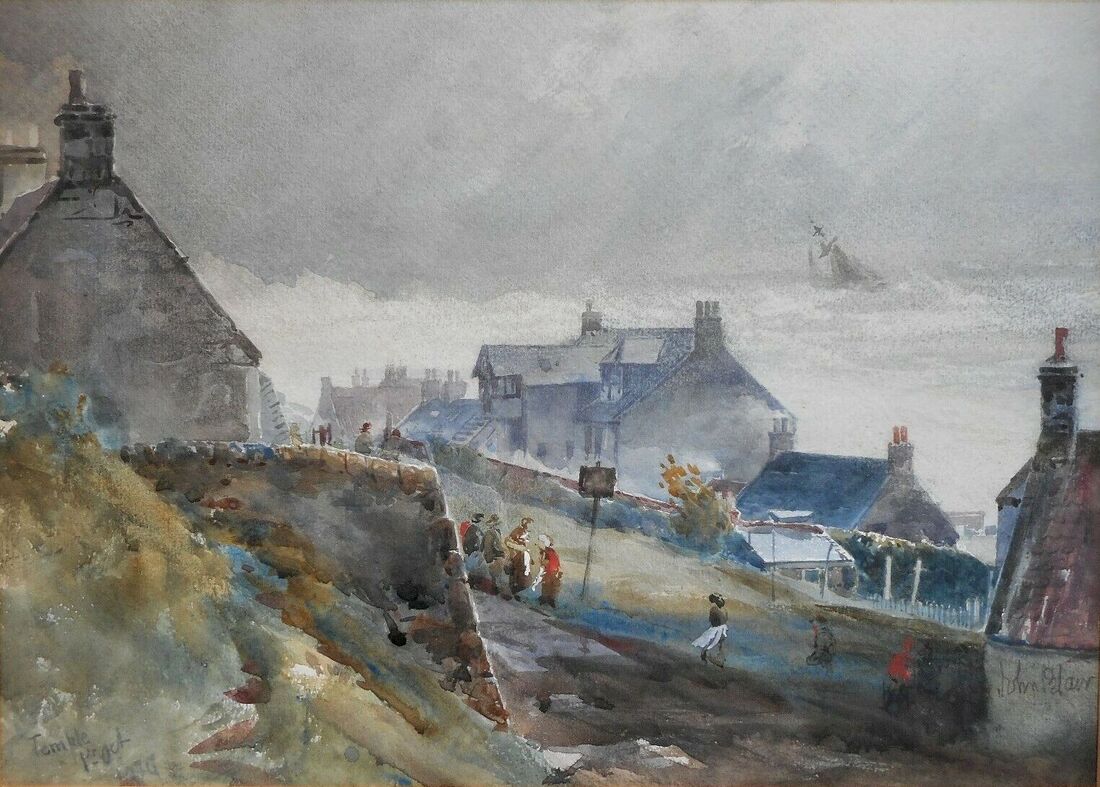
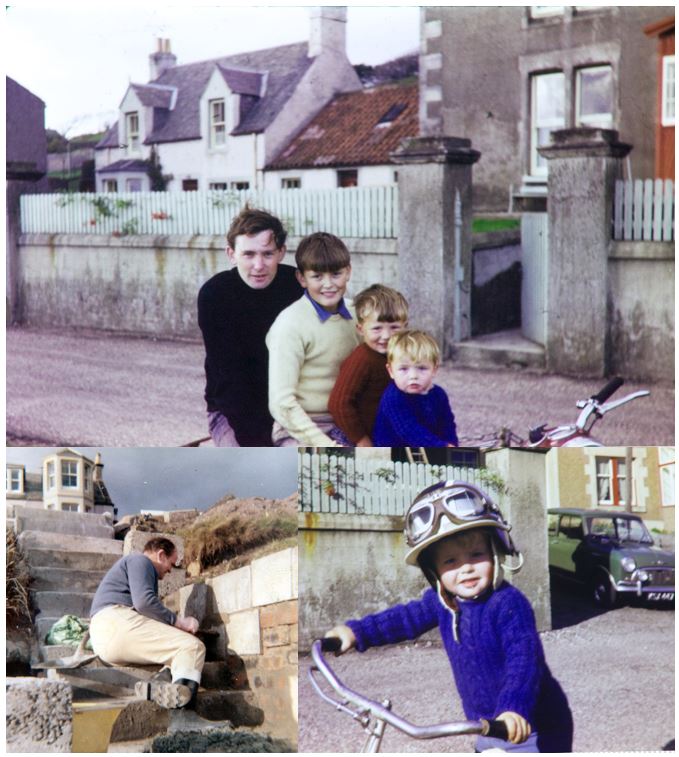
​Rollo Villa remained in the ownership of the same family until very recently. In the painting above, by John Blair, the rear of Rollo Villa can be seen within a grey and stormy scene. Below are some photographs outside Rollo Villa from the mid-1960s when the Downie family resided in the upper flat and Rollo Villa was owned by David Rollo (whose mini can be seen in one of the photos). One shows Mr Downie working on the retaining wall of the front garden across the road. In the photo of the four male Downie siblings, the neighbouring properties can be seen before the extensive renovation work which makes their appearance today very different.

Picture
With many thanks to Ian Downie for the 1960s photographs featuring family members outside Rollo Villa and the photographs from the rear of the property featuring passing trains.
0 Comments

Memories of Lower Largo and Lundin Links

5/4/2021

2 Comments

 
Picture

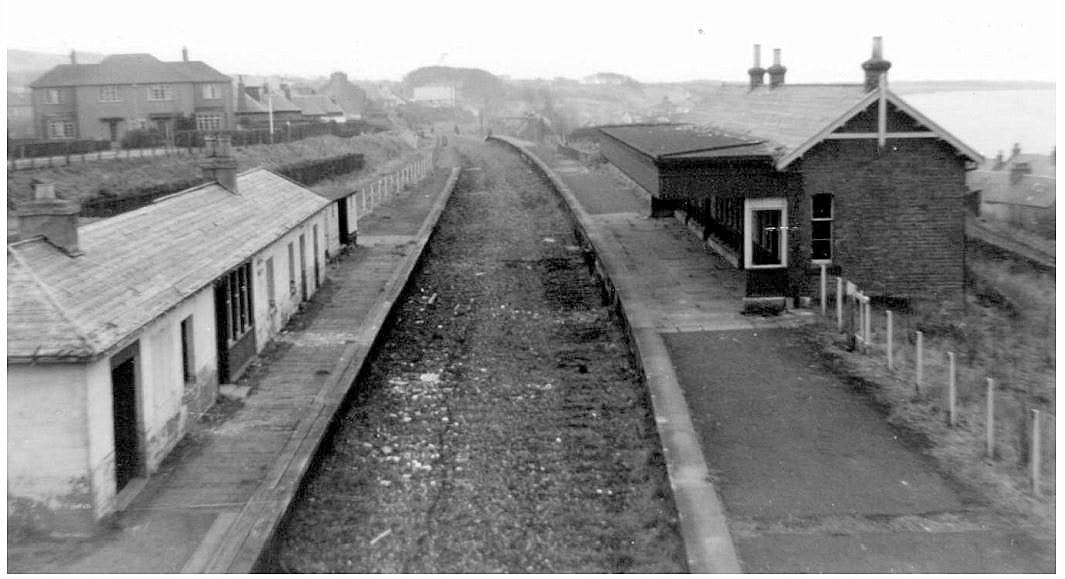
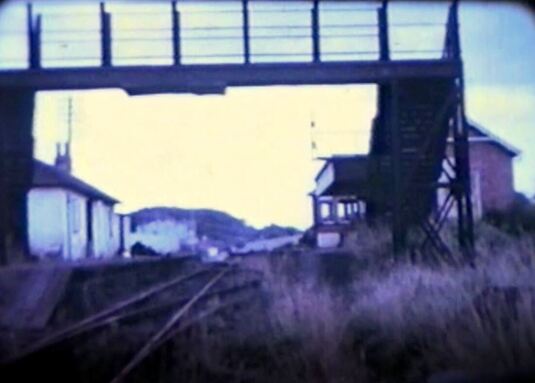
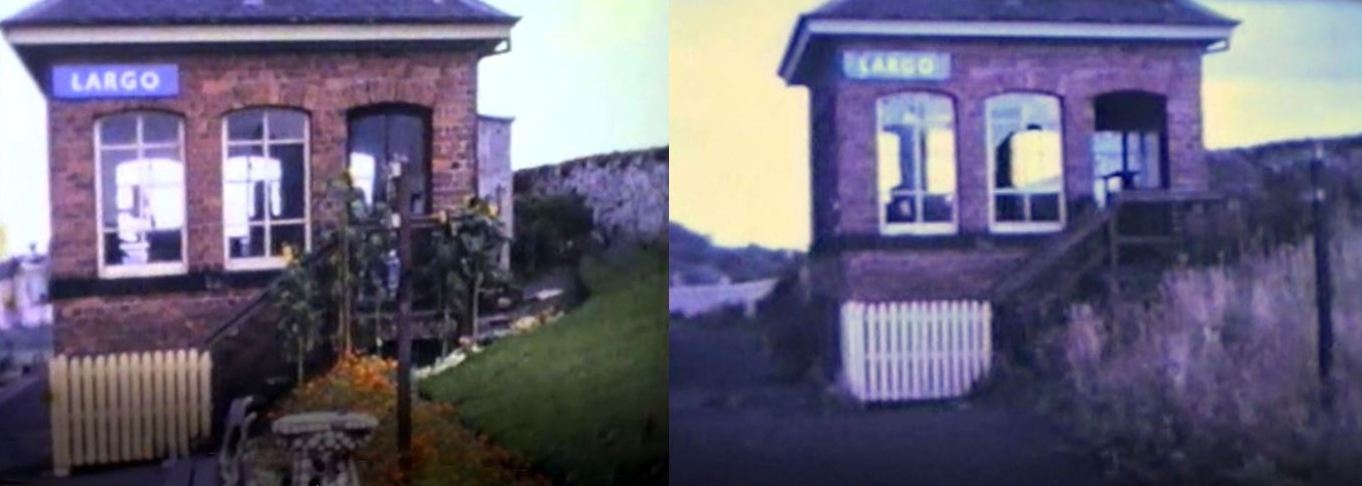
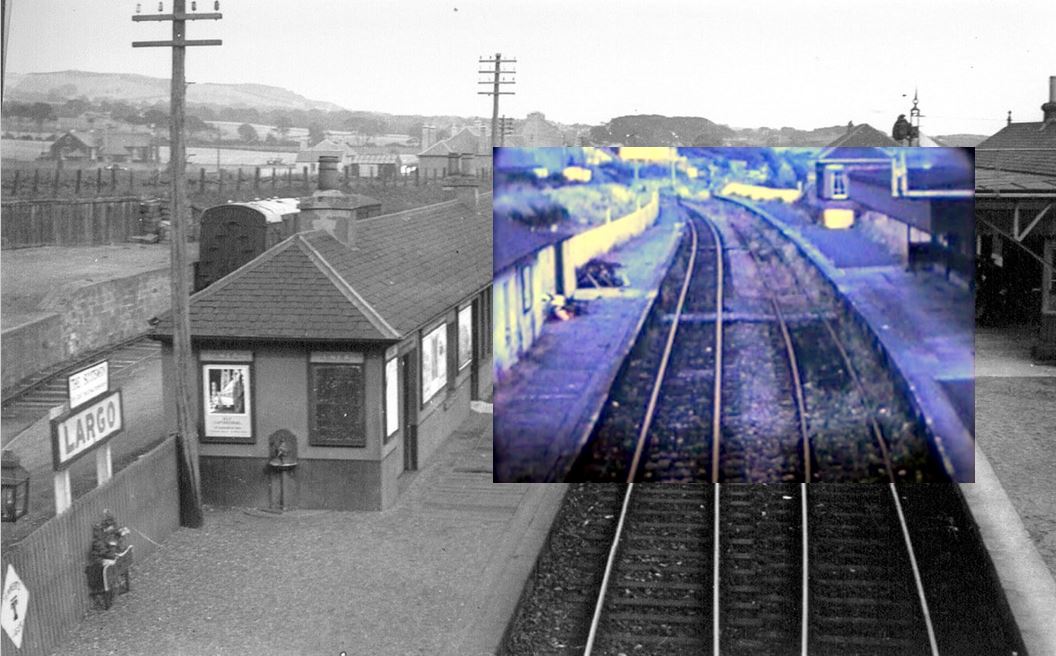
Hopefully many of you managed to watch 'Scotland's Scenic Railways' on Channel 4 the other evening, featuring Largo and Lundin Links stations, vintage railway footage and present day local scenes. For anyone that missed it, the programme is currently on All 4 catch-up here.  One of the content contributors, who appeared on the programme, was Robert Drysdale. Robert has kindly written up detailed memories of his many childhood holidays to Lower Largo and Lundin Links and has included several photographs in the attached PDF document. Among the images are pictures of both Largo and Lundin Links stations after the railway line closed and the tracks had been lifted, plus a view from the former road bridge over the line at the top of Drummochy Road.  

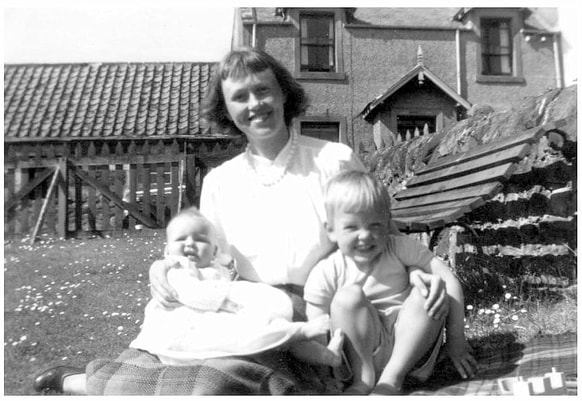
To access this evocative description of holidaying in Largo in the 1950s and 1960s, please click here and enjoy! Above is a picture of Robert (right) with his baby sister and mother in the garden of 'Kincraig' (number 15 the Temple). Below is a view of the closed Largo station with the tracks recently lifted, taken from the footbridge over the line. These and many more images appear in the document.

Picture
With many thanks to Robert Drysdale.
2 Comments

Scotland's Scenic Railways - featuring Largo

25/3/2021

2 Comments

 
UPDATE: Largo episode now scheduled for 4 April at 8pm.
​

Picture
 
Largo is going to feature in some detail in one of the 3 additional episodes of Scotland’s Scenic Railways coming to Channel 4 over the coming weeks. Filmed last autumn, these shows are a mix of stories featured in the original 2019 The World’s Most Beautiful Railway series and new content filmed between lockdowns in 2020. The new material includes an item about the East of Fife railway, prompted by the reopening of the line to Leven.
 
Featuring some archive material from this blog and from blog readers, vintage film footage, history of the old line and interviews with people who remember when the railway served Largo, anyone with an interest in Largo will not want to miss this. The East of Fife item is in the episode that transmits on Sunday April 4th @ 8pm on Channel 4. You will also see preparations taking place at Leven for the reinstatement of a five and a half mile section of the line to Leven (Levenmouth Rail Scheme). Spread the word!

2 Comments

Locomotive Club of Great Britain visit to Largo Station in 1966

9/3/2021

2 Comments

 
Picture

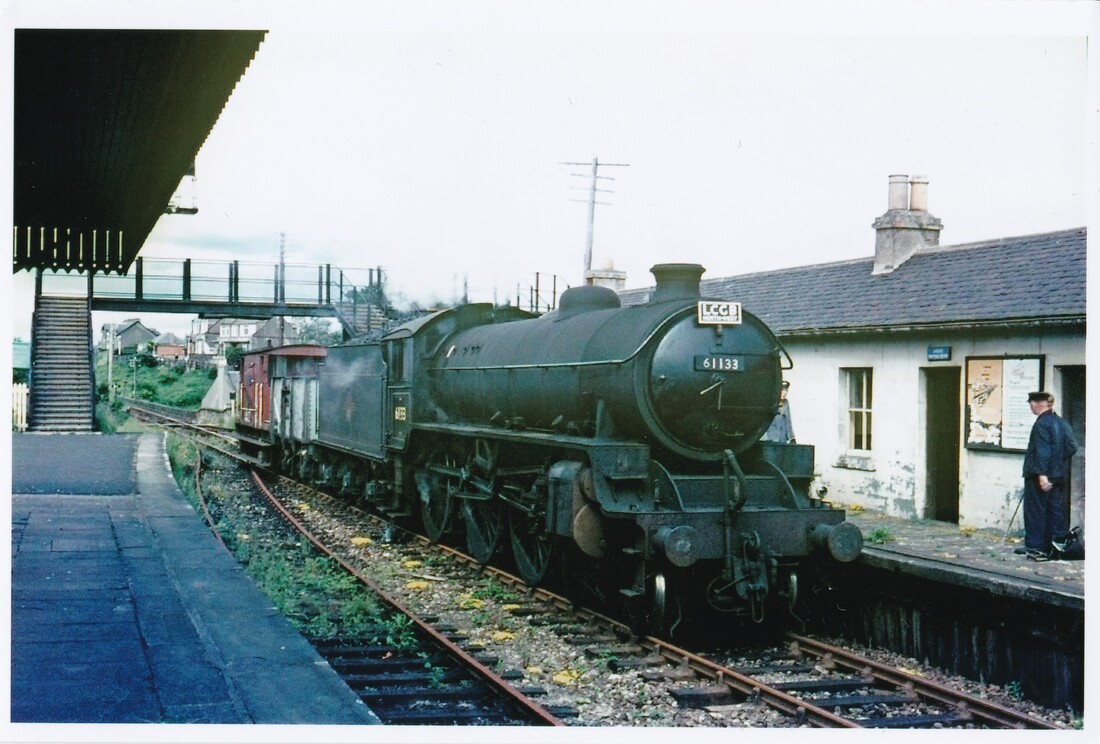
The above photograph has appeared in a previous blog post, entitled After the Line Closure. However, new information has just come to light about this particular journey which is well worth sharing. Intrigued by the 'headboard' on the front of the engine, which reads LCGB North West, Brian Malaws investigated the story behind this. He asked Peter Crossman, Hon General Secretary of the Locomotive Club of Great Britain, if he could provide any information. He duly responded with the following...

The club's monthly magazine, The Bulletin, records that on Tuesday, July 5th 1966, members of the North West Branch of the Locomotive Club of Great Britain travelled on the 09:05 Thornton Yard to Crail working. Apparently, great interest was shown in the headboard by the train crew and yard staff. The train consisted of class B1 4-6-0 no. 61133 hauling one wagon of coal and a brake van, in which the club members were accommodated. After arriving safely at Crail, the train returned to Anstruther, where the locomotive was turned on the still-operational turntable during a lunch stop on the return journey to Thornton.

The line had closed to passenger traffic in September 1965 so this was a rare opportunity to travel the line, which then closed to even goods traffic two weeks afterwards. Demolition of the station followed a few years later.

With thanks to Brian Malaws for sharing this snippet of information.


2 Comments

Atmospheric Harbour Scene

11/12/2020

3 Comments

 
Picture

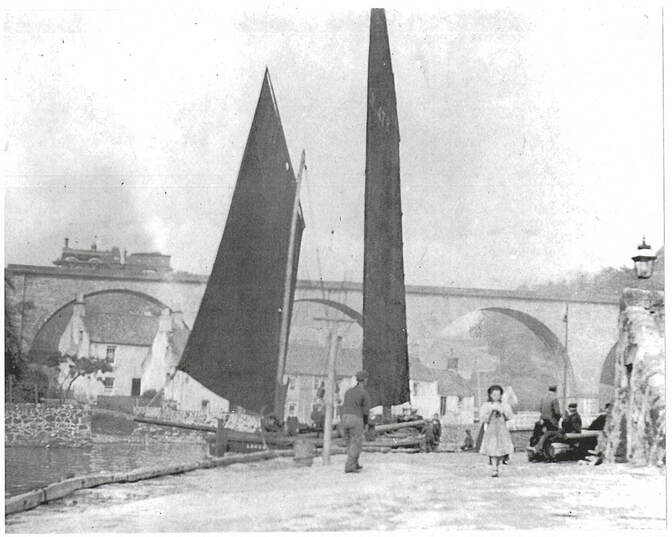
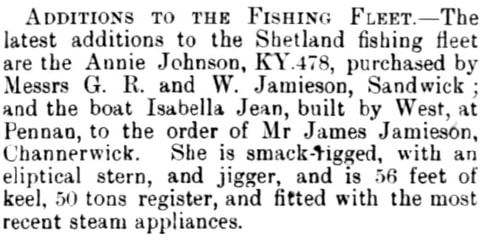
The above photograph is part of Historic Environment Scotland's Canmore collection but was originally part of a private collection. It's dated as circa 1890, which tallies with what we can see in the image. Firstly, the image was certainly captured after 1888, as the stone-built "W.C. for the benefit of sailors and fishers" can be seen on the right hand edge below the lamp.  Another clue to the date is the registration 'KY 478' on the sail of the fishing boat on the right. This vessel was sold to Messrs G.R. and W. Jamieson of Shetland in 1901 (see 18 May Shetland Times below) so the image was taken prior to that date.

In the background, under the right hand arch of the viaduct is the old wooden footbridge over the Keil Burn. Different versions of this footbridge existed up until 1914. The photographer has clearly waited for a train to pass over the viaduct before committing to the picture. The engine is a pleasingly old-looking one - reminiscent of a toy train to modern eyes. There a lot of people in the scene, including a group of men taking a rest on the right, a young girl heading for the end of the pier and several men (and possibly boys) congregating around one of the fishing boats. It's not too hard to imagine the smells and sounds that would have accompanied this sight. It's another image that I would love to be able to step right in to!

Picture
3 Comments
<<Previous

    About

    This blog is about the history of the villages of Lundin Links, Lower Largo and Upper Largo in Fife, Scotland. Comments and contributions from readers are very welcome!

    Search

    There is no in-built search facility on this site. To search for content, go to Google and type your search words followed by "lundin weebly".
    Contact

    Categories

    All
    Antiquities
    Beach
    Boarding Houses
    Business
    Churches
    Clubs And Societies
    Drummochy
    Facilities
    Farming
    Fishing
    Golf
    Houses
    Keil's Den
    Largo Law
    Lower Largo
    Masseney Braes
    New Gilston
    People
    Railway
    School
    Shops
    Standing Stanes
    Streets
    Tourism
    Upper Largo
    Viaduct
    War

    Archives

    November 2025
    October 2025
    September 2025
    August 2025
    July 2025
    June 2025
    May 2025
    April 2025
    March 2025
    February 2025
    January 2025
    December 2024
    November 2024
    October 2024
    September 2024
    August 2024
    July 2024
    June 2024
    May 2024
    April 2024
    March 2024
    February 2024
    January 2024
    December 2023
    November 2023
    October 2023
    September 2023
    August 2023
    July 2023
    June 2023
    May 2023
    April 2023
    March 2023
    February 2023
    January 2023
    December 2022
    November 2022
    October 2022
    September 2022
    August 2022
    July 2022
    June 2022
    May 2022
    April 2022
    March 2022
    February 2022
    January 2022
    December 2021
    November 2021
    October 2021
    September 2021
    August 2021
    July 2021
    June 2021
    May 2021
    April 2021
    March 2021
    February 2021
    January 2021
    December 2020
    November 2020
    October 2020
    September 2020
    August 2020
    July 2020
    June 2020
    May 2020
    April 2020
    March 2020
    February 2020
    January 2020
    December 2019
    November 2019
    October 2019
    September 2019
    August 2019
    July 2019
    June 2019
    May 2019
    April 2019
    March 2019
    February 2019
    January 2019
    December 2018
    November 2018
    October 2018
    September 2018
    August 2018
    July 2018
    June 2018
    May 2018
    April 2018
    March 2018
    February 2018
    January 2018
    December 2017
    November 2017
    October 2017
    September 2017
    August 2017
    July 2017
    June 2017
    May 2017
    April 2017
    March 2017
    February 2017
    January 2017
    December 2016
    November 2016
    October 2016
    September 2016
    August 2016
    July 2016
    June 2016
    May 2016
    April 2016
    March 2016
    February 2016
    January 2016
    December 2015
    November 2015
    October 2015
    September 2015
    August 2015
    July 2015
    June 2015
    May 2015
    April 2015
    March 2015
    February 2015
    January 2015
    December 2014
    November 2014
    October 2014
    September 2014
    August 2014
    July 2014
    June 2014
    May 2014
    April 2014
    March 2014
    February 2014
    January 2014
    December 2013
    November 2013
    October 2013

    Links

    Largo Baywatch Blog
    Fife Family History Society
    ​
    Polish Parachute Brigade Info​

    RSS Feed

Powered by Create your own unique website with customizable templates.