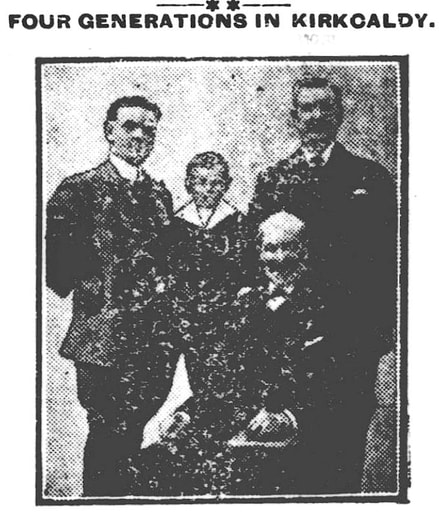
The above photograph of four generations features William Grieve, the eldest in the image, seated in the foreground (published in Fife Free Press on 14 August 1909). This Lower Largo man found fame as a maker of walking sticks and for his highly-detailed carved models made from parrot coal. His life story, which also included 45 years working for the railway, is well worth telling. Standing behind William in the photograph is his son David. On the far left is his grandson, also William Grieve, and in the centre is great-grandson James Norcross Grieve.
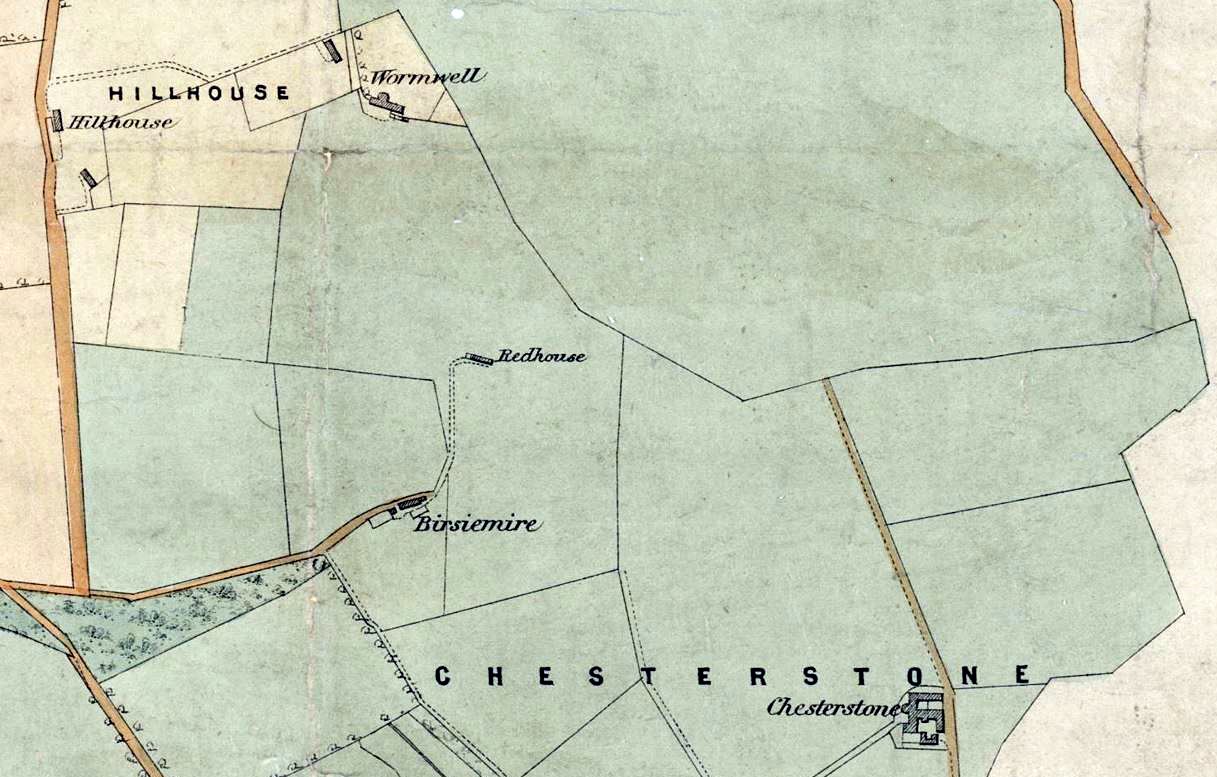
William senior was born in Ceres Parish in 1838, to ploughman David Grieve and his wife Janet Wilson. However, by the age of two, the census of 1841 records William and family at Greenside Bank, within Largo Parish. Greenside Bank was around midway between Montrave House and Teasses House. A decade later, the 1851 census finds the Grieve family at Redhouse within the farm of Chesterstone (shown in the centre of the 1866 map below). Twelve-year-old William was described then as an 'errand boy'.
William senior was born in Ceres Parish in 1838, to ploughman David Grieve and his wife Janet Wilson. However, by the age of two, the census of 1841 records William and family at Greenside Bank, within Largo Parish. Greenside Bank was around midway between Montrave House and Teasses House. A decade later, the 1851 census finds the Grieve family at Redhouse within the farm of Chesterstone (shown in the centre of the 1866 map below). Twelve-year-old William was described then as an 'errand boy'.

William married Agnes Cunningham on 12 June 1858. The pair were living with William's parents in 1861 in the 'Cote House' at Balcormo Farm. At this point their son David (pictured in the family photograph above when he was around 50) was two years old. Both William, aged 22, and his father, aged 65 were employed as ploughmen, while Agnes combined work as an agricultural labourer with being a new mother. However, the agricultural life was about to end for William and Agnes. By 1871 they were living at the Temple in Lower Largo. William had found employment as a 'railway plate layer' with the Leven and East of Fife Railway Company. In 1878, their son David, by then a spirit dealer and assistant grocer, married Jessie Gillies, the daughter of Largo fisherman Alexander Gillies.
Meanwhile, William's talent for carving parrot coal developed. Parrot coal (also known as 'cannel coal') is more compact that ordinary coal. The term 'parrot' coal apparently came from the noise it made when burned - like the clicking sound a parrot makes with its beak. This type of coal, which occurred in Fife among other places, was easy to work and could be highly polished. It was durable and had an attractive marble-like finish. Coal carving had long existed in many places but particularly flourished in Fife in the second half of the nineteenth century.
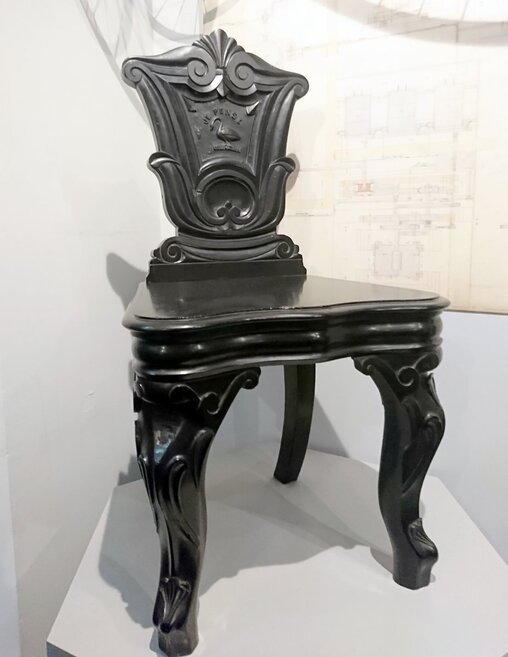
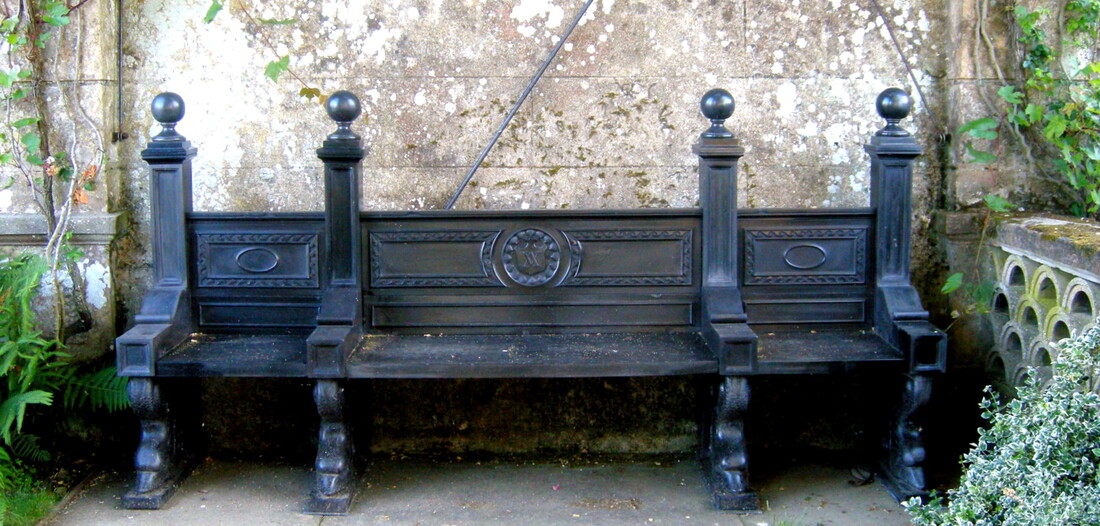
Sometimes, large items such as pieces of furniture were made from the material. An example can be seen today at the Kirkcaldy Galleries - the parrot coal chair pictured above. This chair was made in 1855, by West Wemyss stonemason Thomas Williamson. It was part of a set of two chairs and a table made by Williamson for the Wemyss family. It features the Wemyss family motto 'Je Pense' and a swan, which features on the family crest. Below is a garden seat also made by Williamson which was commissioned by Prince Albert. It was exhibited at the Great Exhibition in 1851 and can still be seen at Osborne House on the Isle of Wight.
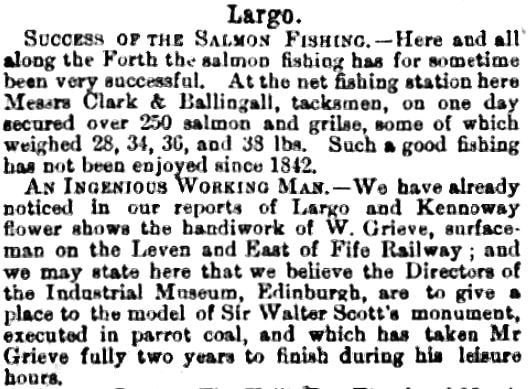
William Grieve's parrot coal creations were of a smaller-scale and more intricate form. The above from the 17 August 1876 Fife Herald describes his model of Sir Walter Scott's monument. This piece took two years to complete and it was hoped that it would find a place in a museum. That same summer, Mr Grieve exhibited his work at flower shows in both Largo and Kennoway. One model displayed was a pasteboard and floral design of the Coventry Cross but it was the Scott Monument parrot coal piece that won first prize.
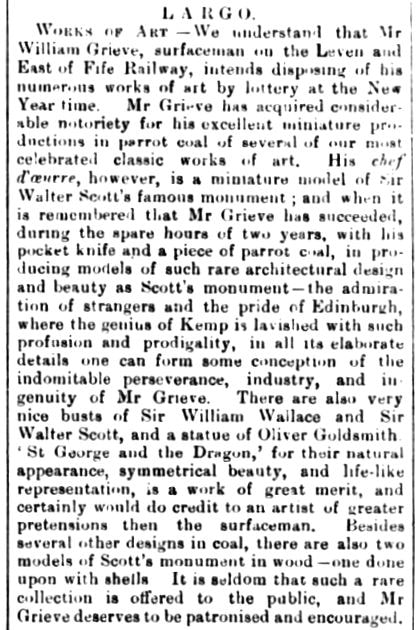
By the end of 1876, the East of Fife Record (1 December above) reported that William intended "disposing of his numerous works of art by lottery". His "miniature productions in parrot coal of several of our most celebrated classic works of art" had become well-known by this time. Other subjects depicted in coal by Grieve included busts of Sir William Wallace and Sir Walter Scott, a statue of Oliver Goldsmith and a representation of St George and the Dragon. Mention is also made of a wooden model of Scott Monument decorated with shells. I wonder who acquired these pieces and what became of them. Newspaper archives tells us that, three years later, in August 1879 when the Largo Museum opened, some examples of Grieve's parrot coal models were among the exhibits.
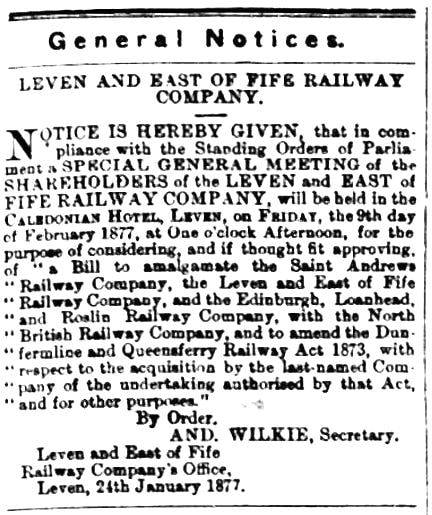
In the meantime, the railway (William's employer) had transferred from the Leven and East of Fife Railway Company to the North British Railway Company. The notice below, from 1 February 1877 Fife Herald, advertises a Special General Meeting of the shareholders to discuss the proposal. It was unanimously agreed to and the transfer took place on 1st August 1877.
In 1881, William was described as a 'Railway wire fencer', his wife was a 'Railway gate keeper' and they had a nine-year-old daughter, named Agnes. Their son David was now a grocer in Kirkcaldy and had developed a keen interest in model yachting. David and his wife Jessie had three young children, including William junior. Ten years later, in 1891, William senior was described as a 'Railway surfaceman' and was living in Railway Cottage at the Temple with his wife, daughter and niece.
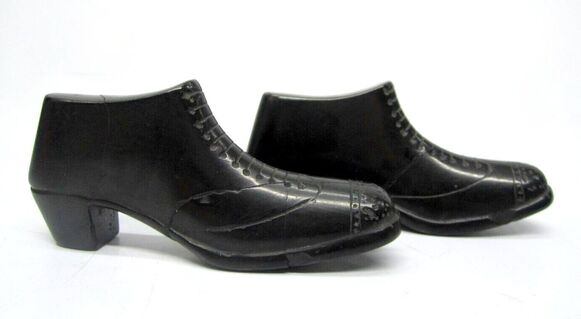
William's wife, Agnes, died in 1899 but he continued to live in Railway Cottage and to work for the North British Railway Company. In 1901 he was described as a 'Railway fencer' and was living with niece, who acted as housekeeper for him. In 1905 William was a 'gatekeeper' for the North British Railway Company. In the 1911 census, William Grieve was still living at Railway Cottage, aged 72, a widower and was described as a 'retired railway foreman fencer'. His niece continued as act as his housekeeper. William died on 27 May 1912 at Railway Cottage, Temple, Largo aged 73. I wonder what other subjects he carved from coal during his lifetime. Surely train engines must have been among his works? Or perhaps a depiction of Robinson Crusoe? Or some simple objects like the shoes featured below? If you know more about William or his carvings, please leave a comment.
 RSS Feed
